
Image: panaramka © 123RF.com
Policy options to improve the resilience of DSO grids to the physical impacts of climate change have been proposed by Eurelectric.
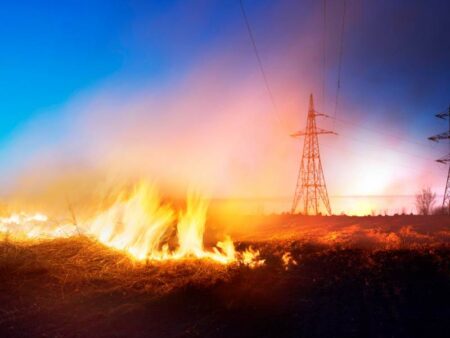
Resilience to a constantly changing climate has never been more urgent as extreme weather events become more prevalent with their impacts, particularly at the local level where they are usually most hardly felt.
Increases in average temperatures, levels of precipitation and wind conditions are among the risks, as are the changing prevalence of snow and ice levels and flows of watercourses, with planning for a long term perspective crucial.
In a new paper, Eurelectric presents a three-step approach for DSOs to enhance resilience to such events, drawing on best practices from distribution utilities around the EU, including E-distribuzione in Italy, ESB Networks in Ireland, Enedis in France, E-REDES in Portugal and i-DE in Spain.
Also of interest
SupergridEurope launched to accelerate the European supergrid
This starts with mapping the risks, with DSOs able to use scenarios from the IPCC and EU or national databases and to translate the effects onto their infrastructure by developing internal simulations.
The second step is to increase the network resilience of lines, cables and substations. DSOs can improve the components used, reduce the exposure of assets, schedule the network renovation and improve the network’s meshing.
Third, the DSOs should prepare efficient emergency response measures. They should make sure that they store enough material to replace damaged assets, that they always have an available workforce and that cooperation is ensured with public authorities and all local relevant stakeholders.
Kristian Ruby, Secretary General of Eurelectric, commenting on the paper, said that grid operators are facing a tough reality.
“In the coming decades, heatwaves, floodings and storms will occur ever more often. Operators need to be prepared. That’s why strong emergency coordination and recovery planning are just as important as physical upgrades.”
An example highlighted is E-distribuzione’s response to a July 2023 heatwave that caused a power blackout emergency in the Italian province of Catania, Sicily. The company carried out a thorough analysis to evolve the distribution networks’ resilience models, which led to the launch of targeted investments, including the replacement of vulnerable segments of the underground MV network with jointless, heat-resistant cables.
Their approach now serves as a blueprint for others across the sector, the paper states, pointing to the need for resilience to be integrated into all grid development with infrastructure installed today expected to operate for 30 to 50 years, i.e. to ca 2075.
To support this, Eurelectric recommends that EU policymakers encourage economic incentives to invest in adaptation and risk mitigation. In the case of disruptive events, ensuring proactive response measures and when necessary a coordinated response should be aligned at EU-level.
In addition, any new initiatives should align with standards already in place, to avoid increased administrative burden.
Other policy recommendations include the inclusion of climate adaptation in legislation such as the upcoming climate adaptation plan, the national energy and climate plans and the NZIA environmental criteria for public procurement procedures.
National regulatory authorities should be explicitly responsible for addressing climate adaptation of electricity infrastructure and investments in resilience should be an integral part of the distribution network development plans.
Originally published on Enlit World.