Engineers at Rice University have identified a diamond coating that resists mineral scaling in industrial pipework, pointing to a possible shift away from chemical additives and frequent mechanical cleaning. Mineral deposition behaves much like limescale in a kettle, but at a scale that constrains flow, drives up pumping energy, and shortens equipment life across water and energy infrastructure.
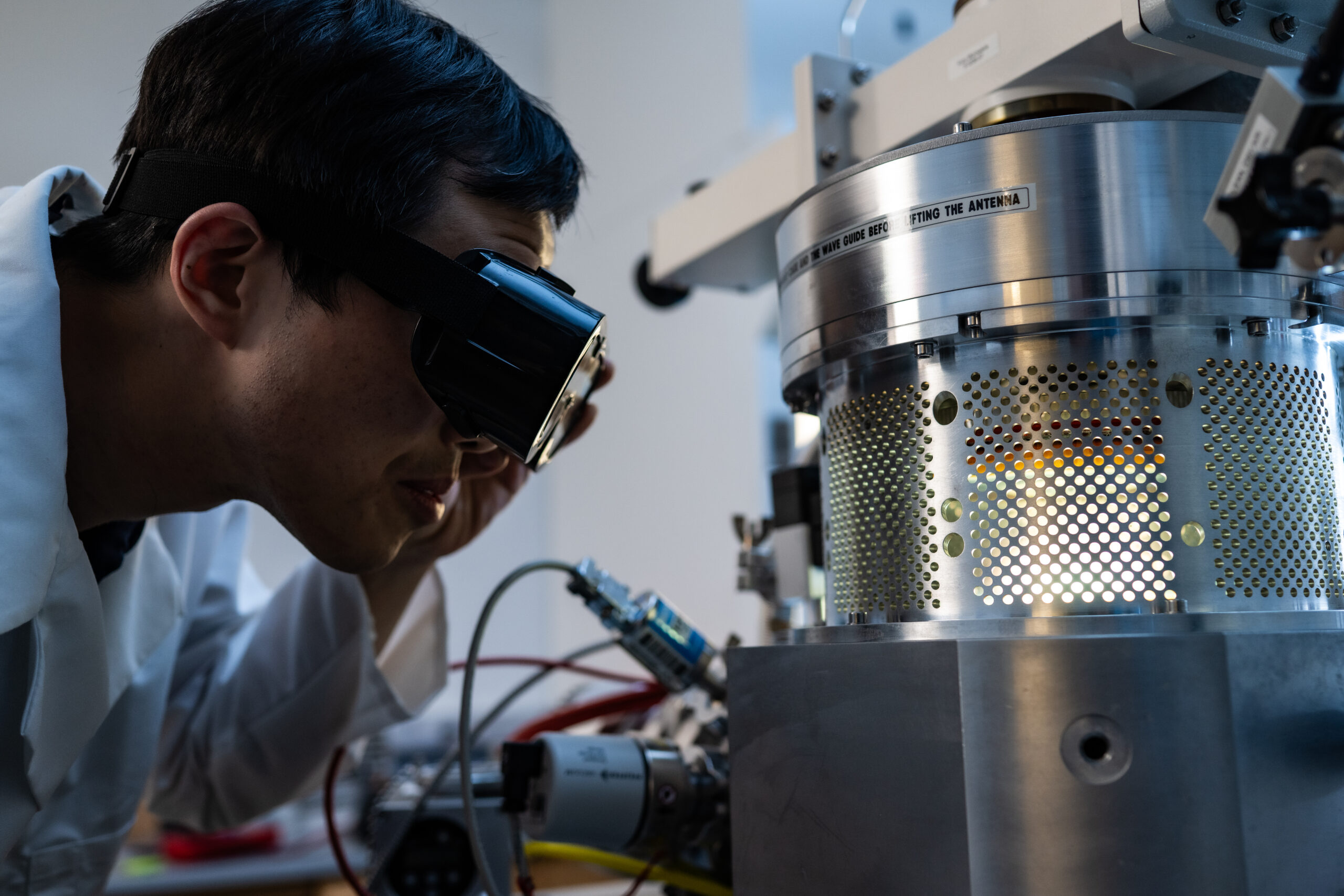
The team focused on lab-grown polycrystalline diamond produced through microwave plasma chemical vapour deposition. Methane and hydrogen were energised into plasma, breaking apart the molecules so carbon atoms could settle onto silicon wafers in a tightly bonded diamond structure. Post-growth treatments allowed the surface chemistry to be tuned, and the researchers examined how these variations influenced the first stages of scale formation.
One configuration, nitrogen-terminated diamond, delivered a step change in performance. According to Xiang Zhang, assistant research professor of materials science and nanoengineering at Rice University and a first author on the study, “there is growing interest in materials that can naturally resist scale formation without constant intervention. Our work addresses this urgent need by identifying a coating material that can ‘stay clean’ on its own.” Microscopy revealed sparse mineral clusters on the nitrogen-terminated surface, while oxygen-, hydrogen- and fluorine-treated films accumulated far denser deposits. The researchers reported an order-of-magnitude reduction in buildup under identical conditions.
Molecular simulations suggest that nitrogen termination encourages a firmly bound interfacial water layer, creating a physical barrier that makes it difficult for mineral ions to anchor and grow. The same surface chemistry was applied to boron-doped diamond electrodes commonly used in electrochemical systems; those electrodes collected roughly one-seventh as much scale and maintained functional performance throughout the tests.
Jun Lou, the Karl F. Hasselmann Professor of Materials Science and Nanoengineering at Rice University, highlighted the wider applicability of the method, stating that “the scalable and versatile deposition process of the coating also makes it very attractive for various industry sectors.” His comments underline the manufacturing relevance of MPCVD, which has matured enough to deliver consistent coatings at lower cost than earlier generations of diamond film technology.
The study combined microscopy, chemical analysis and adhesion measurements to understand not only how much scale accumulated but how strongly it bonded to the surface. Zhang noted that such breadth of characterisation had been constrained until recently by the cost and availability of high-quality diamond films. As MPCVD production becomes increasingly economical, industrial evaluation appears more feasible.
Mineral scaling imposes significant cost on desalination plants, heat exchangers, energy recovery systems and process pipelines, where fouling forces higher operating pressures and more frequent shutdowns for cleaning. Diamond’s hardness, thermal stability and chemical resistance have already established it in challenging industrial environments, particularly where abrasion or corrosion are persistent risks. The Rice results indicate that anti-scaling could be added to that list of functional advantages.
Pulickel Ajayan, the Benjamin M. and Mary Greenwood Anderson Professor of Engineering at Rice University, said the findings “identify vapor-grown, cost-effective, polycrystalline diamond films as a powerful, long-lasting anti-scaling material with broad potential across water desalination, energy systems and other industries where mineral buildup is a problem.”
With scale control costs rising across multiple sectors — and with chemical treatment routes facing tighter regulatory scrutiny — durable surface-engineered coatings are receiving renewed attention. The performance of nitrogen-terminated diamond suggests a credible route to reducing fouling-related downtime, and further industrial trials will determine how far the coating can travel from the lab to operational systems.
The full study is available to read here.