Copper Awareness Day arrives this year with copper trading around $11,420 a tonne, floating close to record territory. Despite the strength of the market, production growth remains sluggish. Global output is forecast at 23.5 million tonnes by the end of 2025, barely enough to hold equilibrium in a sector marked by geological depletion, extended permitting cycles, and political uncertainty.
The International Energy Agency estimates a 31 percent shortfall in the global project pipeline compared with the supply required by 2035. The deficit reflects deep structural limits. Ore grades continue to fall, capital investment has lagged, and new mines can take close to a decade to reach production. The global drive to electrify is colliding with a resource base that cannot expand quickly enough to support it.In short, the world is electrifying faster than copper can be dug up.
Global copper demand is projected to increase from 25.9 million tonnes in 2023 to 31 million by 2030 and more than 36 million by 2040, driven almost entirely by clean-energy technologies. Each electric vehicle contains up to four times more copper than a conventional model, and demand from the automotive sector alone is expected to double by the middle of the next decade. The surge in renewable generation capacity compounds the trend: wind and solar installations, coupled with the vast expansion of grid infrastructure, will add millions of tonnes of incremental demand at precisely the moment when primary supply growth is flattening.
An additional and largely unanticipated driver has emerged from the digital economy. The build-out of artificial-intelligence data centres — dense, energy-hungry facilities requiring vast electrical connectivity — is expected to add roughly 1.1 million tonnes of copper demand to grid infrastructure by 2030 and consume an extra 2,200 terawatt-hours of electricity by 2035. Because copper represents less than half a percent of overall project cost, this demand behaves as effectively price-insensitive, sustaining consumption even through cyclical volatility and reinforcing a structurally tight market.
The supply profile, by contrast, remains narrowly concentrated and increasingly precarious. Chile, the Democratic Republic of Congo, and Peru collectively account for close to half of global mine output, while China dominates the refining stage with a share approaching 60 percent. Each of these regions faces its own pressures — from drought and community opposition in South America to political instability in central Africa — which together create an operational landscape in which disruptions are both frequent and prolonged.
High prices, which might ordinarily stimulate a wave of new investment, offer little immediate relief when the typical development cycle for a major project spans seven to ten years. The 2020s are therefore likely to remain characterised by scarcity, irrespective of market optimism.
A metal under maximum strain

For manufacturers and utilities, that constraint is filtering rapidly through to project economics. Copper is embedded in every stage of electrification, from high-voltage transmission and distribution networks to vehicle wiring harnesses and renewable-energy converters, meaning that its rising cost translates directly into higher capital expenditure for infrastructure developers and OEMs alike. Analysts now estimate that the expansion of electricity grids required to integrate renewable generation will alone demand an additional two million tonnes of copper by 2035 — a scale of material intensity that underscores the industrial dependence on a resource whose supply cannot be quickly scaled.
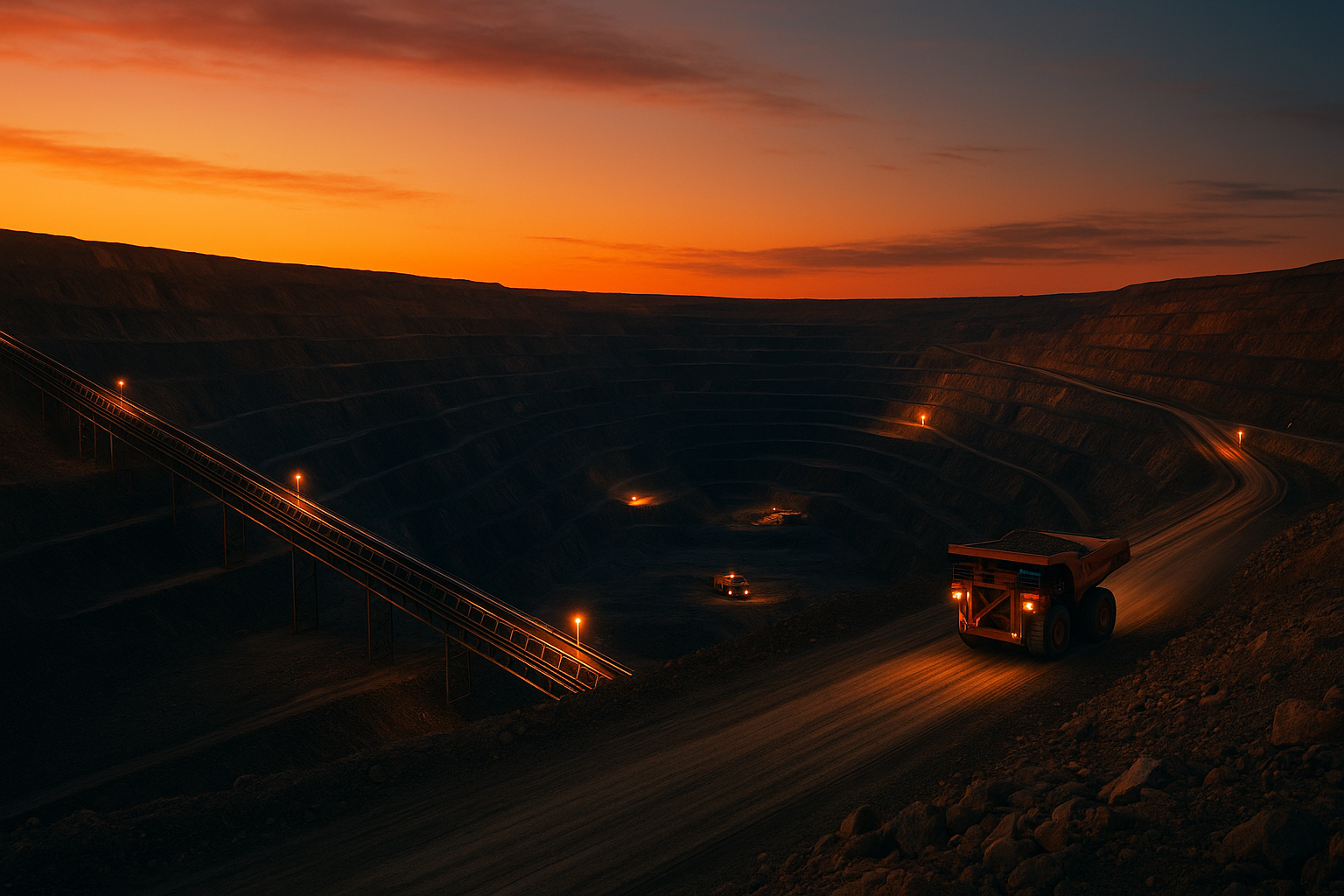
In response, the mining sector has turned to technology as a defensive measure. Electrified haulage fleets and battery-electric underground vehicles have begun to replace diesel systems, cutting ventilation costs and improving air quality, while process automation and digital monitoring platforms are extending equipment life and reducing unplanned downtime. As Björn Jonsson, Global Business Line Manager for Mining at ABB, observes, “to bridge this growing gap between supply and demand, technology will be decisive. In copper mining, where efficiency and resilience go hand in hand, electrified haulage systems, high-efficiency grinding solutions and real-time digital monitoring can help producers scale responsibly.”
These advances help operators stabilise costs and lower emissions, though they remain evolutionary rather than transformational in scale — incremental efficiency gains offsetting geological decline rather than delivering substantive new capacity.
Recycling offers another partial buffer. Secondary copper supply is projected to rise from 4.4 million tonnes in 2023 to nearly 10 million by 2040, supported by improved collection and processing of end-of-life products such as EVs and renewable components. Yet even at this accelerated pace, recycled feedstock will not meet the growth in total demand, leaving a shortfall approaching four million tonnes by the end of the decade.
Aluminium substitution, incentivised by a copper-to-aluminium price ratio above 3.5 to 1, is advancing in HVAC and low-voltage applications, but conductivity and reliability limitations restrict its use in critical systems such as traction motors and high-voltage cables. Each mitigation strategy has clear boundaries; none alters the underlying arithmetic of scarcity.
Meeting global net-zero commitments would require copper demand to double by 2050 — equivalent to commissioning around 55 percent more new mines than are currently in development. Such an expansion would demand not only capital and permitting reform, but also a fundamental realignment of industrial planning timelines with geological reality.
Copper’s price on Copper Awareness Day is an indicator of the material tension at the centre of the energy transition. The metal remains the conduit through which electrification becomes physically possible, yet its limited availability is already shaping the pace and cost of that transformation. In the decade ahead, the success of global decarbonisation efforts will depend as much on the capacity of the copper industry to adapt as on any technological breakthrough in the sectors it serves.