For RSE, the sign that its design workflow was no longer keeping pace with the business was not a spectacular software failure. It was something more ordinary, and probably more revealing: structural designers were splitting the same job into smaller models simply so several people could work on it at once.
That sort of workaround can survive while project volumes remain manageable. It becomes harder to defend when the product being designed is a modular water-treatment plant and the company behind it is expanding both its engineering workload and the manufacturing capacity expected to turn those models into physical equipment.
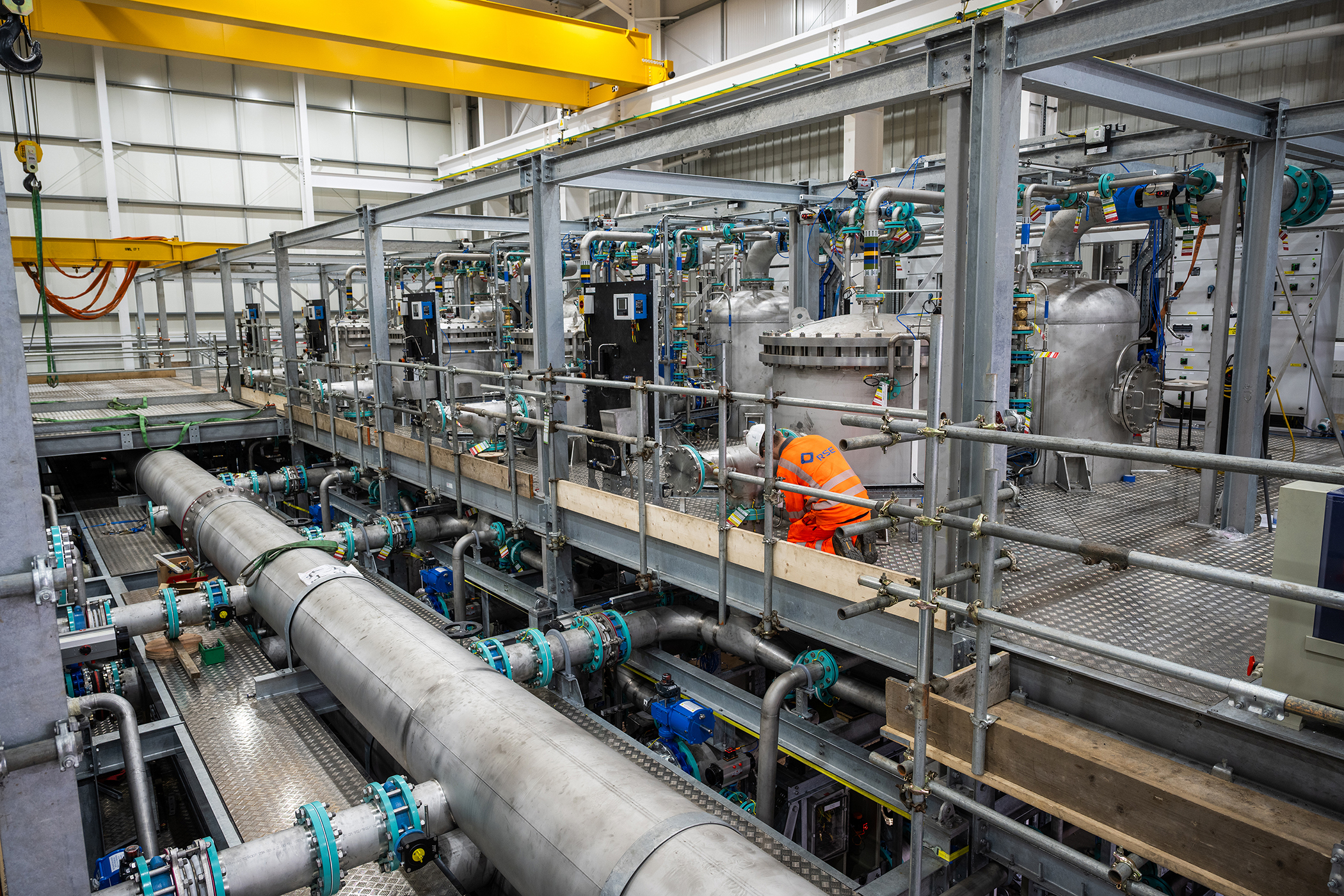
RSE develops systems for drinking-water purification, wastewater recycling, and industrial water treatment. Its delivery model places considerable emphasis on Design for Manufacture and Assembly, with substantial sections of treatment plants built away from site as Transportable Treatment Units, or TTU®s, before being delivered to the final project.
The company has around 475,000ft² of manufacturing capacity across 22 UK locations. That factory-led approach is intended to move more work into a controlled production environment, where access, quality, materials, and sequencing can be managed more predictably than on a live treatment site.
The trade-off is that pressure moves upstream. Off-site manufacture only works efficiently when design information reaches the fabrication shop in sufficient detail, in the correct sequence, and without different engineering disciplines quietly working to different assumptions.
RSE’s structural workflow starts with engineers developing the concept. Structural designers then turn that into fabrication-level steelwork information, while plant and mechanical teams develop the pumps, pipework, and other equipment that make up the working treatment module.
“Our approach is heavily design-led – it is this that unlocks the modular and offsite capabilities,” said William MacKenzie, Senior Structural Designer at RSE. “Coordination is truly essential.”
Previously, Autodesk Inventor carried both structural-steel and mechanical modelling duties. Inventor remains part of the mechanical workflow, but as RSE grew, the structural team found that the way it was detailing steelwork was becoming increasingly awkward to scale.
Concurrent working was one of the clearest problems. Jobs could be divided into several smaller models and allocated to individual designers before being brought back together, creating more opportunities for revisions or information to disappear between separate pieces of the same project.
“We tried other platforms, but it simply wasn’t the right tool for the scale that we, as a business, knew we wanted to get to,” MacKenzie said. “At one point, we were having to split up a job into smaller individual models, each assigned to a different team member.”
RSE eventually moved structural detailing into Tekla Structures. The important part was not simply finding another environment in which to model steel, but making sure the structural workflow remained connected to the mechanical design rather than creating another isolated information silo.
STEP exchange now provides part of that connection. Mechanical geometry can move from Inventor into Tekla and back again while retaining its intended position and coordinates.
That sounds like an unremarkable interoperability function until the geometry involved is a compact treatment module containing pumps, valves, pipework, access requirements, steel members, lifting points, connections, and service clearances. A beam moved in one discipline can become a pipe clash in another very quickly.
For RSE, keeping those models aligned is therefore directly connected to whether the module remains manufacturable.
“You can import it knowing it’ll land exactly where you need it to in the plan, automatically dropping into its exact real-world position and coordinates,” MacKenzie said.
The change has also altered the information reaching fabrication. RSE says the newer workflow produces models that can be interrogated in greater depth and can carry metadata into a federated BIM environment rather than existing largely as geometry used to derive drawings.
That matters as the production operation becomes more systematic. A fabrication shop working from repeatable, information-rich models has less need to reinterpret the designer’s intention on every module.
The standardised nature of the TTU® range provides another opportunity. The mechanical content changes from project to project, but parts of the structural chassis can be reused.
RSE has used Tekla custom components to turn that repetition into a modelling tool. A blank structural module can be stored as a starting point, allowing designers to establish the required grid and place the number of modules needed for a project before more detailed work begins.
MacKenzie compares the process to building with LEGO® bricks. Associated drawings can already sit behind the reusable component, reducing the amount of repetitive detailing required every time a familiar structural arrangement appears in another project.
Drawing cloning adds another layer. Tekla can identify similar assemblies and suggest related drawings as a starting point, letting designers reuse established information where the geometry genuinely warrants it rather than manually recreating near-identical output.
The productivity change is substantial. Under RSE’s earlier workflow, a single module could take around a fortnight to model and detail from start to finish. The experienced team can now detail around three modules in a week.
That does not mean software has somehow removed all the engineering from the process. The design still has to accommodate the plant, structural loading, interfaces, transport constraints, fabrication, and the specific requirements of each water-treatment project.
The gain comes from spending less time recreating information that has already been solved and reducing the friction involved in moving coordinated information between disciplines.
“As well as the slicker way of working, the quality of what we are handing over is better too,” MacKenzie said. “Now, we are getting information-rich models and going down the federated BIM route, where you are putting meta-data into the files.”
RSE’s next steps take that information beyond the engineering office. The team is exploring Trimble Connect and the practicalities of putting tablets into the fabrication workshop, potentially giving production staff access to current digital information closer to the point at which steel is being cut, assembled, and checked.
Scanning technology is also being considered. Capturing as-built information in the factory could provide another layer of reporting, quality management, and traceability by comparing the manufactured unit with the design information before it leaves the workshop.
That would bring the process closer to a digital thread running from concept, through detailing and fabrication, to inspection and final documentation.
For modular water-treatment equipment, the value is fairly practical. Every problem found in the factory rather than on site is a problem that can be dealt with around established tooling, engineers, lifting equipment, parts, and controlled access.
The story is consequently less about RSE replacing one piece of design software with another than about reaching the point where the design workflow itself had become a constraint on manufacturing growth.
RSE needed the structural model to work concurrently, exchange information cleanly with the mechanical team, reuse standard content where appropriate, and produce enough fabrication detail to support a more production-line approach in the workshop.
As MacKenzie puts it, the longer-term direction is towards digital twins and more complete documentation. Before that ambition becomes useful, however, the more fundamental job has to work: getting reliable engineering information from the design team into a factory quickly enough for modular production to scale.