Minebea Intec has implemented an automated weighing and filling system for Egyptian Ferro Alloys Company, shifting the producer from manual powder filling to a fully automated dosing process designed to improve accuracy, reliability, and day-to-day safety.
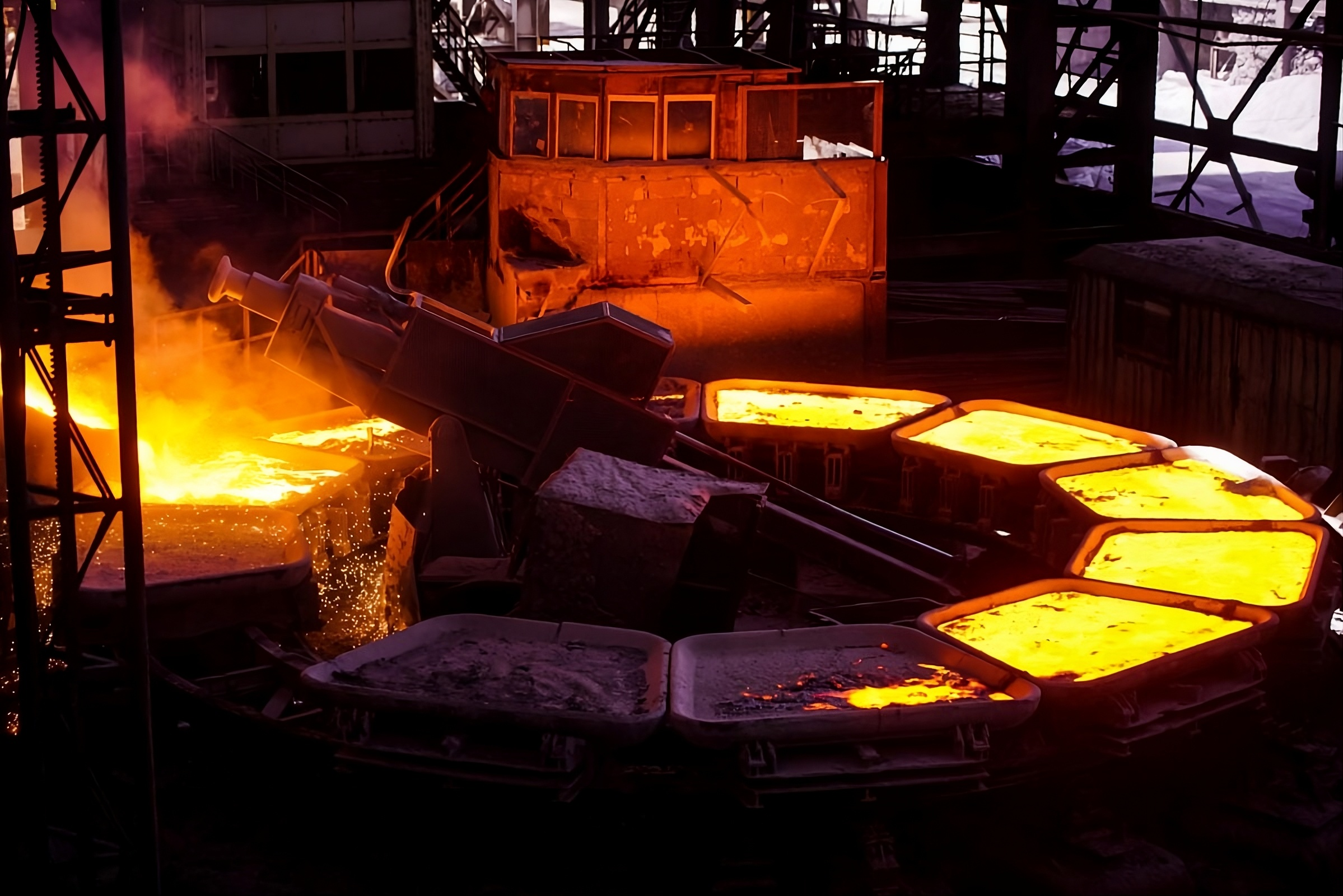
Egyptian Ferro Alloys manufactures ferrosilicon and other metallurgical additives used by steelmakers and foundries for desulfurisation, deoxidation, and alloying. In powder form, these materials can be heavy, free-flowing, and prone to clumping or adhesion, creating practical problems for consistent batching and repeatable fills — particularly when production quality depends on tight tolerances.
The project targeted the operational weak points of manual filling, which Minebea Intec and its partner, EAST, linked to dosing fluctuations, handling difficulty with sticky materials, and avoidable losses. The resulting system is built around automated material feed from silos and controlled filling into intermediate bulk containers (IBCs), with process validation and commissioning completed after reliability testing and operator training.
At the measurement layer is Minebea Intec’s PR 77/100 kg C3MR bending tube load cell, specified with C3 accuracy class in accordance with OIML R60. The load cell is designed for demanding industrial environments, where vibration, abrasive powders, dust exposure, and cleaning regimes can degrade stability and accuracy over time. The company positions this robustness as central to maintaining consistent measurements when powders behave unpredictably under load and during discharge.
Control of the filling sequence is handled by the Maxxis 4 weight controller, which uses the incoming measurement signal to manage dosing and stop conditions. Minebea Intec said the controller is equipped with an IBC filling licence — a software function for automated, standard-compliant control and monitoring of IBC filling, including tolerance checks, logging, and traceability. For users, that combination pushes the filling process away from “operator judgement plus correction” and towards repeatable setpoints with recorded outcomes.
The company lists the installed package as including the PR 77/100 kg C3MR load cell, a 30 m PR 6135/31 connection cable, and the Maxxis 4 controller with IBC filling licence for single-component filling, alongside flexible interfaces intended to support integration into existing plant systems.
Beshoy Kamel, Project Manager at EAST, said: “By automating the filling process, our customer gains measurable advantages: precise dosing, reduced material losses and greater safety in daily operations.”
This case reflects a broader push across powder-handling operations: automation is increasingly being justified on process stability and traceability rather than labour reduction alone. For producers supplying steel and foundry customers, the commercial penalty for inconsistency is often embedded in downstream performance — and once the powder is in a bin, the only economical place to fix variability is at the fill.