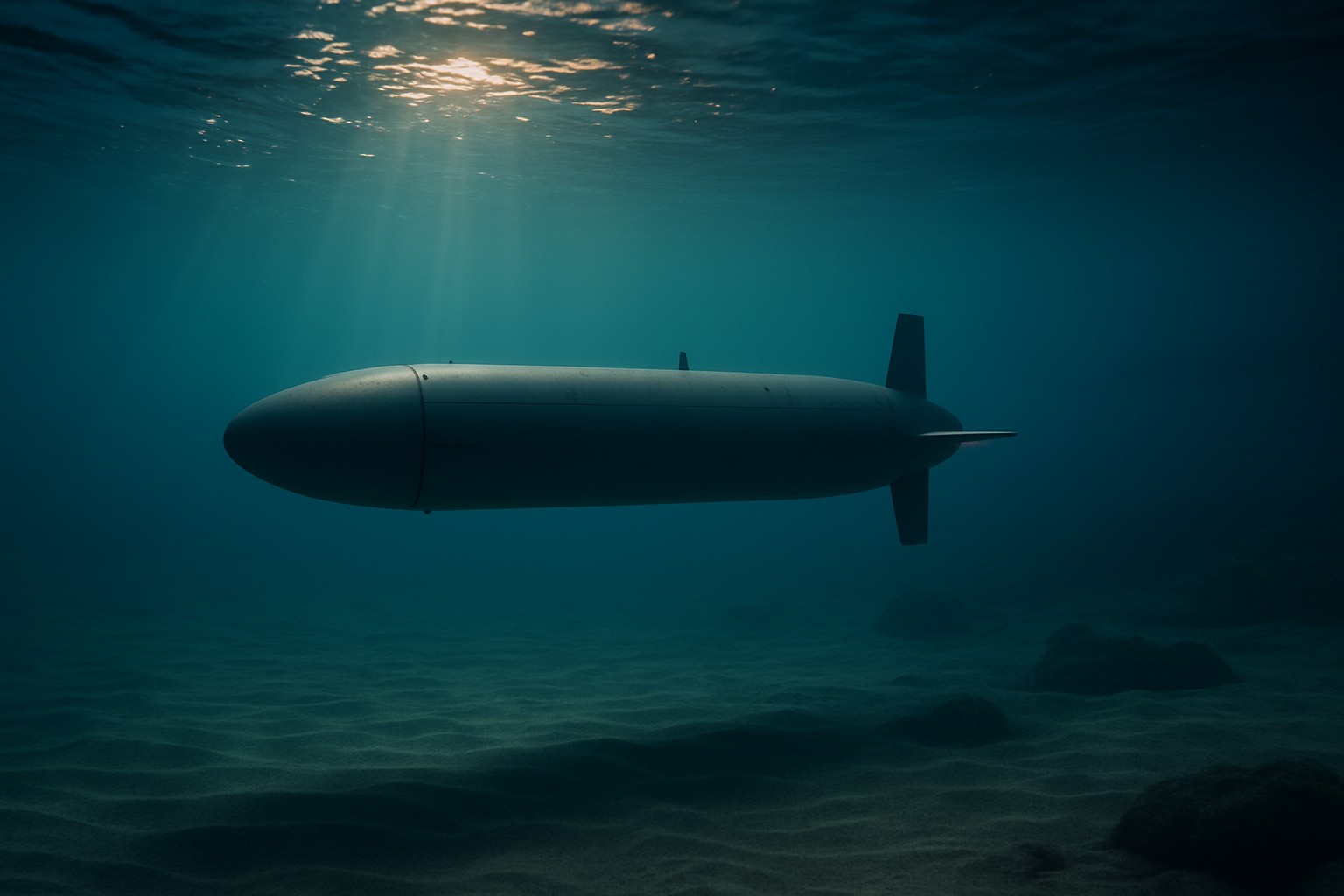
Australia has signed a five-year, $1.1 billion contract with Anduril Australia to deliver a fleet of Ghost Shark autonomous undersea vehicles, marking one of the largest single investments in naval drones to date. Defence Minister Richard Marles said the programme would deliver “a more capable and more lethal navy” by expanding strike and surveillance options beyond conventional submarines and surface ships.
The Ghost Sharks will operate at very long range without surfacing, conducting intelligence, reconnaissance, and strike missions in waters stretching across Australia’s vast northern approaches. Production will take place at Anduril’s facility in New South Wales, where the contract will support around 120 existing roles and create a further 150 high-technology jobs. The fleet size remains classified, though officials have suggested it will number in the dozens.
Deployment is scheduled from early 2026, years ahead of the nuclear-powered submarines Australia expects to receive through the AUKUS programme in the 2030s. Officials have been explicit that the drones are intended to fill a capability gap — extending reach and deterrence while traditional assets remain limited.
The Ghost Shark contract covers delivery, maintenance, and ongoing development, ensuring iterative upgrades as the technology matures. The vehicles are designed to provide persistent undersea presence across a maritime domain of almost three million square kilometres, a region impossible to cover adequately with crewed assets alone.
The timing underscores a broader pivot toward autonomous naval warfare, where cost efficiency and rapid deployment are increasingly prioritised. Regional tensions — particularly Chinese naval activity — have heightened pressure on Australia to bolster deterrence in contested waters. Ghost Shark’s stealth profile offers a tactical advantage in undersea operations, countering advances in anti-submarine detection.
While the AUKUS programme remains the centrepiece of Australia’s long-term deterrent posture, the Ghost Shark initiative is a pragmatic stopgap. By 2026, the navy will field autonomous systems capable of scaling up operations without the manpower demands of crewed submarines. In doing so, Australia has made a sharp, technically decisive bet on unmanned force multipliers — a move that recognises the unforgiving arithmetic of time, capability, and geography.