Alfa Laval is expanding its augmented reality-enabled remote support offer for vessels, aiming to give crews faster access to shore-based technical expertise as engine-room systems become more connected and more complex. The company says improving onboard connectivity is now making it practical to move from occasional remote assistance to a more scalable service model covering troubleshooting, training, compliance, and performance support.
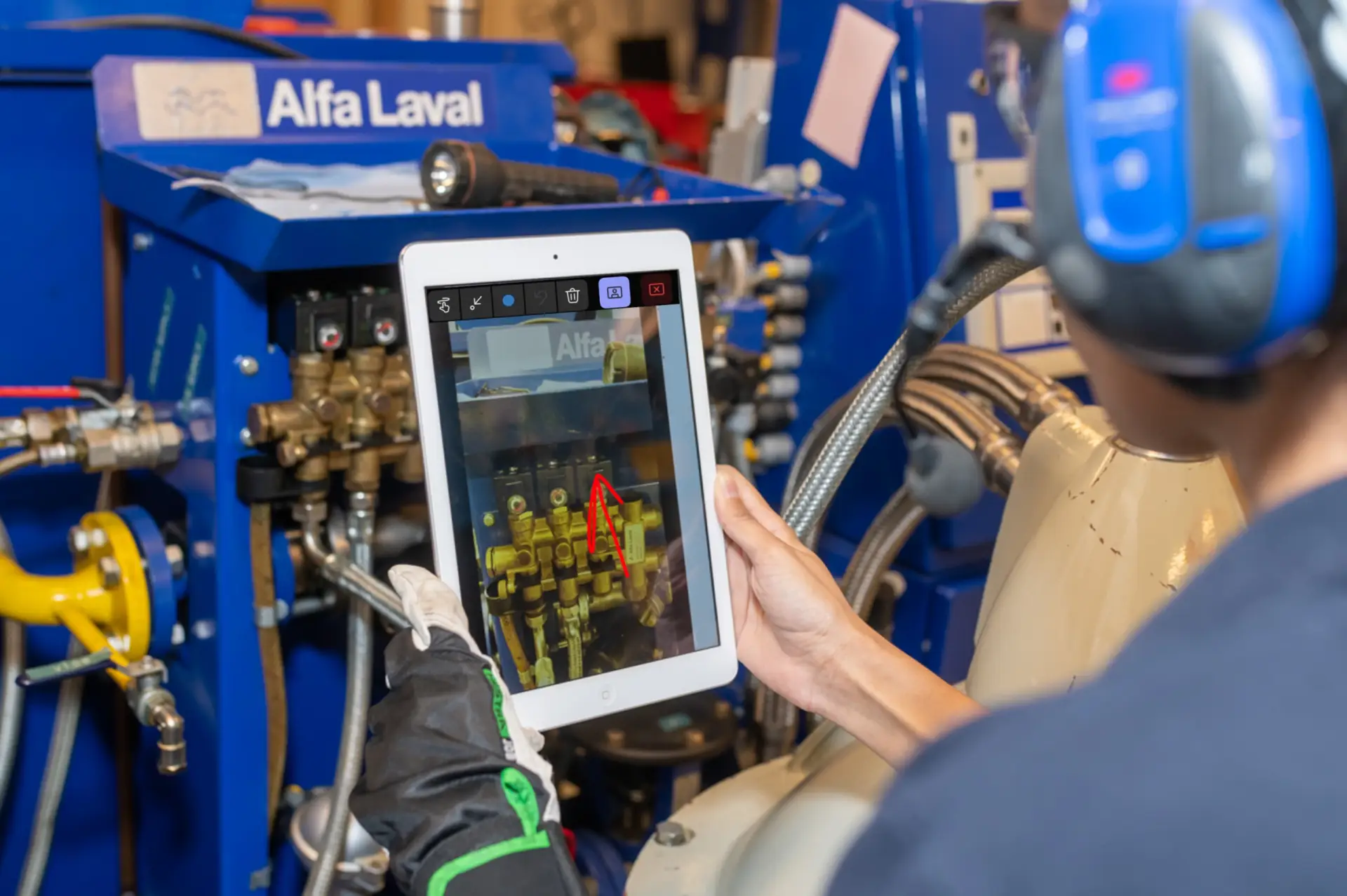
The immediate use case is straightforward enough: remote experts can see what the crew sees and guide work in real time when faults or operating issues arise. Alfa Laval says that approach has already been used onboard for boiler emergency operation, separator discharge, freshwater generator assessment, and troubleshooting of methanol fuel supply systems. In practice, that means less waiting for specialist attendance, fewer travel-intensive interventions, and a shorter path from diagnosis to corrective action.
Jesper Boman, vice president and head of Vessel Operations at Alfa Laval, said the combination of new onboard technologies and rapid improvements in remote communication tools makes this “the ideal time to integrate remote connectivity into real-time support services”. The company’s trials with Maersk, Anglo-Eastern, and Everllence PrimeServ also suggest the infrastructure hurdle is lower than it once was. Alfa Laval says only minor hardware investment was needed to connect key equipment in machinery spaces and validate remote troubleshooting, crew guidance, training, and product evaluation.
The next step is more significant than the first. Alfa Laval is looking to extend the same remote support model beyond fault response and into ongoing compliance and performance monitoring, starting with a forthcoming Compliance Monitoring Package for PureBallast. That carries particular weight in a market where ballast water systems, fuel treatment, and emissions-related equipment sit under increasingly tight operational and regulatory scrutiny, and where crews are being asked to manage new fuel systems and efficiency technologies without necessarily carrying every specialist onboard.
As deep-sea connectivity improves, the commercial logic of connected machinery spaces is becoming harder to ignore. The question is no longer whether remote support can work at sea, but how quickly ship operators will fold it into routine technical operations. More details are available through Alfa Laval’s 24/7 service and support platform.