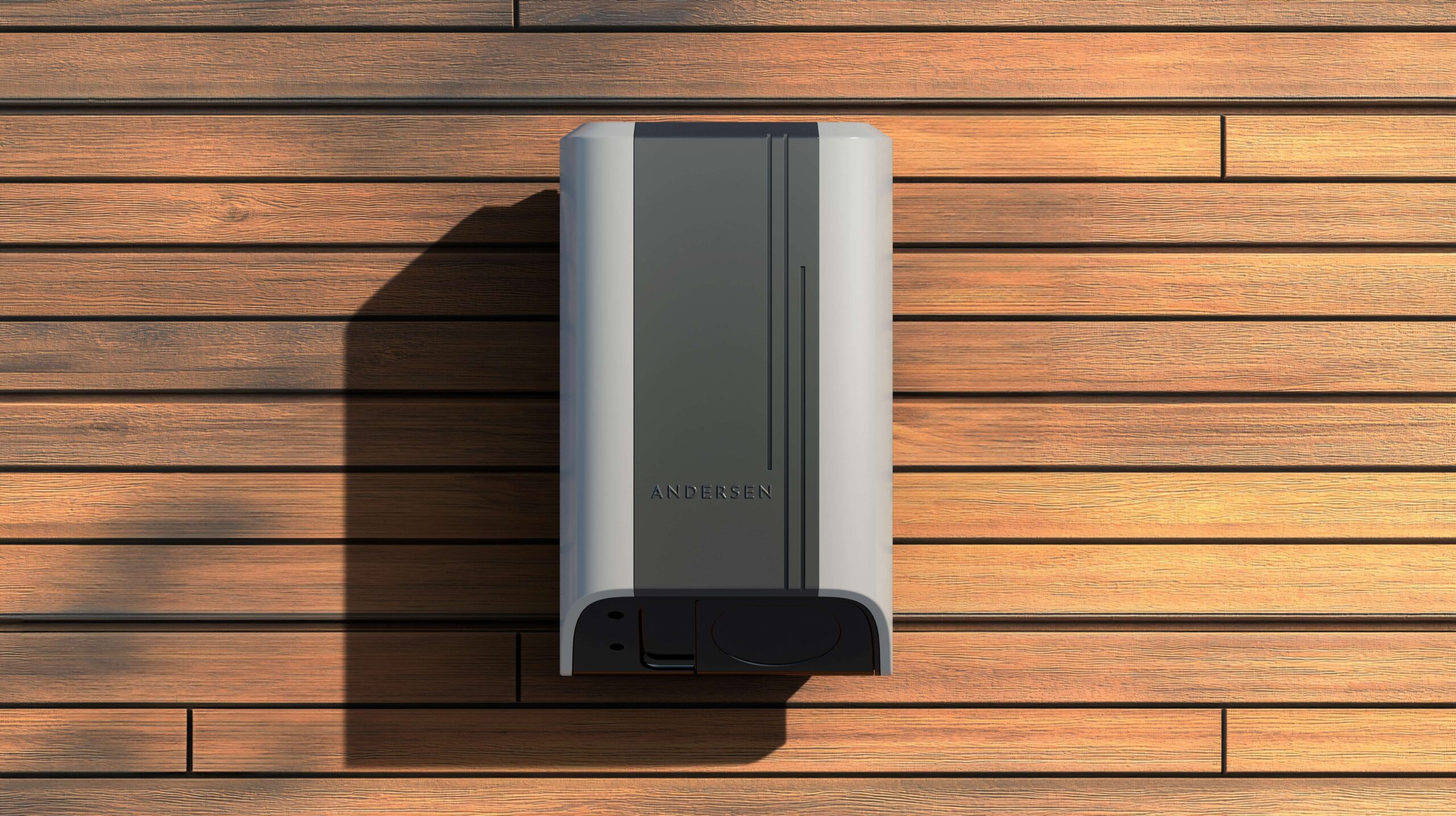
British electric vehicle charger manufacturer Andersen EV has expanded its production operations in Stewartby, Bedfordshire, after third-quarter sales volumes more than doubled year on year, adding manufacturing space and investing in new technology to improve order fulfilment across its configurable home charging ranges.
The business has taken an additional unit alongside its existing manufacturing facility. It has also introduced artificial intelligence (AI) into its production operations, although it has not disclosed the specific applications, equipment or financial value of the investment.
The additional capacity has enabled Andersen to offer same-day dispatch across its A2, A3 and Quartz product ranges when orders are placed before 11am on working days. The offer covers products in the customer’s chosen specification and finish, rather than being limited to a small selection of preconfigured units.
Andersen offers more than 200 combinations of colours and finishes, including metal and wooden fascias. Its product configurations also encompass different charging capacities and cable arrangements, adding to the range of physical components that must be managed within the manufacturing operation.
David Martell, CEO of Andersen EV, said: “Being able to offer same-day dispatch across our product range is a significant improvement for our customers and demonstrates what can be achieved by combining British manufacturing, investment and innovation.”
Supporting this range within a short dispatch window requires production and inventory management processes capable of accommodating individual specifications. Manufacturers can hold common electrical assemblies and configuration-specific components separately, completing final assembly or finishing after an order has been received. This approach can reduce the quantity of finished stock required to provide a wide range of choices, provided the necessary components are available and the remaining assembly and testing operations can be completed within the fulfilment period.
Andersen’s A2 and A3 chargers incorporate storage for their tethered charging cables, integrating electrical equipment with mechanical enclosure and cable management features. Its Quartz range uses a different enclosure arrangement. Available models include units intended for 7kW single-phase and 22kW three-phase installations, subject to the electrical supply and vehicle charging capabilities.
These variants have requirements that go beyond cosmetic differentiation. Domestic charging equipment communicates with the vehicle and controls the supply of alternating current to its onboard charger. Its enclosure, electrical connections and protection systems must accommodate the specified operating current and environmental conditions. Charging capacity cannot be increased simply by changing the external appearance of an existing unit.
Some of Andersen’s products also support charging from surplus solar generation, through control functions that adjust charging demand in response to the electricity available at the property. Such functions add software and electrical integration requirements alongside the physical manufacturing processes.
Testing and configuration control are consequently important in the production of charging equipment. Where several variants share components, manufacturers must maintain records of the correct assemblies and settings for each specification. A shorter fulfilment window must still accommodate the checks required to ensure the completed product corresponds to the customer’s order and the applicable product requirements.
The manufacturing expansion comes as registrations of battery electric vehicles (BEVs) continue increasing in Britain. According to the Society of Motor Manufacturers and Traders, 48,858 new BEVs were registered in October, up 32.7% on the same month in 2025. Their share of new registrations reached 32%, compared with 26.6% across the first ten months of 2026.
Andersen’s distribution arrangements include partnerships with automotive manufacturers Porsche, Jaguar Land Rover, Renault, Alpine and Geely. It has also begun supplying products through the John Lewis & Partners website and has collaborated with English Heritage to develop additional finishes.
These channels connect equipment purchasing with different stages of the vehicle acquisition process. Customer orders can arrive directly or through commercial partners, while installations depend on the suitability of the property’s electrical supply and the availability of an installer. Faster dispatch can remove one source of delay, although the timescale for installation remains separate from the manufacturing company’s fulfilment commitment.
With more than half a million new battery electric cars registered in Britain during the first ten months of 2026, charging equipment manufacturers are operating in a growing market that also encompasses an expanding installed base. Andersen’s additional production space is intended to accommodate that demand while retaining the ability to supply individually configured products. Increasing output at Stewartby while retaining the short dispatch window will require the flow of configuration-specific parts to remain aligned with assembly capacity and order volumes.