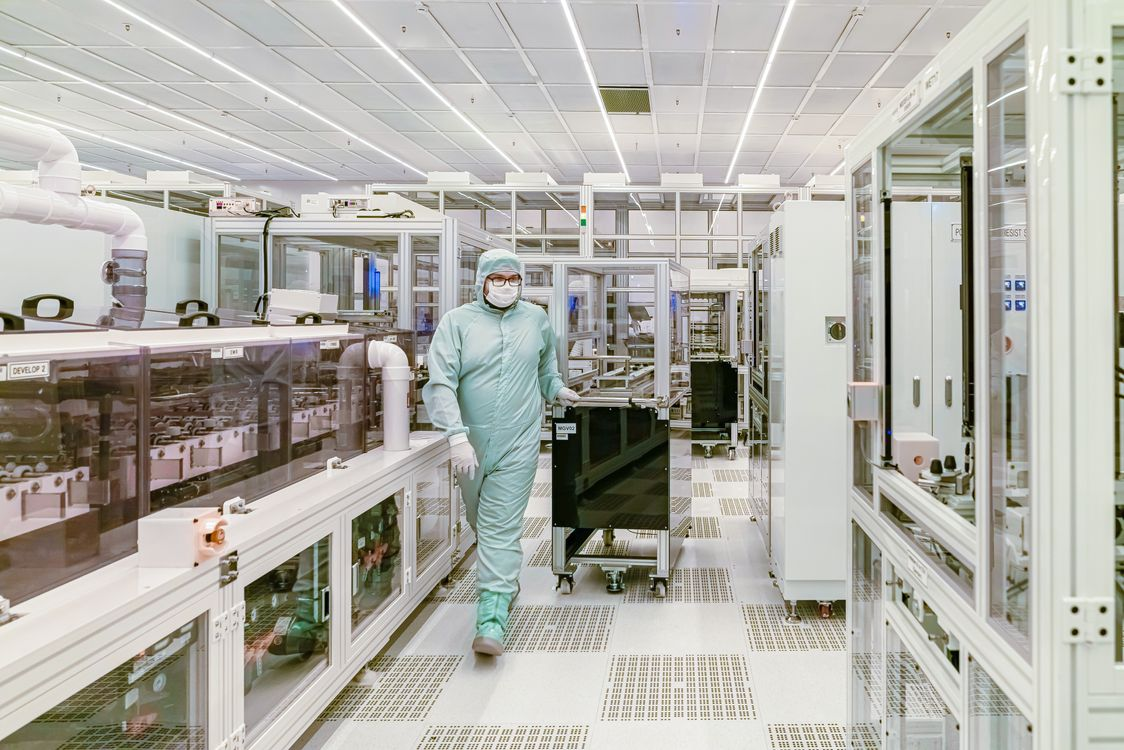
Scottish semiconductor developer Neuranics is advancing a £13.1m magnetic sensor manufacturing project in Glasgow following approval of its full business case, establishing domestic fabrication capabilities for a technology with applications in industrial sensing, human-machine interfaces and medical devices.
The project is the first within the £190m Glasgow City Region Investment Zone to move into delivery. Neuranics is working with the University of Glasgow’s James Watt Nanofabrication Centre and Kelvin Nanotechnology, which will operate the facility.
The Investment Zone will contribute £5.2m, with Scottish Enterprise providing support towards equipment costs. The balance of the project value will come from the delivery partners. UK government minister Jim McMahon said the development would create more than 100 skilled jobs.
The investment will fund the installation of an ion beam etching system at the nanofabrication centre, allowing Neuranics to manufacture tunnelling magnetoresistance (TMR) sensors in the UK. Other companies and researchers will also be able to access the equipment for semiconductor fabrication.
TMR sensors exploit changes in electrical resistance within a magnetic tunnel junction. Two magnetic layers are separated by a thin insulating barrier, through which electrons can tunnel. Their relative magnetic orientations influence the resistance of the junction, allowing an external magnetic field to be detected as an electrical signal.
Neuranics is developing these sensors to measure extremely weak magnetic fields, including signals generated by human muscle activity. Such measurements could support wearable devices and interfaces that translate movements into inputs for electronic systems without relying exclusively on optical or mechanical sensing.
Fabricating magnetic tunnel junctions requires the deposition and patterning of several thin material layers. Individual layers must retain their magnetic and electrical characteristics while the sensing elements are formed, as variation in their dimensions or interfaces can affect the performance of the device. Magnetic materials can also present etching challenges distinct from those encountered when processing conventional silicon structures.
Ion beam etching removes material through bombardment with energetic ions. This physical removal mechanism can be used to pattern combinations of materials that are difficult to etch selectively using chemical reactions. Controlling the geometry of the etched structure and limiting damage or redeposition of removed material are important aspects of developing a repeatable fabrication process.
Access to the new equipment will bring a greater proportion of the manufacturing sequence within the Glasgow cluster. Rather than sending wafers elsewhere for a specialist processing stage, engineers can develop and refine fabrication methods in closer proximity to the researchers and companies responsible for device design. The project is intended to support an end-to-end domestic magnetic sensor fabrication and assembly capability.
Neuranics was formed in 2021 as a joint spinout from the universities of Glasgow and Edinburgh. In 2025 it raised $8m in seed funding to support commercial adoption of its TMR technology and international expansion. The manufacturing investment addresses a separate requirement: establishing the industrial infrastructure through which its designs can be fabricated.
The UK semiconductor sector includes businesses at different points in the manufacturing value chain. The government’s 2026 sector study identified 295 dedicated semiconductor companies and 408 diversified companies with semiconductor activities. Dedicated businesses generated an estimated £10.6bn of revenue in 2025, and 92% were classified as SMEs.
That distribution creates a case for shared manufacturing infrastructure. A specialist equipment purchase can be difficult to justify against the early production volumes of an individual semiconductor business, even when the technology being developed has substantial commercial potential. Sharing a fabrication tool across research and industrial projects can increase its utilisation and distribute the costs of technical support.
Access to equipment does not remove the need to develop individual device processes. Before a sensor moves into commercial production, its fabrication sequence must achieve consistent electrical performance and yield, with suitable methods for testing, packaging and integrating the device. These requirements vary with the intended application, from wearable sensing to industrial measurement.
The Glasgow Investment Zone also includes complementary initiatives supporting semiconductor packaging and photonics. The Neuranics-led project adds a specialised magnetic sensor fabrication process to that regional infrastructure, complementing existing university and commercial research capabilities. Its progression into delivery will enable the partners to establish domestic production capability while opening access to a processing technology that other British semiconductor companies may be able to incorporate into their own devices.