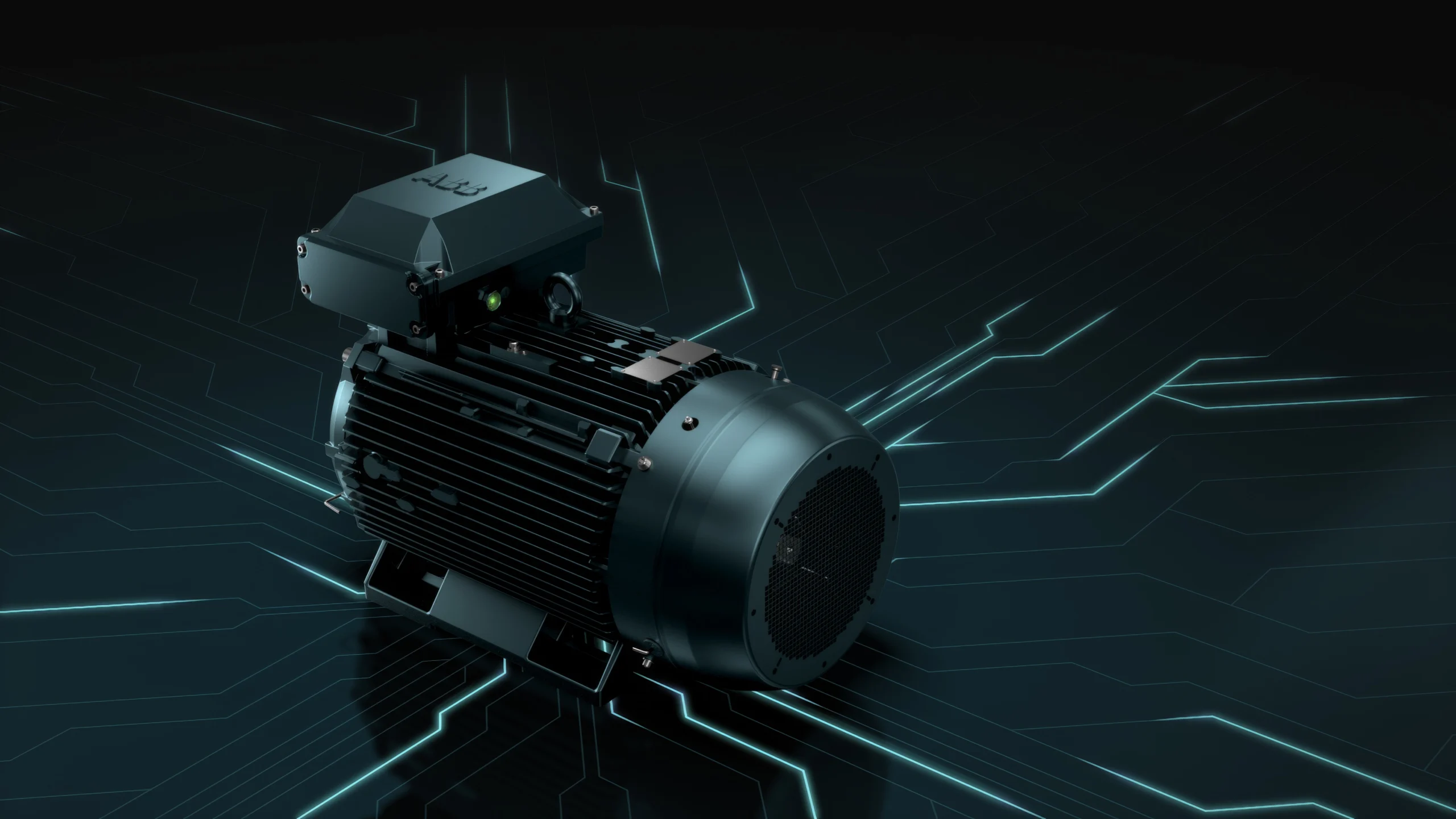
ABB has introduced Intelleqt, a low-voltage industrial motor with sensing, edge computing, and connectivity incorporated during manufacture, providing operational information from its first rotation without the need to retrofit the embedded monitoring hardware.
Launched at the SPS industrial automation exhibition in Nuremberg on 24 November, the motor is designed to increase the availability of equipment-level data for condition monitoring, maintenance, and industrial AI. ABB will initially work with original equipment manufacturers and end users to establish application-specific configurations, ahead of a broader rollout planned for 2027.
The motor’s open architecture is intended to allow customers to connect its data to existing digital platforms while maintaining ownership of that information. ABB estimates that more than 300 million motor-driven systems operate worldwide and account for 60% of industrial electricity demand, yet many remain unconnected to digital monitoring systems.
“The shift towards AI-driven operations is accelerating, yet most of the motors powering global industry do not generate data and remain invisible to the intelligence being built around them,” said Stefan Floeck, president of ABB’s IEC Low Voltage Motors division. The company describes Intelleqt as the first low-voltage motor with intelligence integrated at the factory.
Conventional condition monitoring may involve mounting vibration or temperature sensors on installed machinery and configuring them to collect measurements during operation. Engineers can use changes in these measurements to investigate potential bearing deterioration, imbalance, misalignment, or other abnormal conditions within a motor or the equipment it drives.
Measurement quality depends on the location of the sensor, the characteristics of the asset, and the frequency at which information is collected. Adding external monitoring equipment can also require installation work, power or communications arrangements, and configuration of the software used to interpret the measurements.
Integrating sensing during manufacture allows the measurement system to be developed alongside the motor’s mechanical and electrical design. It also establishes a source of information before the equipment has accumulated operating hours, allowing its initial behaviour to provide a reference for subsequent monitoring.
Edge computing enables measurements to be processed closer to their source. Instead of transferring every individual reading to a remote computing system, local processing can extract information about operating characteristics or changes in equipment behaviour. This can reduce the volume of information that needs to travel across industrial communications networks.
The usefulness of that information depends on how measurements are interpreted. A motor driving a pump, fan, or conveyor may exhibit changes in its operating behaviour because the process conditions or connected equipment have changed rather than because the motor itself is deteriorating. Distinguishing between those causes requires information about the load and operating environment.
ABB’s open architecture is intended to support the combination of motor data with existing industrial software. That could allow monitoring information to be considered alongside production schedules, process measurements, and maintenance records rather than being examined independently of the equipment’s function within the plant.
Digital twins provide one application for this information. Maintaining a virtual representation of a physical asset requires measurements that reflect its actual condition and behaviour. A model developed solely from nominal equipment characteristics may not capture the effects of changing loads, wear, or differences between installations.
Connecting motor information to such models could support engineering decisions concerning the operation of individual assets and their associated machinery. The benefit will depend on the quality of the model, the measurements available from the motor, and how effectively they can be combined with other operational information.
ABB says early fault detection can reduce unplanned downtime by up to 50%, while equipment-level analysis can identify energy saving opportunities of 30% or more. These figures describe potential outcomes from monitoring and optimisation, rather than guaranteed savings associated with the motor itself. Energy reductions depend on the efficiency of the driven system, its operating profile, and the corrective measures implemented in response to the data.
Scaling industrial AI beyond pilot projects requires dependable, accessible information from physical assets across the installation. Integrated monitoring can provide part of that data infrastructure, while installation-specific requirements still govern how individual motors are connected to plant systems.
ABB invested $1.3 billion in research and development during 2025 and plans to allocate between 4.5% and 5% of group revenues to R&D. Its current development programme for Intelleqt will concentrate on working with customers to establish operating and integration requirements, with the broader commercial rollout expected to focus initially on Europe, Japan, China, and India in 2027.