SSE expects to begin rewatering its Atwick underground gas storage facility in East Yorkshire during summer 2027 unless changes to commercial or policy arrangements allow continued operation.
The energy company has warned that unfavourable seasonal gas prices are undermining the economics of storage, despite the role that existing underground facilities can play in maintaining supply flexibility.
In its interim results published on 18 November 2026, SSE said that current market arrangements do not adequately support the continued operation of strategically important gas storage assets.
The company is continuing discussions with the UK Government about possible intervention. Without a change in circumstances, it expects to progress towards a multiyear programme of rewatering and subsequent decommissioning, progressively removing storage capacity from the market.
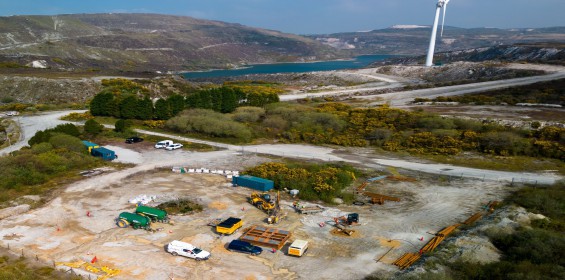
Atwick is located near Hornsea on the East Yorkshire coast and comprises eight underground salt caverns with a stated storage capacity of approximately 309 million cubic metres of natural gas.
The site entered commercial operation in 1979 and has been owned by SSE since September 2002. It forms part of the company’s gas storage business alongside the Aldbrough facility, operated through a joint venture with Equinor.
Atwick’s commercial operation relies substantially on the difference between gas prices during periods when gas is injected into storage and those when it is withdrawn.
Seasonal storage can generate revenue when operators acquire or retain gas at one price and release it when the market value is higher, provided the difference is sufficient to cover the costs and risks involved.
These costs include operating and maintaining compressors, wells, pipelines and other infrastructure, alongside the energy required to move gas into and out of the caverns.
The commercial opportunity depends on forward prices, storage availability and the arrangements under which the gas is held and traded.
A positive seasonal price difference does not automatically guarantee profitability because the operator must still account for the costs associated with injection, withdrawal and maintaining the facility.
Conversely, an unfavourable price difference can reduce the incentive to store gas even where the physical equipment remains capable of operating.
SSE’s management has identified the weakness of seasonal spreads as the principal issue at Atwick.
During the company’s results discussions, management indicated that summer 2027 gas prices were higher than the corresponding winter prices in the market being considered.
That relationship undermines the conventional commercial case for buying or injecting gas during summer and withdrawing it during winter at a higher price.
The market position can change, but SSE says current conditions do not provide a dependable basis for sustaining the site’s operation.
Underground storage provides a physical service distinct from the trading arrangements used to recover its costs.
Salt caverns are formed within suitable underground geological structures and connected to the surface through wells and associated equipment.
Gas is stored under controlled pressure, with operating limits determined by the facility’s engineering design and the conditions of the underground structure.
Injection generally requires equipment capable of moving gas into the storage system at the appropriate pressure. Withdrawal involves returning gas to the connected network under controlled operating conditions.
The facilities must be monitored and maintained to preserve the integrity of the wells, underground storage system and surface infrastructure.
Their performance is determined by more than total storage volume. The rate at which gas can be injected or withdrawn influences the flexibility available to the wider energy system.
A facility with substantial capacity may provide seasonal supply support, while equipment with different operating characteristics may be better suited to shorter changes in demand or market conditions.
Atwick’s stated capacity therefore describes one aspect of its physical contribution, not the quantity of gas that could necessarily be released during a particular day or emergency.
Gas storage interacts with other sources of supply, including domestic production, pipeline imports and liquefied natural gas terminals.
These sources have different lead times, operating constraints and commercial characteristics. Storage can provide gas already held within the system, reducing the immediate need to obtain additional supply when conditions change.
The value of that flexibility may become more apparent during periods of disruption or unexpectedly high demand than under normal seasonal market conditions.
SSE argues that the current commercial framework does not adequately recognise the strategic contribution of storage capacity as domestic gas production declines.
The company has not announced a specific government agreement, financial support mechanism or regulatory change that would allow Atwick to remain open.
Its present plan is therefore to prepare for the physical processes involved in withdrawing the facility from service.
Rewatering involves introducing water into storage caverns as part of a controlled decommissioning procedure, displacing the gas previously held within them.
The engineering work must account for the condition of the wells, the underground structure and the equipment used to manage the process.
Removing a cavern from gas storage service is different from simply suspending commercial injection and withdrawal. The physical changes associated with decommissioning can make a return to conventional operation more difficult.
The process must also address the safe management of gas, pressure and the infrastructure connecting the cavern to surface facilities.
SSE has not published a detailed rewatering schedule for each Atwick cavern or a final date for completing the site’s decommissioning.
The company describes a multiyear process, with capacity progressively withdrawn rather than necessarily removed in a single operation during summer 2027.
Its latest position does not establish that all the site’s storage capacity will remain commercially available until the process begins, nor that every cavern will enter decommissioning at the same time.
Aldbrough remains a separate operation with different commercial and ownership arrangements.
SSE Thermal owns and operates Atwick, while Aldbrough is operated through a joint venture in which SSE holds a majority interest and Equinor is the other partner.
The company has not stated that Aldbrough will begin the same rewatering programme on Atwick’s proposed timetable.
Differences between the facilities, their operating characteristics and commercial arrangements must therefore be considered when assessing their respective futures.
The issue also sits within a changing UK energy system. Gas demand, domestic production, imported supply and the growing contribution of renewable electricity generation can influence the periods in which flexible gas infrastructure is used.
Those developments do not remove the physical requirements of gas storage, but they affect the conditions under which operators can recover the costs of maintaining it.
A decision to decommission Atwick would remove established industrial infrastructure whose replacement could require significant engineering investment and development time.
SSE has not disclosed an equivalent replacement storage project that would restore Atwick’s existing natural gas capacity.
Government discussions remain the principal potential route to changing the current outlook.
Unless a commercially workable arrangement is established, the company expects rewatering to begin in summer 2027, marking the start of the progressive withdrawal of an underground gas storage facility that has operated for more than four decades.