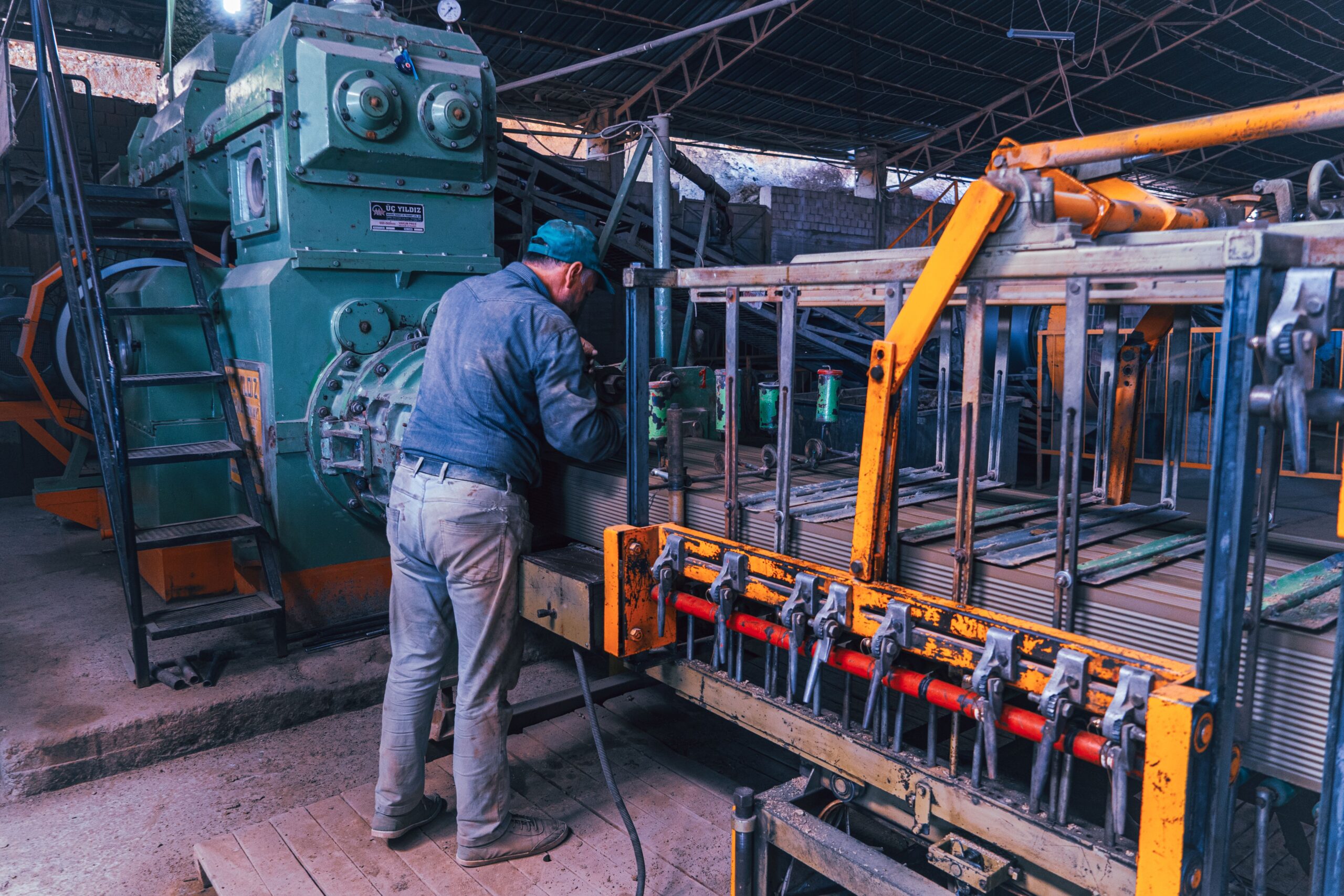
Nefab has opened a 2,500m² manufacturing and warehousing facility in Northampton, adding domestic production capacity for industrial packaging used to transport machinery, components and sensitive equipment.
The facility was formally inaugurated on 17 November 2026, following the commencement of manufacturing in early August. Production has increased progressively since then, with Nefab expanding an operation that previously concentrated on office, warehouse and distribution activities.
The investment allows the company’s UK business to manufacture selected packaging products locally rather than relying entirely on supplies from other facilities and external production partners.
Its equipment produces corrugated packaging for small and medium-sized goods, plywood packaging and wooden crates for larger industrial equipment, and protective cushioning designed around the requirements of individual products.
These categories address different mechanical and logistical demands. Corrugated packaging provides relatively lightweight containment and protection, while plywood structures and wooden crates can accommodate heavier loads requiring more substantial support during handling and transport.
Protective cushioning serves a separate function by controlling the movement of goods within their outer packaging and managing the forces transmitted to components during distribution.
The appropriate construction depends on the product’s mass, geometry, fragility and expected handling conditions. A dense mechanical assembly and a sensitive electronic instrument may require quite different arrangements, even where their external dimensions are similar.
Nefab supplies packaging for sectors including electric mobility, lithium-ion batteries, medical technology, energy, data communications, cloud infrastructure and defence. Its new Northampton capacity is intended to serve customers across these applications.
The company’s managing director for the UK, Julian Freeman, identified increased production capacity, shorter delivery times and improved service among the objectives of the investment.
These are expected operational benefits rather than independently measured results from the completed facility. Nefab has not disclosed its annual packaging output, investment cost or the reduction in lead times achieved since manufacturing began.
The distinction between production capacity and warehouse space is relevant to the facility’s operation. A warehouse can accommodate finished goods and incoming materials, but the quantity of packaging produced depends on equipment, labour, material supply and the manufacturing processes installed.
Corrugated packaging begins with board manufactured from layers of paper-based material. The board can be converted into boxes, fittings and other structures by cutting, creasing, folding and joining it according to the required design.
Dimensions and construction influence how the packaging performs when subjected to stacking, compression and handling loads. The strength of the board alone does not determine how a completed package behaves, because openings, folds, joints and load distribution can affect its performance.
Larger equipment may require timber or plywood structures designed to support substantial concentrated loads. These can incorporate bases, restraints and handling features that allow forklifts or lifting equipment to move the packed product safely.
Loads must be transmitted through the packaging without allowing excessive movement or placing damaging forces on vulnerable parts of the equipment.
The arrangement also has to account for loading and unloading. A crate that adequately protects a component during transport may still prove unsuitable if its design prevents equipment from being lifted or removed safely at the destination.
Packaging engineers therefore consider the product and its handling sequence together, from preparation at the manufacturer’s premises through to installation or unpacking by the recipient.
Cushioning introduces another design consideration. Suitable materials can help manage shocks and vibration, although performance depends on the loading conditions and the amount of deformation available within the package.
Too little cushioning may transmit damaging forces, while an unsuitable arrangement can allow a product to move excessively or create unstable support.
A reliable design must also be compatible with the practical constraints of manufacturing the package. Complex internal supports may provide protection but require additional assembly operations, materials or preparation time.
Producing several packaging types at Northampton gives Nefab the opportunity to coordinate those activities within its UK operation. Structural containers and internal protection can be manufactured to suit the same customer requirements, provided the necessary materials and equipment are available.
Local production can also support adjustments when product designs change. A manufacturer introducing a revised assembly may need corresponding changes to crate dimensions, internal supports or the location of handling points.
The ability to manufacture those components closer to the customer may reduce some transport and coordination stages. It does not establish that every packaging type supplied to UK customers will now originate from Northampton.
Nefab’s wider European network continues to provide additional manufacturing and logistics capabilities. Sofia Axelsson, the company’s executive vice-president for Europe, the Middle East and Africa, has described the UK investment as a platform for serving domestic customers while supporting international business.
The combination of local and regional production is important where requirements extend beyond the capabilities installed at one facility.
Some industrial shipments involve specialised environmental protection, testing or materials that may be provided elsewhere within the wider group. The Northampton opening does not establish that every such service has been installed at the site.
Its location also places the operation within reach of manufacturing businesses across the Midlands, including companies producing vehicle components, engineering assemblies and other equipment requiring protective transport packaging.
The value of that proximity will depend on the types of orders received, delivery routes and the manufacturing capacity available when customers require their packaging.
Nefab has not announced a site-specific employment figure or the number of production machines installed. Manufacturing was already underway when the formal opening took place, however, distinguishing the development from a factory proposal or construction programme.
The Northampton investment gives the company a UK production base for corrugated, plywood and protective packaging alongside its established warehousing activities, with further output growth dependent on customer orders and the site’s operating capacity.