Export Finance Norway (Eksfin) is providing guarantees of up to $183 million to support the financing of two specialist cable-laying vessels being built by Norwegian shipbuilder Ulstein for Malaysia-based OMS Group.
The vessels, CS Resilience and CS Alliance, will install and maintain subsea fibre-optic telecommunications cables, expanding OMS Group's capacity to support international communications infrastructure.
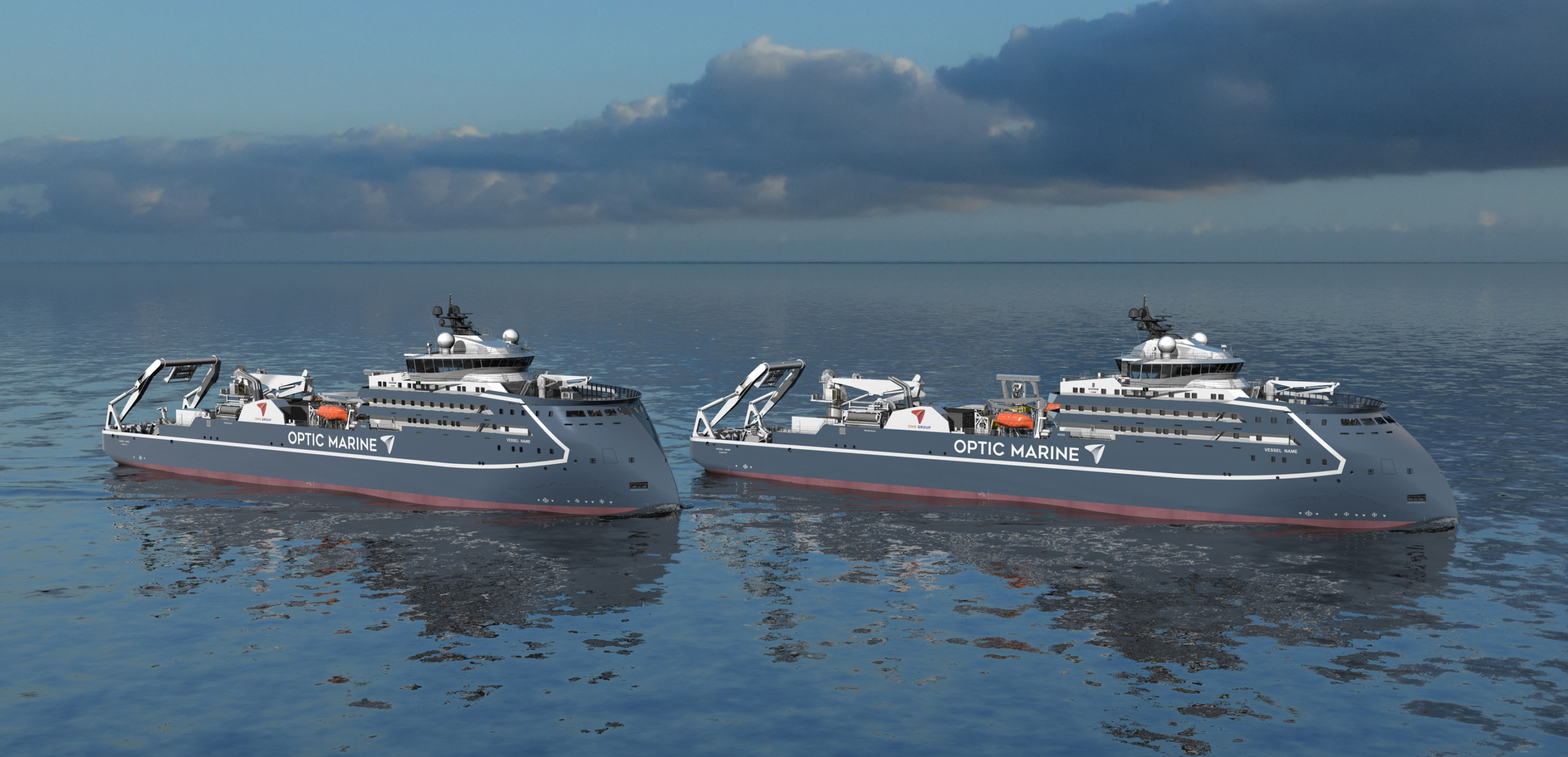
Designed by Ulstein Design & Solutions, both ships are scheduled for delivery from Ulstein Verft in Norway during 2028. Each will be 130 metres long and capable of carrying up to 6,500 tonnes of fibre-optic cable.
Eksfin's guarantee arrangement supports the transaction during construction and provides backing for OMS Group's long-term bank financing. The agreement forms part of a four-vessel newbuilding programme for which financing has now been secured.
The remaining two ships will be constructed at a Dutch-owned yard in Vietnam, with financing supported by Atradius Dutch State Business. The arrangements involve two export credit agencies supporting different construction contracts within the wider fleet development.
Commercial banks will provide the loans under the export credit agency-backed facilities. Standard Chartered and HSBC acted as joint global coordinators, bookrunners and export credit agency coordinators for the transaction.
The $183 million figure represents the maximum value of the guarantees being provided by Eksfin. It is not a disclosed purchase price for the two vessels or the total construction cost of the four-ship programme.
The original contracts for the Ulstein vessels were signed in December 2025, with their design and construction programme progressing during 2026. The newly confirmed financial arrangements support the execution of contracts already under way rather than representing a fresh shipbuilding order.
Ulstein's scope covers vessel design, construction management and final delivery, with hull fabrication taking place at the CRIST shipyard in Poland.
Construction of CS Resilience began with steel cutting in July 2026. The keel-laying milestone followed in September, marking progress in the assembly of the hull structure.
Once the hulls are sufficiently advanced, they will be transferred to Ulstein Verft in Norway for outfitting, systems integration, commissioning and completion.
Dividing the work between the Polish and Norwegian yards requires coordination of structural fabrication, material supply and equipment installation. Hull construction must establish the spaces, foundations and interfaces needed for the machinery and specialist systems installed during the later stages.
Ulstein is using its SX252 design for both vessels. The arrangement has been developed specifically for subsea fibre-optic cable installation and repair, incorporating substantial cable storage, handling equipment and facilities for underwater intervention.
Submarine telecommunications cables carry large volumes of international data traffic between coastal landing stations. Installation requires a vessel capable of transporting long cable sections and controlling their movement as they are placed along a planned route.
During deployment, cable passes from onboard storage through handling machinery before entering the sea. The installation equipment must control movement and tension so that the cable remains within its permitted mechanical limits.
Excessive bending or tension can damage a telecommunications cable, potentially affecting its optical transmission performance or mechanical integrity. The allowable conditions depend on the construction of the cable and the requirements of the installation.
Cable design varies according to the intended operating environment. Sections installed in deeper water may have different protective arrangements from those used near shore, where fishing activity, anchors and other external hazards can influence the level of protection required.
The SX252 design incorporates two large cable tanks and two additional tanks for spare cable. These provide storage for installation work and material that may be required during repairs.
Storage arrangements must allow cable to be loaded and discharged while maintaining the handling conditions specified for the product. The size and organisation of the tanks influence how much cable can be carried and the sequence in which different sections are deployed.
The ships also feature a covered cable deck, providing a sheltered area for handling operations and associated equipment.
Above the hangar is an open deck intended to accommodate remotely operated underwater vehicles and containers used during subsea work.
Remotely operated vehicles can assist with inspecting the seabed, monitoring cable placement and examining areas where repair or intervention is required. Their capabilities depend on the installed sensors, operating depth and equipment fitted for the particular task.
Each vessel will incorporate a 50-tonne A-frame and towing winch designed to support subsea ploughing equipment.
Cable burial is used where a route requires protection from external hazards. A subsea plough can create a trench and position the cable beneath the seabed, although the suitability of the method depends on soil conditions, route characteristics and the equipment selected.
The vessel must provide the towing capability required by the plough while maintaining its intended course and controlling the interaction between the installation equipment and the cable.
Some cable routes may require different burial techniques or sections where the cable remains exposed. The final installation method is determined through route engineering and assessment of the seabed and surrounding infrastructure.
Both ships incorporate Ulstein's X-BOW hull configuration, which is designed to influence the vessel's movement through waves. Ulstein identifies reduced slamming and improved motion characteristics among the advantages of the arrangement.
Ship movement is relevant during cable laying because changes in vessel position and motion can affect the forces experienced by cable and handling machinery.
Actual operating limits depend on sea conditions, vessel positioning, installed equipment and the requirements of the cable being handled. The hull design contributes to the operating characteristics but does not eliminate weather-related restrictions.
Each vessel will also feature a hybrid electrical power system combining battery technology with Ulstein's variable speed generator arrangements.
Variable speed generation allows the generating equipment to operate at speeds appropriate to the electrical demand, rather than relying exclusively on fixed-speed operation.
Battery equipment can provide additional flexibility by supplying or absorbing electrical energy under selected operating conditions. The resulting effect on fuel consumption depends on the vessel's load profile and how its generating and storage systems are controlled.
Ulstein Power & Control is providing integrated power, automation and energy management systems. These will coordinate electricity generation and distribution across propulsion, auxiliary equipment and the specialist systems used during cable installation.
Marine electrical requirements can vary substantially between transit and installation work. Propulsion demand, cable handling equipment, positioning systems and supporting machinery may place different loads on the power system during successive operations.
Energy management software can help coordinate the available generating and storage equipment, although the fuel savings achievable during service must be established through actual operating conditions.
The vessels will have a beam of approximately 22 metres and accommodation for up to 75 people. The onboard complement will vary according to the marine and subsea activities being undertaken.
OMS Group operates across subsea cable installation, maintenance, landing stations and related connectivity services. Its four-vessel programme is intended to increase the company's capacity to undertake international infrastructure projects.
Additional ships can support parallel installation and maintenance programmes, although the number of projects completed depends on route length, cable availability, installation conditions and the work required at each location.
The financing structure also reflects the requirements of specialised shipbuilding. Considerable expenditure can arise during design and construction before the finished vessel enters commercial service.
Export credit guarantees support arrangements between the shipbuilder, customer and commercial lenders, helping finance contracts whose engineering and construction work extends over several years.
The guarantees do not change the technical requirements or delivery obligations of the project. Ulstein remains responsible for completing the two vessels under the agreed construction programme.
CS Resilience and CS Alliance are scheduled for delivery in 2028, adding to OMS Group's planned four-vessel expansion. The confirmed financing arrangements allow the construction programme to progress towards outfitting, commissioning and eventual entry into service.