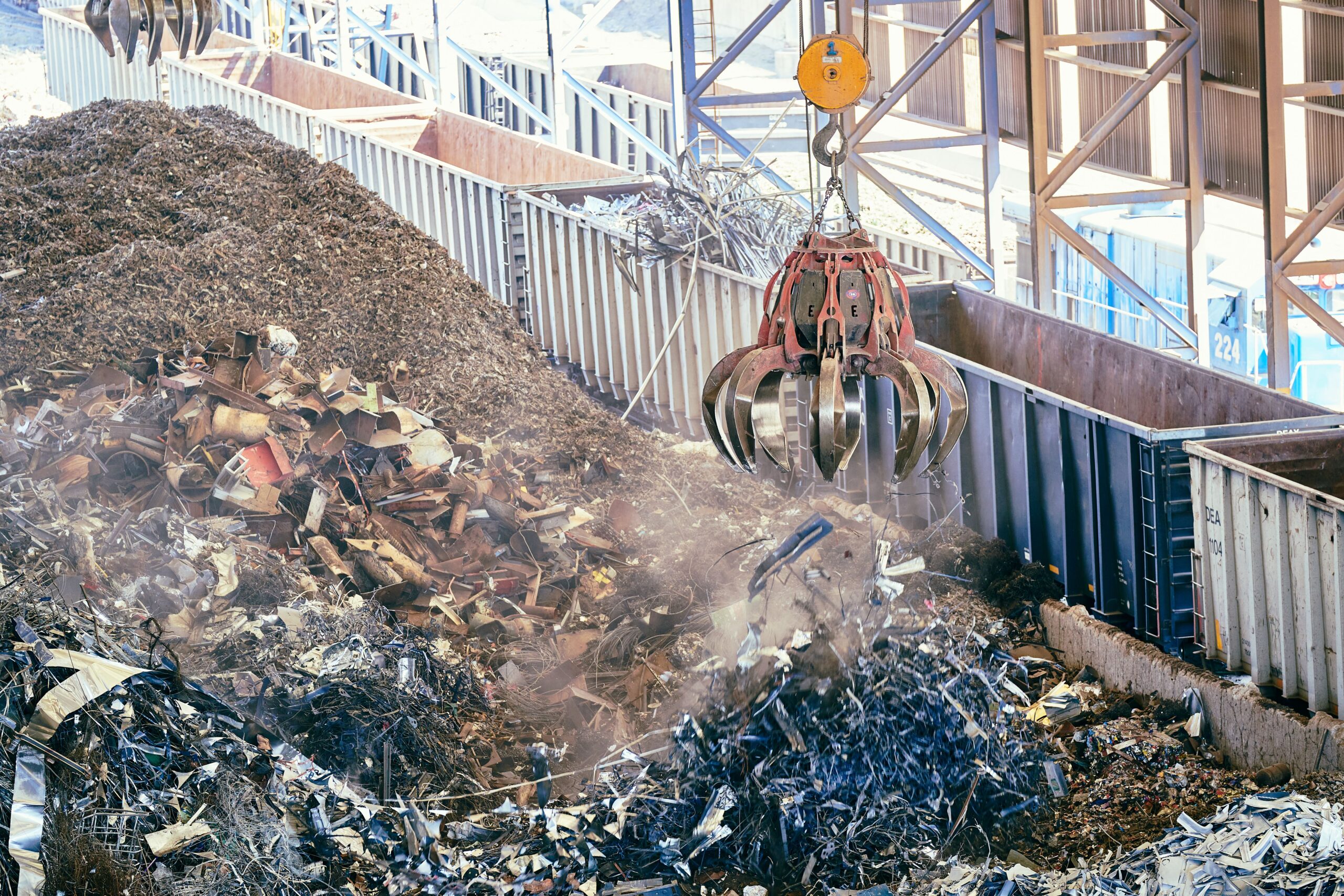
The Bureau of International Recycling has warned that restricting exports of recovered metals could undermine investment in European collection, separation and refining, particularly where domestic manufacturers cannot absorb the grades of scrap currently sold overseas.
The issue was examined at the organisation’s World Recycling Convention in Málaga on 26 October, when Frank Pothen, professor at the University of Applied Sciences in Jena, presented research into the potential effects of export barriers on recovered copper. The study was undertaken with colleagues at the Fraunhofer Institute for Germany’s Circular Metal Association.
The researchers identified four linked risks: fewer export outlets, lower prices for material retained in domestic markets, weaker incentives to collect and sort difficult scrap, and reduced working capital for investment. These are potential consequences of additional trade barriers, rather than measured effects of a newly enacted European export ban.
Copper demand provides the industrial context. Around a third of the raw material used in global copper production in 2024 came from recycled sources, according to the figures presented. Global demand is expected to reach 42 million tonnes by 2040, approximately 50% above the current level used in the analysis. Meeting that demand requires both primary production and functioning routes for secondary metal recovery.
Recoverable copper does not arrive at processing plants in a uniform condition. Manufacturing offcuts of a known composition can be suitable for direct melting, while material recovered from dismantled machinery, wiring, consumer products and mixed industrial waste may contain coatings, other metals and incompatible alloys. Each additional separation step consumes equipment capacity, labour, energy or chemicals before a usable feedstock can be sold.
A buyer’s technical specification determines whether a recovered material can be used directly. Copper destined for electrical applications may need tighter control of impurities than an alloy feedstock for another product. Sorting material by broad metal category alone cannot resolve those differences.
The availability of customers is consequently part of the processing calculation. Exporting a particular grade is commercially valuable when there is insufficient domestic demand for it, even if the region already has significant copper smelting and manufacturing capacity.
Brass is a prominent example. Pothen reported that brass represented 41.7% of the EU’s copper scrap exports in 2025, with China and India buying approximately 80% of the exported alloy. The figures concern that material stream, not all European recovered copper.
Brass contains copper and zinc. A refinery equipped to process high-purity copper scrap cannot necessarily substitute brass without additional separation or changes to its processes. Removing overseas outlets before creating suitable domestic capacity could therefore leave material accumulating in recycling yards rather than flowing into European factories.
Joan Campmajó, chief executive of Spanish recycler ACIN, described the difficulty of finding buyers for lower-quality recovered metals. His company has invested in machinery intended to separate zinc from copper, making more of the resulting material suitable for sale within the EU.
Such equipment has to earn a return. Capital costs, maintenance requirements, throughput and the price difference between the incoming scrap and the separated products determine whether additional treatment is commercially viable. A fall in selling prices can weaken the case for installing more equipment, despite a policy ambition to retain material locally.
The effect is not identical across the supply chain. A domestic smelter might benefit from lower input prices, while a collector or sorting business receiving less revenue might reduce purchases of difficult material. Without adequate collection and upgrading, a larger theoretical domestic scrap supply does not necessarily become a larger volume of manufacturing-grade feedstock.
Georgeta Postas, raw materials purchasing director at Spanish copper producer La Farga, addressed the demand side of that relationship. In 2025, recycled copper represented 60% of the company’s production of 200,000 tonnes. More than 70% of the material it collected during 2026 came from within Europe.
La Farga wants to increase regional sourcing, but can only do so if the material arriving from recyclers meets industrial requirements in the necessary quantities. Reliable supply, consistent chemistry and appropriate processing capacity are therefore as important as the geographic location of the transaction.
The industry also faces constraints that trade rules alone cannot remedy. High industrial energy costs affect separation and refining operations, while permitting requirements and other regulatory obligations can influence the time and capital required to expand a facility. These costs must be compared with expected recovery values when deciding whether a new line is viable.
Complex scrap streams can become more challenging as products incorporate multiple materials and increasingly specialised components. Separating constituents without excessive contamination requires appropriate processes, and the economics can differ sharply from those of clean production offcuts.
Investment in greater sorting capability could increase the usable proportion of recovered material retained in Europe. The capacity cannot appear immediately after a change in trade rules, however. Equipment needs to be ordered, installed, commissioned and supplied with sufficient material, while operators must qualify their outputs with prospective customers.
Pothen’s analysis highlights why a restriction designed to support strategic material security could produce weaker recovery incentives if introduced without a credible route for upgrading and consuming the affected scrap. Lower-priced inventory held in storage is not equivalent to reliable material supply for an operating plant.
The convention did not announce a new EU measure or establish a timetable for export restrictions. The unresolved industrial question is whether policy changes will be accompanied by sufficient refining, alloy processing and manufacturing demand to absorb the material they are intended to retain.