Kanthal has introduced Generation 3 of its Flow Heater electric process gas heating system, with standard equipment rated at 10, 20 and 40 kW and a specified outlet temperature of up to 1,100°C. The Swedish supplier is targeting industrial processes that need a controlled stream of hot gas, including applications in metals, industrial furnaces and equipment manufacture. Kanthal is offering a product range; no completed installation at a named factory has been identified.
Kanthal publishes a thermal efficiency figure above 95%, an advertised temperature accuracy of ±1°C and a 10:1 turndown ratio for the range. These are supplier specifications, not results independently demonstrated across every plant configuration. Gas composition, mass flow, inlet conditions and the design of adjoining equipment determine whether an individual heater can achieve the specified duty without compromising process control or component life.
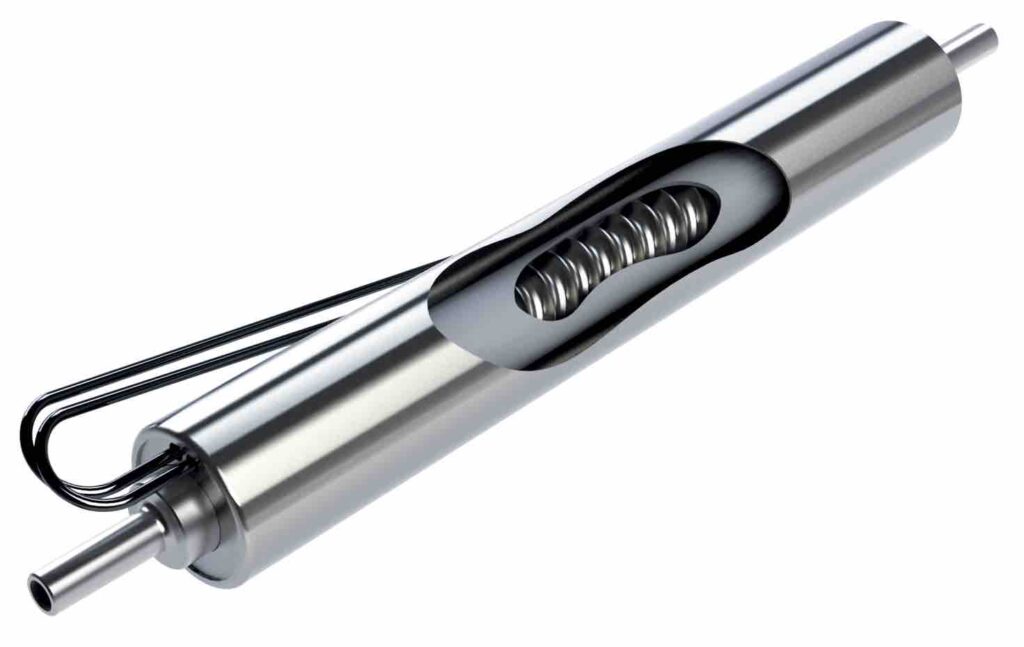
The Flow Heater introduces electrical energy into a heating core through which the process gas travels. Heat passes from the elements to the moving gas stream before that stream enters the receiving equipment. A fuel-fired burner instead generates heat through combustion, potentially producing combustion emissions at the plant. Electric heating removes that local combustion step, but the equipment still requires an appropriate electrical supply, thermal protection and gas handling arrangements.
A conventional indirect heater can place a heat-transfer surface between a separate heating medium and the process stream. The Flow Heater changes that arrangement by heating gas directly as it travels through the electric core. Heat transfer is still influenced by residence time, flow rate, element temperature and insulation: the absence of a combustion chamber does not mean that every installation will deliver the same response or efficiency.
The listed 10, 20 and 40 kW configurations provide a defined starting point for engineering selection. Kanthal recommends a safety margin of 10–20% above calculated theoretical power and offers customised units for duties outside its standard range. Multiple heaters can be configured in parallel; the company says its modular core can be scaled to megawatt capacities. That claimed scalability should not be confused with confirmation of a newly commissioned megawatt-scale customer system.
Parallel heating arrangements give designers options for distributing the gas duty and operating individual units at different outputs. They also introduce requirements for balancing flow, coordinating controls and managing maintenance isolation. Kanthal recommends multiple heaters for some duties above 40 kW, citing equipment life and spare parts management; it has not supplied a comparative trial that quantifies those benefits for every process.
The maximum outlet temperature is subject to the operating environment, especially the properties of the gas being heated. Pressure, inlet temperature, gas chemistry and adjacent material ratings all affect the final specification. Kanthal says custom engineering is available for particular gas mixtures and conditions. A temperature limit quoted for the product therefore cannot be applied automatically to a reactive gas, a different pressure regime or existing plant pipework.
Integrated temperature monitoring and over-temperature protection form part of the equipment offering. Kanthal also lists control cabinets, blowers and insulated piping among its system options. A complete installation must coordinate heater output with the gas flow and the temperature required by the receiving process. Sudden changes in demand can affect the outlet temperature even where the heating core responds quickly, and instrumentation must be placed where it measures the relevant operating condition.
The supplier’s stated 10:1 turndown allows the heater output to be adjusted across a wide operating range. Its published ±1°C accuracy is a product specification rather than a promise of uniform temperatures throughout a downstream furnace or processing chamber. Residence time, flow distribution, process load and the position of the temperature sensor affect the final temperature achieved by the material being processed.
Replacing a burner with electric heating alters both plant emissions and operating economics. Combustion at the point of heating can be avoided, including the local formation of combustion-related nitrogen oxides, while the overall carbon effect depends on the electricity source and any changes in total energy consumption. Electricity tariffs, fuel contracts, connection capacity and demand patterns also influence the commercial case; Kanthal has not published an emissions or payback study at an operating site for this launch.
The relatively compact heating arrangement may be useful where an existing production line has limited space, but retrofitting requires more than a like-for-like exchange of components. Engineers must check the required electrical capacity, pipe and flange connections, gas supply, thermal expansion, control interfaces, guarding and safe shutdown behaviour. Applications that operate near the quoted 1,100°C outlet temperature may require particular attention to materials and insulation around the heater.
Kanthal describes Generation 3 as fully refurbishable, supported by a maintenance programme. Routine work can include replacement of temperature sensors, while more substantial refurbishment can address the core, insulation and connections. Maintaining major assemblies rather than replacing the entire heater could extend equipment use, although the manufacturer has not disclosed a measured service life comparison or a monetary lifecycle saving for the new version.
Kanthal has framed the latest design around increasing demand for high-temperature electrification and controllable process gas heating. The disclosed operating figures provide a basis for preliminary equipment assessment; the next meaningful evidence will come from specified installations where actual gas duty, energy use, availability and maintenance can be measured against the product claims. Kanthal has not reported a customer order value or delivery timetable for Generation 3.