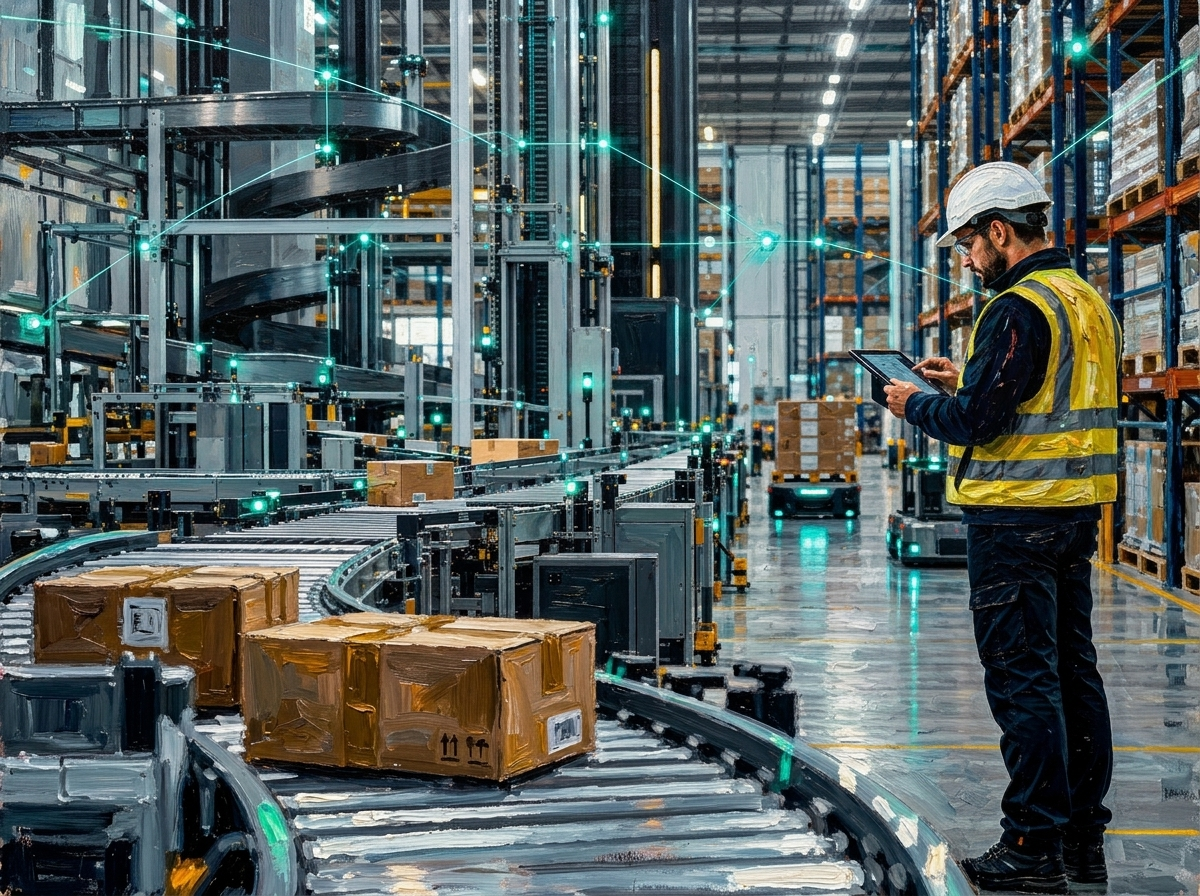
Warehouses are being asked to move greater volumes with fewer interruptions while taking on a wider range of connected equipment, automated processes, and AI applications. The potential gains are considerable, but their reliance on data, software, and reliable networks is changing how logistics resilience is assessed.
That tension anchors the October 2026 edition of IN Supply, published by the Industrial News Network, which examines the changing warehouse alongside pressures reshaping sourcing, regulatory compliance, and delivery.
At Arvato’s Hamm facility, an AI verification system developed with Nomagic has checked millions of orders and can clear around 95% without human intervention, according to Arvato UK managing director Dennis Schmitz. The remainder is referred to staff when confidence is insufficient or errors carry greater consequences. Meanwhile, Fidelity Fulfilment co-founder Stephen Williams argues that the commercial case for automation depends heavily on each operation’s product mix, volumes, and need for flexibility.
The same connectivity that enables these systems also widens the scope of potential disruption. Microlise chief information officer James Walker examines weaknesses introduced when legacy warehouse equipment is connected to newer platforms, and the operational value of network segmentation, controlled remote access, and tested backups.
Beyond warehouse operations, the edition traces how supply chain resilience is being redefined by changing sourcing strategies. Nearshoring can reduce transport distances and lead times, although managing a broader mix of regional and international suppliers places greater demands on inventory and transport coordination.
As regulatory scrutiny increases, documentation is also becoming more demanding. Contributions from Green Project Technologies and Oritain examine emissions data and the challenge of verifying the origin of physical materials rather than relying solely on supplier declarations.
Together, these developments point towards a supply chain in which automation, supplier flexibility, cybersecurity, and defensible records have to operate as part of the same system.