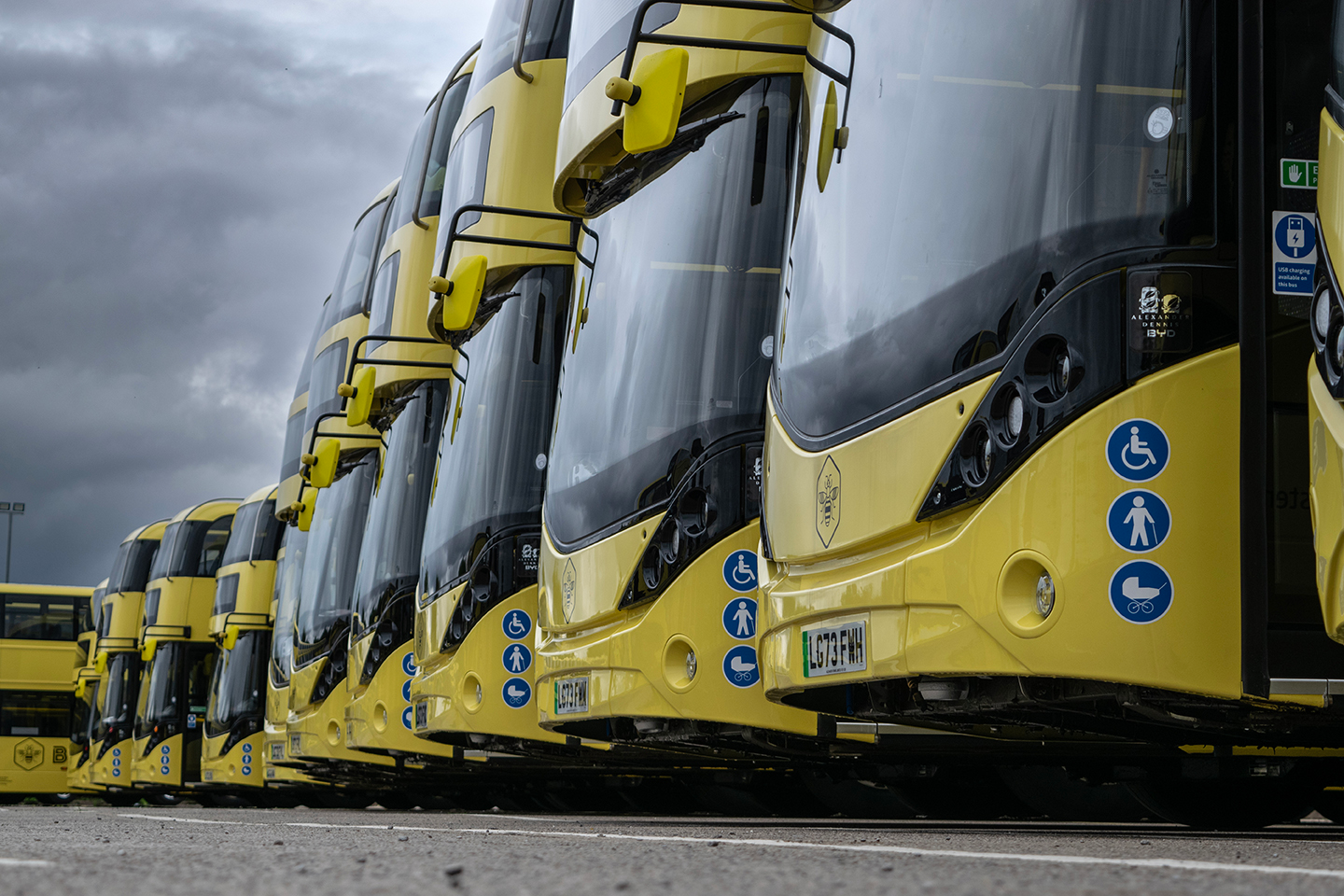
Ebusco says shareholder and strategic partner Gotion has approved €5.86m of support dedicated to producing the remaining buses under the company’s existing Rouen order. The Dutch electric-bus manufacturer disclosed the arrangement on 9 October 2026 alongside a warning that it still needs significant additional short-term financing for operating expenses.
The company describes the €5.86m arrangement as funding earmarked for remaining vehicles in its Rouen order. Ebusco separately acknowledges that additional financing is necessary for its wider operational requirements. The agreement should therefore not be reported as a complete financial rescue or proof that delivery has been completed.
Ebusco says Gotion’s €5.86m commitment is directed towards suppliers and contract manufacturing for the remaining buses in the Rouen order. The amount is earmarked support for that production activity, not a statement that all supplier liabilities have been settled or that the group has sufficient working capital. Ebusco separately warns of further short-term financing needs.
Bus manufacture involves coordinated procurement of structures, drivetrains, batteries, power electronics, interiors and control systems. Payment confidence matters because a shortage of one approved component can interrupt completion of a vehicle whose other systems are already available.
Contract manufacturing adds interfaces between the brand owner, external assemblers and multiple suppliers. Payment responsibilities, quality documentation and delivery sequencing need to be clearly agreed. The fact that funds are directed to the manufacturing chain illustrates how financing arrangements can be designed around specific production orders.
Gotion is both an investor and an industrial partner. That relationship may provide an interest in protecting customer deliveries, but the release does not establish that Gotion has agreed to fund all future obligations. The amount, purpose and limitations of the disclosed support should be reported separately from any previous financing.
For the Rouen customer, delivery depends on accepted buses entering service in accordance with revised arrangements, not merely the allocation of money. Vehicle completion, testing and registration can require additional work after core assembly, while operators need documentation and maintenance arrangements before placing vehicles into service.
Electrical bus production places particular emphasis on battery pack traceability, high-voltage safety and system commissioning. Different routes and operating environments may also affect software settings and vehicle acceptance. Sufficient manufacturing finance is necessary, but it cannot bypass quality or operational checks.
Ebusco’s statement describes the funding as a step supporting continued execution of the order. It does not provide a new precise delivery timetable in the details cited here. Treating a financed order as a completed shipment would therefore overstate the immediate development.
Financial stress can influence industrial supply chains well beyond a single manufacturer. Specialist vendors may seek payment assurance before producing items that are difficult to resell elsewhere. A ring-fenced arrangement can protect selected obligations while leaving unrelated creditors or operating commitments unresolved.
It is also important to distinguish orders, production, deliveries and cash receipts. A bus may be in the order book without being built, assembled without being accepted, and accepted without the timing of final payment being established. Each stage has its own commercial and engineering dependencies.
Evidence of progress would include confirmation of supplier payments, progress at contract manufacturers, buses delivered against the Rouen order and any new unrestricted funding for Ebusco. Until then, the announcement is best understood as targeted industrial support accompanied by an explicit liquidity warning.
The arrangement should also be separated from any new sales activity. It concerns an existing customer order in Rouen, not evidence that Ebusco has secured additional bus customers or expanded its order book. The company has provided a dedicated funding figure but has not thereby established a return to sustainable profitability.
If component manufacturers are paid directly, they may gain greater confidence that materials procured for the contract will be covered. Nonetheless, those payments must align with the production schedule and with the commercial responsibilities of contract manufacturers. A funding authorisation is only one step in turning the arrangement into regular deliveries.
Transport operators ultimately assess vehicles against operational requirements that reach beyond initial electrical propulsion. Reliability, spare-parts access, software support, driver familiarisation and maintenance training can all affect the transition from factory acceptance to passenger service. These matters are especially important where a manufacturer faces financial pressure.
The statement therefore supports a narrow and qualified headline: production support has been approved. It would be inaccurate to report that all of Ebusco’s financing problems have been solved, or that the company has delivered the remaining Rouen vehicles. Those outcomes require later evidence.