Cell Impact is accelerating production of an existing SEK5.3 million flow plate order after a US fuel cell and electrolyser manufacturer requested that most of the contracted volume be delivered during the next two quarters.
The order was placed in June and was originally scheduled to run over two years from the third quarter of 2026. Final delivery is now planned for April 2027, compressing the production programme without increasing the disclosed contract value.
The customer is a major PEM fuel cell and electrolyser manufacturer in the north eastern United States and has worked with Cell Impact for several years. The plates are established components already developed for products in regular operation, allowing the revised programme to move directly into higher rate manufacturing rather than beginning with a new qualification cycle.
Flow plates are repeated throughout fuel cell and electrolyser stacks, where channels formed into their surfaces distribute gases or liquids across the active area of each cell. The plate also contributes to electrical conduction and separation between adjoining cells, so channel geometry, surface condition and dimensional accuracy affect both fluid distribution and stack performance.
Manufacturing variation can multiply quickly because a stack contains many plates made to the same design. A systematic dimensional or surface error can therefore be repeated across numerous cells, making process consistency important as production rate increases and more parts move through forming and inspection over a shorter period.
Cell Impact manufactures metallic plates using its Cell Impact Forming process, which shapes thin metal at high velocity between precision tools. The method is designed to create the required channel geometry rapidly while using little electricity and no process water, with final plate quality still dependent on tooling accuracy, material condition and control of the forming operation.
The existing design and tooling remove several stages that would accompany a newly developed component. Production parameters are already established, leaving the Karlskoga factory to increase delivery rate while preserving the dimensional and quality controls previously accepted by the customer.
Raw material for the order is already held in stock, removing one purchasing lead time from the accelerated schedule and limiting the need for additional working capital before production begins. The revised timetable instead places more immediate demand on forming equipment, handling, inspection and any finishing operations required before shipment.
Factory loading changes substantially when the same contracted volume is brought forward from roughly two years into a much shorter period. Machine time, labour and inspection resources that would have been spread across several reporting periods now have to accommodate a steeper production profile while other customer work continues through the same facility.
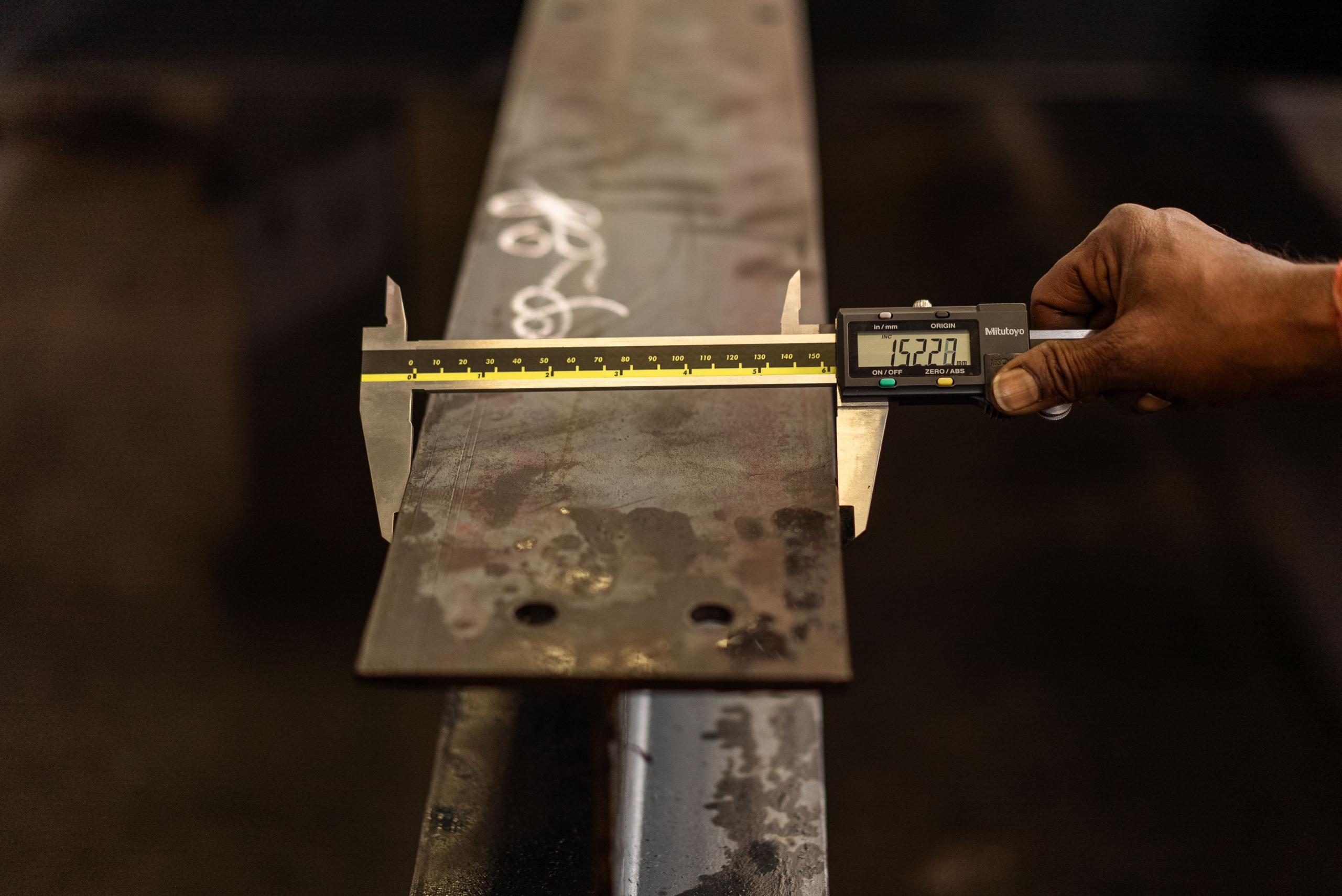
Inspection cannot be reduced simply because the shipment timetable has moved forward. Plate geometry, surface quality and integrity remain part of the stack specification, so higher throughput has to preserve the checks used to prevent forming variation from moving directly into the customer’s assembly process.
The high velocity forming method is intended to support scaling by repeating a rapid forming cycle rather than relying on a long sequence of conventional press operations. Overall throughput will still reflect the complete route through material handling, forming, inspection and subsequent processing, because capacity at any one of those stages can restrict the number of finished plates shipped.
Earlier delivery also changes the timing of revenue and cash flow. Cell Impact expects the revised schedule, combined with material already in stock, to improve liquidity sooner than under the original programme as a greater share of the contracted volume is manufactured and invoiced during the coming quarters.
That production comes at a useful point for a company that has been preparing for higher volumes while customer investment across parts of the hydrogen market has progressed unevenly. An established component moving into faster production gives the factory committed work that is already beyond the design and validation stage.
The order remains modest in value compared with large industrial manufacturing contracts, while the compressed timetable materially changes the rate at which the factory must produce the plates. Completion by April 2027 requires existing tooling, material stock and manufacturing capacity to sustain that higher rate while retaining the dimensional consistency expected by an established PEM fuel cell and electrolyser customer.