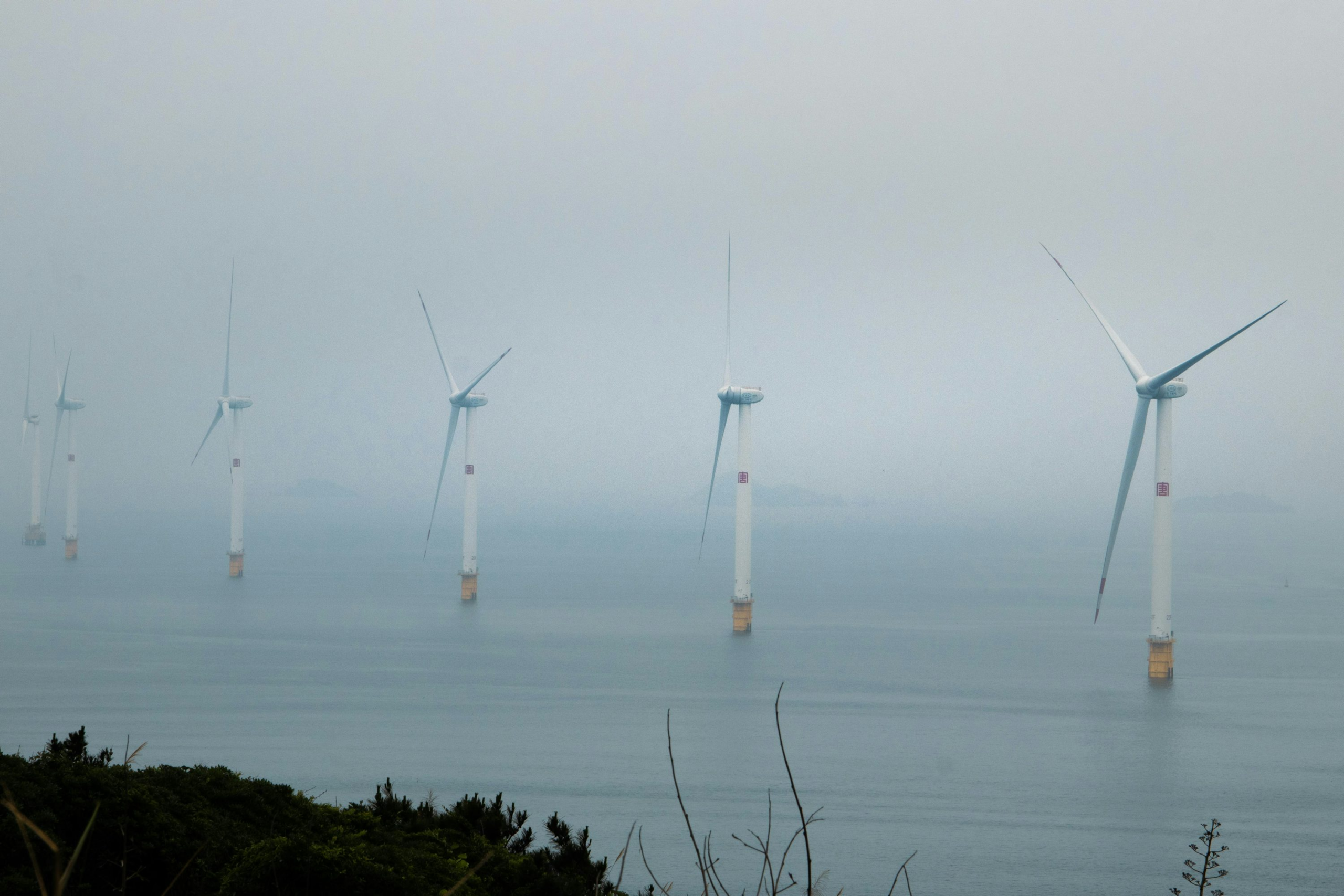
Tekmar has secured a €6 million contract extension for a European offshore wind project, adding cable protection systems, accessories, engineering, analysis, and design work to a forward order book increasingly weighted towards renewable energy.
Manufacturing under the award will take place at Tekmar’s Newton Aycliffe facility in County Durham. The contract remains subject to the project’s final investment decision, currently expected during the first quarter of Tekmar’s 2027 financial year, so the award improves workload visibility without yet becoming unconditional committed production.
The agreement also includes an option for a second project phase with a broadly similar scope and value. That option sits outside the announced €6 million Phase 1 contract and would require both exercise by the customer and a separate investment decision before entering execution.
Tekmar’s scope centres on cable protection systems used where subsea power cables transition between the seabed and fixed offshore structures. These interfaces can be exposed to bending, movement, abrasion, installation loads, and local seabed conditions that increase the risk of cable damage if the mechanical system is not designed around the specific project environment.
Protection equipment represents a relatively small share of the capital cost of an offshore wind farm, but it surrounds assets whose offshore repair can be expensive and operationally disruptive. Design work therefore has to account for cable geometry, water depth, seabed profile, structure design, installation method, and the movement expected over the operating life of the project.
Tekmar says the latest award combines physical protection equipment with specialist engineering, analysis, and design carried out by its in-house team. That brings the modelling used to understand cable behaviour closer to the hardware ultimately manufactured for the project, reducing the separation between engineering assumptions and product design.
The contract arrives as Tekmar reports higher utilisation at its UK manufacturing operation. The group expects revenue for the financial year ending 30 September 2026 to be more than 20% above the previous year, with second-half revenue ahead of both the first half and the equivalent period in 2025.
The company attributes part of that improvement to increased manufacturing volumes and a shift in its order book towards European offshore renewables projects. Better factory loading matters because specialist production facilities carry fixed labour, equipment, and overhead costs whether order flow is strong or weak.
Growth has not been entirely smooth. Tekmar said the prolonged conflict in the Middle East has deferred some work scopes and awards, while a power outage at a UK supplier delayed planned material deliveries into October. Revenue associated with those delayed inputs has consequently moved into the company’s 2027 financial year.
The latest extension and several smaller wins are nevertheless expected to leave Tekmar entering FY27 with an order book more than 50% higher than at the start of FY26. The group says that gives longer-term visibility into 2028 and beyond, which is valuable when projects require early engineering work and long manufacturing lead times.
Tekmar has also arranged a further £4 million working capital facility to support larger sales volumes. The funding supplements an existing UK Export Finance-backed trade loan and includes invoice discounting, giving the business more headroom as the size and timing of European offshore wind orders increase.
Working capital can become restrictive even when an order book is expanding. Engineered products often require material, labour, and supplier payments well before final customer receipts arrive, so a factory can consume more cash as throughput rises. That effect becomes more pronounced when several large projects overlap.
The latest award follows a series of offshore wind contracts secured earlier in 2026. Tekmar announced more than €8 million of cable protection system awards in May alongside a separate £4 million European offshore wind contract, while its half-year results showed an order book of £31.7 million at the end of March compared with £12.6 million a year earlier.
Those orders are being pursued under the company’s Project Aurora programme, which is intended to improve order quality, deepen customer relationships, and make greater use of engineering capability around the manufactured product. The strategy depends on converting design expertise into repeatable production rather than simply increasing the number of projects passing through the factory.
The €6 million extension strengthens that pipeline, but the FID condition remains material. Until the underlying offshore wind project is sanctioned, Tekmar has an award rather than a fully executable manufacturing programme. If the investment decision proceeds as expected, the Newton Aycliffe plant will enter FY27 with another sizeable European package moving from engineering into physical production.