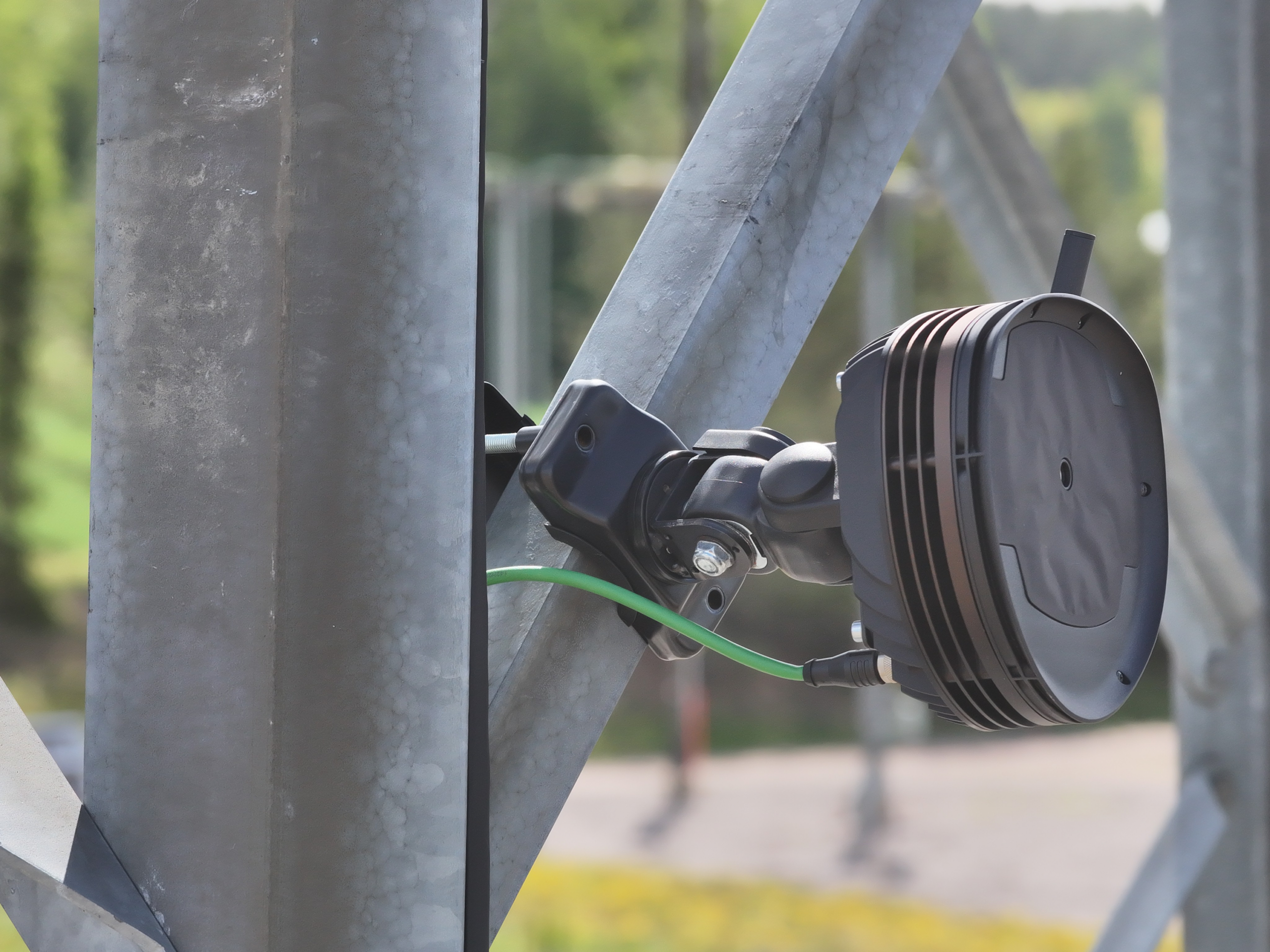
Teledyne FLIR has expanded its fixed acoustic imaging range with the Si2a-LD and Si2a-Pro, adding continuous monitoring for pressurised leaks and electrical partial discharge across industrial and utility assets. The two cameras complete the Si2a fixed monitoring portfolio and are intended for permanent installation rather than periodic inspection rounds.
The Si2a-LD is focused on compressed air and pressurised gas systems, continuously detecting, locating and quantifying leaks that may otherwise develop between scheduled inspections. The Si2a-Pro adds partial discharge monitoring, allowing the same fixed platform to watch electrical equipment alongside pressurised systems.
Both models use an array of 124 low-noise MEMS microphones to create a real-time acoustic image. FLIR specifies a detection range from 0.3m to 200m, with a 12MP colour camera providing the corresponding visible image. The acoustic system operates across a 2kHz to 130kHz bandwidth, while AI enhanced analysis is used to identify and assess detected events.
The more significant change is the move from portable inspection towards continuous observation. Handheld acoustic cameras are normally carried around a plant during planned surveys, allowing technicians to inspect pipework, valves, switchgear and other equipment at defined intervals. A fixed camera can remain focused on a critical area between those visits, increasing the chance of detecting an intermittent fault that is absent when an inspection takes place.
Compressed air provides an obvious application because relatively small leaks can persist without stopping production. The cost instead appears in compressor electricity consumption as equipment works harder to maintain system pressure. The Si2a-LD automatically identifies pressurised leaks and can estimate leak rate and annual cost, giving maintenance teams another way to rank defects rather than treating every detected source with the same urgency.
FLIR says the system can quantify leakage involving compressed air and gases including ammonia, argon, carbon dioxide, helium, hydrogen, methane, natural gas and nitrogen where sufficient pressure is present. Detection performance will still depend on distance, plant layout, background conditions and the characteristics of the source, but permanent installation increases the amount of time available to observe a developing problem.
The Si2a-Pro extends the same principle into electrical condition monitoring. Partial discharge is a localised electrical discharge associated with insulation defects or deterioration and can provide an early indication of problems in high-voltage equipment. FLIR specifies detection of surface and internal discharge, positive and negative corona and floating discharge, with automated severity assessment intended to help determine which events need further investigation.
The camera is consequently aimed at applications including switchgear, substations and gas insulated switchgear where continuous observation can complement scheduled electrical inspections. Acoustic monitoring does not replace the need for engineering diagnosis, but it can provide an additional warning channel when discharge activity appears or changes between conventional inspection intervals.
Permanent installation also changes the importance of environmental protection and connectivity. Both models are IP66 rated and use VESA mounting, allowing them to be installed in industrial areas rather than being treated as portable instruments stored between surveys. FLIR also provides connectivity for integration with SCADA, alarms and wider condition monitoring systems.
The supplied launch places the cameras within the FLIR AssetLink ecosystem, allowing acoustic findings to sit alongside wider asset information and maintenance workflows. That becomes more useful as plants increase the number of fixed sensors because detection is only the first part of a maintenance process. An event still needs to be associated with the correct asset, assessed, prioritised and converted into maintenance work where intervention is justified.
Fixed acoustic monitoring therefore occupies a different role from handheld inspection rather than simply replacing it. Portable instruments remain useful where engineers need to move between large numbers of assets, investigate suspected problems or carry out surveys across changing areas. Permanent cameras are easier to justify around equipment where the cost of an undetected leak or electrical defect is high enough to warrant continuous observation.
The economics will depend heavily on placement. Installing a dedicated camera over every section of compressed air pipework would be difficult to justify, while monitoring a compressor house, inaccessible process area or critical electrical installation can provide information that would otherwise require repeated manual surveys. Configurable monitoring zones and alarms also allow one field of view to cover several areas of interest.
The Si2a-LD and Si2a-Pro became available from 22 September 2026. Their industrial value will depend less on producing more acoustic images than on whether continuous monitoring leads to earlier intervention. Fixed sensors inevitably produce more observations than periodic surveys; the useful outcome is fewer energy losses, better prioritisation and faults addressed before they become production interruptions.