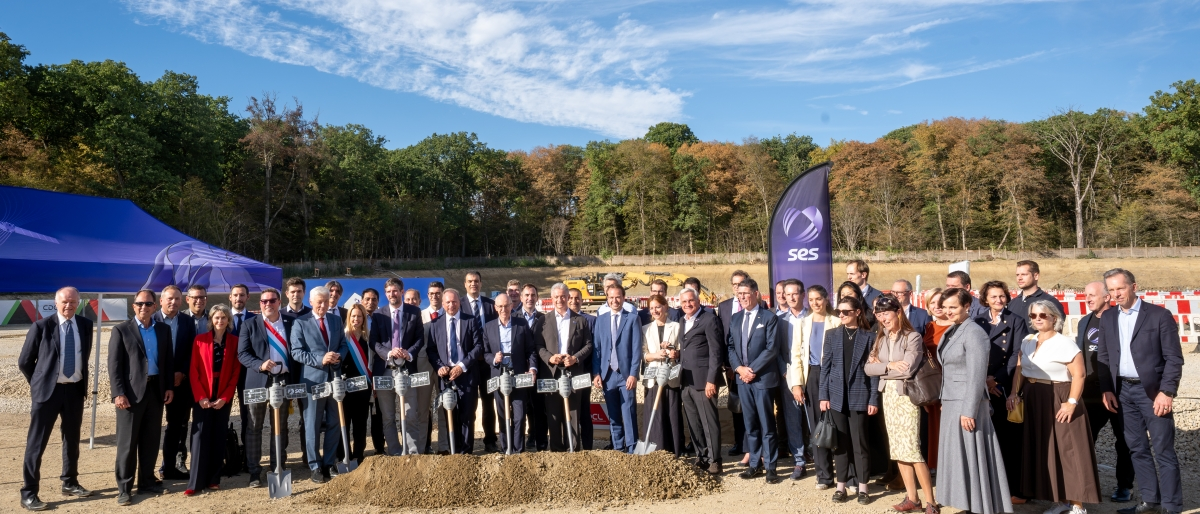
Greenvolt Group has started construction of a 600MW/2.4GWh battery energy storage system at Siedlce in Poland, moving one of Europe’s larger storage projects from development into physical delivery. Commercial operation is scheduled by the end of 2027.
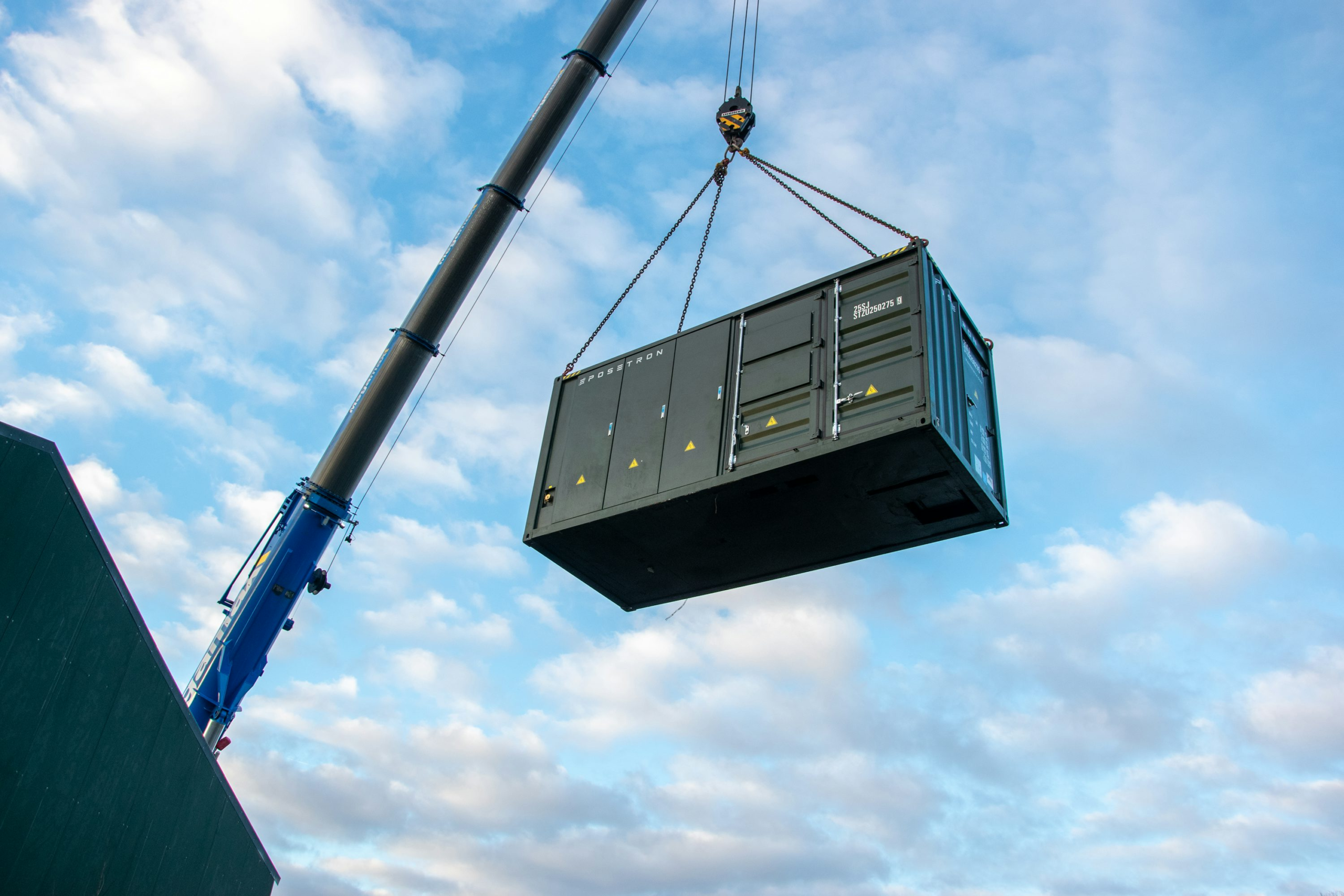
The installation is designed to provide 600MW of power and 2.4GWh of energy capacity, equivalent to four hours at full rated output. BYD Energy Storage will supply the battery technology, while P&Q and ONDE are working on the project’s electrical infrastructure. The design includes 210 battery containers and 105 transformer containers equipped with power conversion systems.
Greenvolt says the project will become Poland’s largest battery storage facility. Its role is to absorb electricity when generation is high and release it when demand rises or renewable output falls, giving the power system another source of flexibility as wind and solar capacity increases.
At this scale, the engineering challenge extends well beyond installing battery containers. Grid connection equipment, transformers, power conversion systems, protection, controls, thermal management and fire safety have to operate as a coordinated plant. The storage system only delivers its intended value if those components can respond reliably to dispatch instructions while maintaining battery cells and electrical equipment within their operating limits.
The four-hour duration also places Siedlce in a different operational category from shorter systems designed mainly for rapid frequency response. A 2.4GWh reservoir can shift substantial quantities of electricity across several hours, including moving surplus generation into periods of higher demand. That capability becomes more useful as variable renewable generation represents a larger share of the system.
Greenvolt is developing the project through Greenvolt Power, its utility scale renewables business. The group reports a probability-weighted battery storage pipeline of approximately 4.6GW, including around 2.4GW in Poland. Siedlce therefore sits inside a broader storage build-out rather than operating as an isolated project.
The company already has experience of delivering large storage assets in the Polish market. Its 200MW/800MWh Turośń Kościelna facility entered operation in July 2026, while the similarly sized Ełk project is expected to reach commercial operation during the fourth quarter. Once all three projects are operational, Greenvolt says they will provide a combined 1GW of power and 4GWh of storage capacity.
Repeat projects can reduce some delivery risk because grid interfaces, commissioning procedures and contractor relationships become more familiar. Siedlce is still a substantial step up in scale, with three times the power and energy capacity of either Turośń Kościelna or Ełk. The larger plant will also contain more battery blocks, transformers, conversion equipment and auxiliary systems that have to be installed and commissioned in sequence.
The use of 210 battery containers illustrates the modular structure of modern grid storage. Capacity is assembled from repeatable battery blocks rather than one monolithic electrochemical system, allowing individual units to be isolated and maintained within a larger plant. The same modularity increases the number of interfaces, control points and monitoring channels that have to remain coordinated throughout the asset’s life.
Battery storage is increasingly an infrastructure issue rather than simply an adjunct to renewable generation. Conventional power systems historically obtained much of their flexibility from dispatchable thermal plant, while systems with more variable generation need other assets capable of shifting energy through time and responding quickly to changing grid conditions. Batteries can provide both fast electrical response and scheduled energy movement, provided network connections and market arrangements allow those services to be used commercially.
Poland is a significant market for that transition because its power system is changing while network operators still have to maintain security of supply. Large storage projects can help integrate renewable generation without producing electricity themselves, but they do not remove the need for generation, transmission and distribution investment. Their role is to give the system another way to balance when electricity is produced against when it is required.
For Greenvolt, the start of construction changes the project from development capacity into a programme involving equipment manufacture, civil works, electrical installation, grid integration and commissioning. Battery supply and grid connection agreements are already in place, giving the project a clearer delivery path than a scheme still dependent on securing its main equipment or network interface.
The end of 2027 remains the critical milestone. If Siedlce reaches commercial operation on schedule, Greenvolt’s three major Polish storage projects will represent 4GWh of installed capacity between them. The next question will then be less whether large batteries can be built in Poland than how effectively they are dispatched, maintained and integrated into a power system carrying a growing proportion of variable generation.