Dragonfly Advanced Materials has secured £1 million to expand production of its silica aerogel technology as the Newcastle University spinout moves from process development towards larger industrial supply.
The Northumberland business has received £500,000 from Northstar Ventures through the North East Spinout Inspire Fund, alongside a £500,000 grant from Innovate UK’s investor partnership programme. The funding will increase production capacity, support recruitment across sales and development, and help move joint development work with industrial partners towards commercial deployment and licensing.
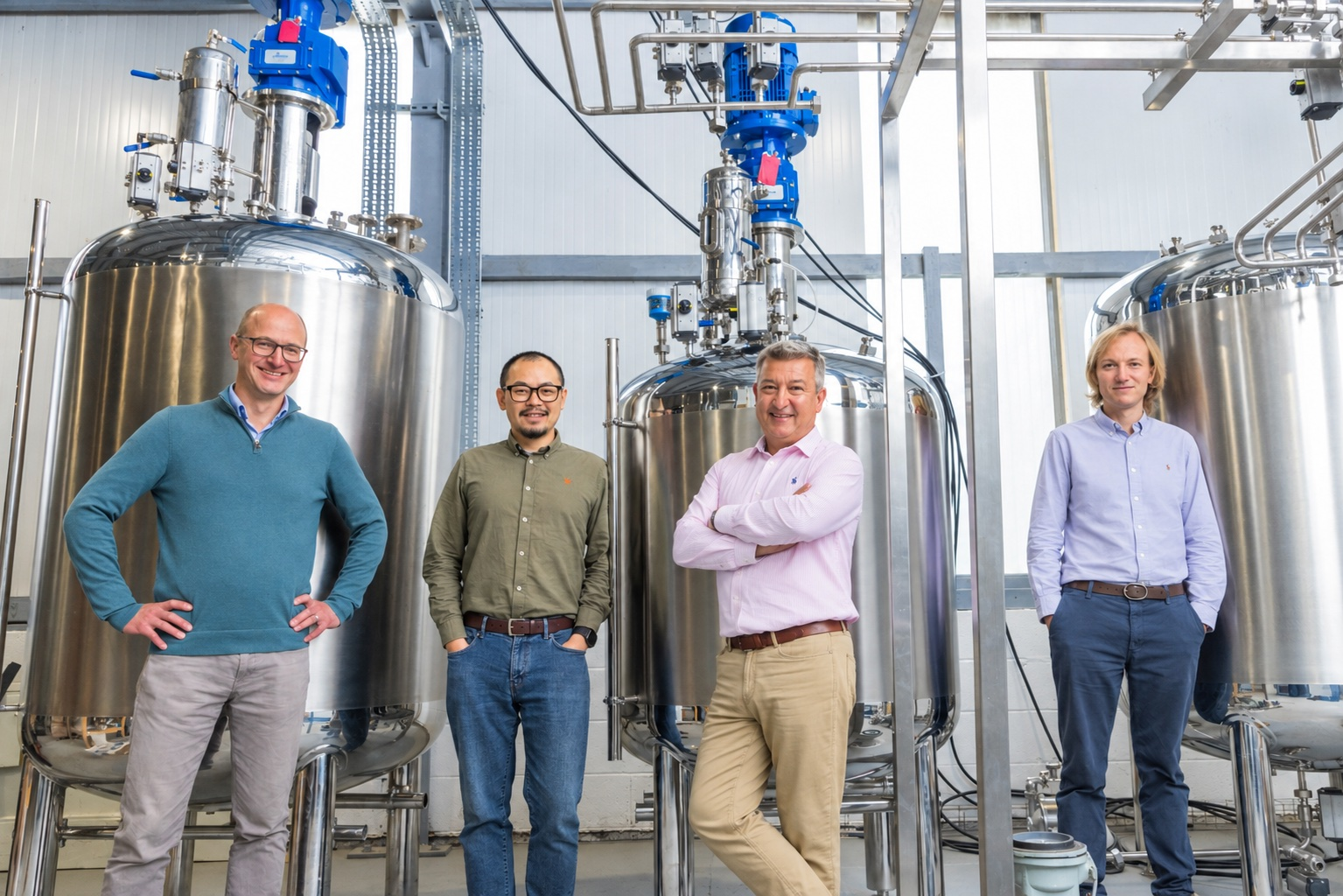
Dragonfly is also completing commissioning of a new manufacturing facility in Northumberland. The site is intended to produce larger quantities of material for customer validation and development, giving potential users more scope to test the company’s aerogels in their own applications before committing to wider adoption.
Aerogels combine very low density with strong thermal insulation, fire resistance and water resistance, but cost and manufacturing complexity have restricted their use. Dragonfly’s patented process is designed to reduce reliance on expensive solvents while simplifying the production route so that material can be made more economically at higher volumes.
The technology originated from research at Newcastle University and has since been developed into a commercial manufacturing process. Dragonfly was established as a spinout in 2020 and says it now holds three patents covering its approach.
John Baines, chief executive officer of Dragonfly Advanced Materials, said: “This investment marks an important milestone in Dragonfly’s progression from university spinout to commercial advanced materials business.”
He said the company had spent recent years developing and protecting the technology, expanding manufacturing capability and building relationships with industrial partners. With most of the scaleup infrastructure now in place, its focus is shifting towards customer adoption, qualification, licensing and commercial delivery.
That transition puts repeatability and economics under greater scrutiny. Materials that perform well in laboratory quantities still have to be produced consistently, supplied in useful volumes and incorporated into customer processes without creating new handling or quality problems. Qualification can also be lengthy where the material sits inside construction products, transport systems, energy equipment or other regulated applications.
Dragonfly’s model combines direct material production with the option of licensing its process. A licensing route could allow future production to be located closer to customers or application markets without requiring every increase in volume to pass through one central plant, although that approach also places greater emphasis on process transfer, quality control and intellectual property protection.
The funding structure reflects the route by which university research is increasingly being pushed towards industrial use. Northstar’s investment comes from the £22.5 million North East Spinout Inspire Fund, backed by Durham, Newcastle, Northumbria, Sunderland and Teesside universities alongside the North East Mayoral Strategic Authority through the North East Fund.
The fund was created to commercialise research emerging from the region’s universities, with Dragonfly now moving into the point where manufacturing capacity and customer validation matter as much as the original science. The new facility should provide enough material for larger development programmes while giving the company a base from which to demonstrate process consistency.
Aerogels have potential across coatings, energy, construction, transport and industrial manufacturing because of their combination of low mass and thermal performance. Wider use has remained limited partly because conventional production methods can be expensive and difficult to scale, leaving a gap between the material’s technical properties and the cost structures required for broader industrial adoption.
Dragonfly is attempting to narrow that gap through process simplification rather than by changing the basic value proposition of the material. Customer trials will therefore need to show not only that the aerogel performs as expected, but that the manufacturing route can deliver stable quality at volumes and prices compatible with commercial products.
Its progress will also depend on how quickly development partners can move from sample evaluation into application specific engineering. Aerogel performance can be attractive in isolation, but customers still have to account for joining methods, coatings, mechanical protection, fire testing, moisture exposure and the surrounding product design. Those integration steps are where a lower cost manufacturing route can begin to translate into a practical commercial advantage.
The Northumberland plant provides the next test. Commissioning, production yield, batch consistency and customer qualification will determine how quickly the company can move from supplying development quantities into recurring orders or licensing agreements.
The £1 million package gives Dragonfly additional capacity to complete that work, but the commercial milestones are now operational rather than academic: material shipped, customer programmes completed, specifications approved and manufacturing processes repeated reliably at scale.