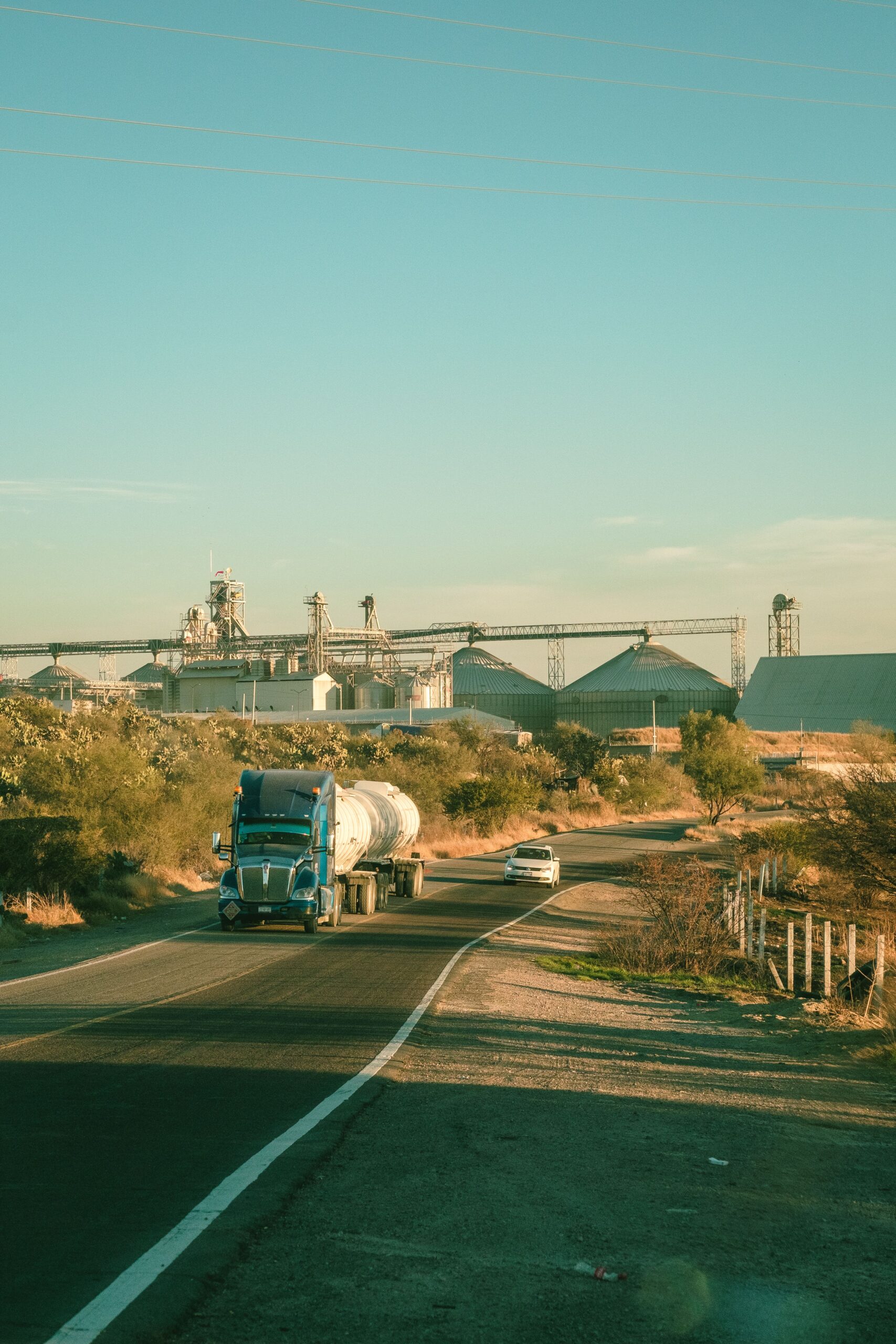
XCMG has launched its Hanjing battery-electric heavy truck for long-haul and cross-regional freight, extending its new-energy commercial vehicle programme beyond fixed-route and shorter-duty applications.
The truck uses an 800V electrical architecture supporting megawatt-class fast charging, with XCMG claiming a 20% to 80% recharge in less than 20 minutes.
The company has not published the Hanjing’s battery capacity or a standardised driving-range figure, leaving those two important operating parameters absent from the launch specification.
Charging speed alone cannot establish whether an electric tractor is suitable for long-haul operation. Battery energy, payload, ambient temperature, road gradient, average speed, auxiliary consumption, charger availability, and route scheduling all affect the practical duty cycle.
XCMG has instead concentrated its launch material on whole-vehicle efficiency. Development began in 2023 and included consultation with logistics companies at major freight hubs before engineering work focused on the powertrain, centralised thermal management, torque distribution, regenerative braking, and vehicle controls.
The Hanjing uses a low-drag cab and an integrated electric drive axle intended to reduce drivetrain losses. Its body incorporates 1,500MPa hot-stamped steel, while several thermal-protection measures are used around the battery system.
Driver systems include a central domain controller, highway navigation-assisted driving, and a digital cockpit. Those systems increasingly form part of the energy-efficiency strategy because vehicle speed, acceleration, braking, and route planning all influence electricity consumption over a long duty cycle.
Before launch, the truck completed high- and low-temperature testing, high-altitude operation, water-fording, and crash testing. XCMG also reports a 24-hour endurance run at the Yancheng proving ground in which the vehicle covered 2,198km at a gross vehicle weight of 49 tonnes.
The test provides evidence of repeated high-utilisation operation but should not be confused with a normal commercial route. A proving-ground programme can control charging access, driving conditions, and scheduling more closely than a freight operator working across public roads.
The more important engineering question is how XCMG balances battery mass against charging frequency. Adding more cells increases usable range but also adds weight and cost, reducing payload or requiring more vehicle mass to be carried for every kilometre travelled.
Reducing battery size has the opposite effect. The vehicle becomes lighter, but the operator depends more heavily on fast, reliable charging at predictable points in the route.
Megawatt-class charging is intended to narrow that compromise. If a truck can recover a large share of its usable battery energy during a mandatory rest stop or depot dwell period, it may not need enough battery capacity to complete an entire operating day without charging.
The electrical consequences move upstream from the truck into the depot or charging site. Supplying one vehicle at close to megawatt power is demanding; charging several simultaneously requires substantial transformers, switchgear, cables, power electronics, protection, control systems, and grid capacity.
Fleet electrification therefore becomes an infrastructure project as much as a vehicle-purchasing decision. Charger utilisation, connection capacity, tariff structure, site demand, and vehicle scheduling all have to be engineered together if high-power equipment is to be used efficiently.
XCMG is attempting to address that with a broader offer covering charging infrastructure, connected fleet management, and lifecycle services. Its vehicle platform monitors status and energy consumption and can be used to plan vehicle and charging allocation around individual routes.
That integration becomes important because electricity availability has to be scheduled. A diesel tractor can refuel quickly across a mature network, whereas a high-capacity electric truck may need a reserved high-power charger and enough site capacity at exactly the time it arrives.
XCMG says it ranked first in China for sales of both new-energy heavy trucks and new-energy tractors between January and July 2026 and has led national new-energy heavy-truck sales for three consecutive years.
The company’s products are also being exported, including to Indonesia and Thailand. One Indonesian mining customer has ordered a further 100 vehicles after previously purchasing more than 150 battery-electric 8×4 dump trucks equipped with 600kWh packs.
Mining duty provides useful experience with high vehicle mass and demanding operation, but the infrastructure environment is very different from cross-regional road freight. Mine trucks often run on controlled routes where chargers can be positioned around a known operating cycle.
The Hanjing programme is intended to push beyond that environment. XCMG has also displayed new-energy commercial vehicles at IAA Transportation in Hannover and says it will adapt future products around local regulations, road conditions, and operating practices.
For European application, that would require more than drivetrain changes. Type approval, dimensions, axle loads, charging standards, driver-assistance regulation, service coverage, parts support, and fleet financing are all part of the commercial vehicle package.
The launch shows that XCMG is engineering around fast charging and utilisation rather than simply maximising battery size. What remains unavailable is enough energy-consumption and range data to judge how that architecture performs on a normal long-haul route.
Those figures will matter more to fleet operators than the endurance-run headline. The Hanjing nevertheless adds another manufacturer to the group attempting to move battery-electric trucking into one of the transport duties that remains considerably harder to electrify than urban distribution or fixed-route industrial operation.