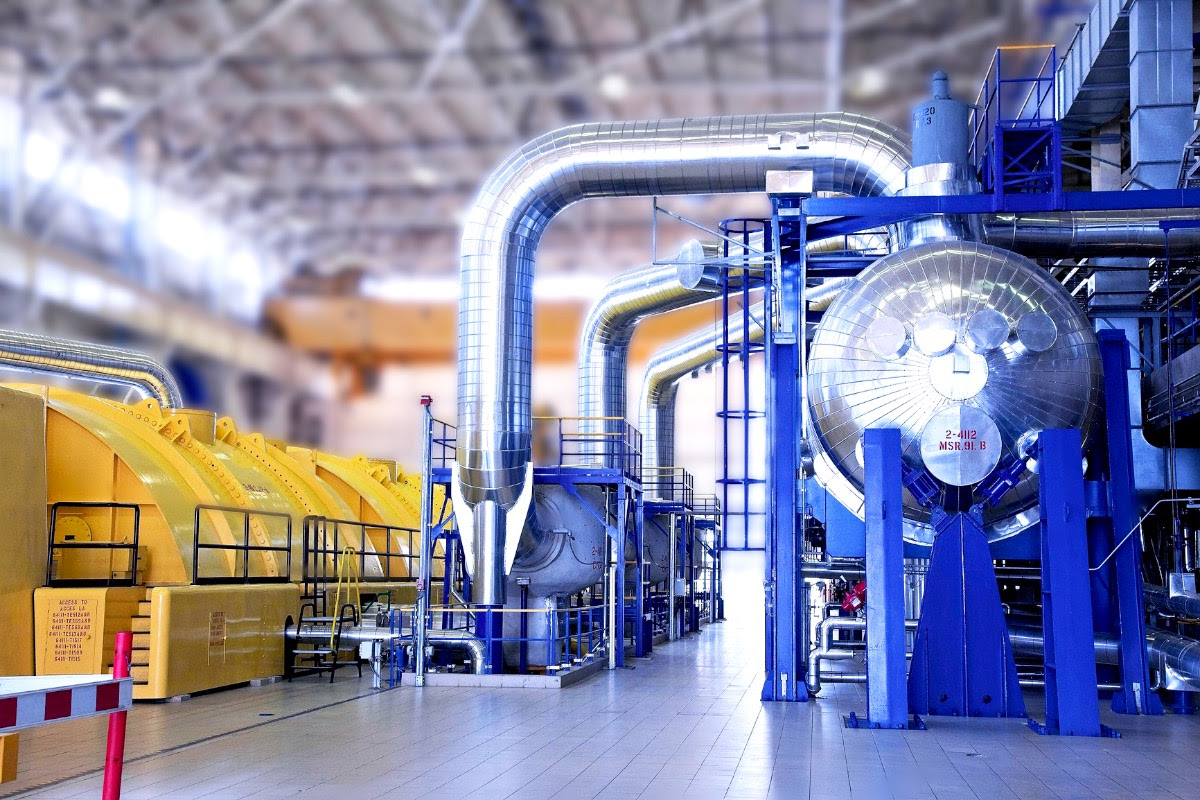
ABB has been awarded a contract by Ansaldo Nucleare to modernise control and safety systems at Unit 1 of Romania’s Cernavodă Nuclear Power Plant, supporting a refurbishment intended to extend the reactor’s operating life by another 30 years.
The scope centres on ABB Ability System 800xA and covers the distributed control system, emergency shutdown functions classified as Category B and C, and cybersecurity engineering and testing. ABB will also provide Category A standby-diesel-generator functions using a combination of conventional hardwired equipment.
Cernavodă is Romania’s only nuclear power station and operates two CANDU-6 units. Unit 1 entered service in 1996 and Unit 2 in 2007, with ABB control technology already operating on the second reactor.
The modernisation forms part of Nuclearelectrica’s wider Unit 1 refurbishment programme, which is intended to return the reactor to operation for another 30-year cycle from 2030. The operator places the project in its preparation and infrastructure phase through 2027, followed by the main unit modernisation between 2027 and 2030.
Control-system replacement is one part of that programme, but it is an unusually consequential one. A nuclear distributed control system collects measurements from across the plant, presents operating information, executes control logic, manages alarms, and coordinates equipment whose behaviour has to remain predictable during normal operation and defined fault conditions.
Replacing such a system is therefore different from a conventional factory automation upgrade. Field instruments, cabling, interlocks, operating procedures, safety analysis, and licensing documentation may have been developed and modified over several decades, leaving the modernisation team to introduce new digital technology without losing the verified behaviour on which the existing safety case depends.
ABB says System 800xA will provide a centralised and cybersecure platform intended to improve operational reliability and support long-term plant performance. Engineering and testing form an explicit part of the contract, reflecting the amount of verification required before new control logic can be connected to safety-significant plant equipment.
The announced division between safety categories is significant. Emergency shutdown functions in Categories B and C will form part of the new automation scope, while Category A standby-diesel functions will retain conventional hardwired equipment rather than being moved indiscriminately onto the same digital platform.
That approach reflects the differing assurance requirements attached to nuclear plant functions. Digital systems can offer improved diagnostics, maintainability, alarm management, and lifecycle support, but the architecture still has to be selected according to the safety significance and required independence of the function being controlled.
Standby diesel generators are particularly important because they provide power to essential systems following loss of normal or off-site electrical supplies. Their control and protection arrangements consequently have to perform under precisely the abnormal conditions in which failures elsewhere in the plant may already have reduced the available operating margin.
Daniela Gentile, chief executive officer of Ansaldo Nucleare, said: “This project represents an important step in ensuring the safety and performance of Unit 1, extending its operational life.”
Ansaldo Nucleare is part of the international EPC structure assembled for the refurbishment. Nuclearelectrica signed the principal EPC agreement in December 2024 with a consortium including Candu Energy and AtkinsRéalis, Ansaldo Nucleare, Canadian Commercial Corporation, and Korea Hydro & Nuclear Power.
The programme has since moved into physical enabling work. Infrastructure construction began in 2025, while Nuclearelectrica says Phase 2 now covers engineering, procurement, licensing, financing, construction planning, and the infrastructure required before the main reactor shutdown and refurbishment.
Phase 3 is scheduled from 2027 to 2030 and includes the principal Unit 1 modernisation work. Reactor retubing will form a major part of that outage, alongside the wider electrical, mechanical, control, and support-system work needed to prepare the unit for another operating cycle.
Unit 1 has produced more than 149 million MWh since commissioning and has operated with a capacity factor above 90%, according to Nuclearelectrica. The operator estimates that the reactor supplies around 9% of Romania’s annual electricity consumption, while the Cernavodă site as a whole provides roughly one-fifth of national generation.
Those figures make life extension an infrastructure project rather than a discretionary equipment upgrade. Retaining an existing nuclear unit preserves generating capacity, the grid connection, an established operating workforce, site infrastructure, and a qualified supply chain that would otherwise have to be replaced by another source of dependable generation.
The control-system task still brings substantial obsolescence and migration risk. Technology installed during the 1990s was designed before present expectations around network segmentation, cybersecurity lifecycle management, software support, digital diagnostics, and industrial connectivity had become standard engineering considerations.
Modern platforms address those limitations but introduce their own verification burden. Existing signals and logic have to be mapped correctly, alarm behaviour reproduced or deliberately revised, interfaces documented, software tested, and operators trained without introducing ambiguity into established procedures.
Human-machine interfaces are part of that exercise. Contemporary control systems can present plant information more flexibly than older panel-based architectures, but a more sophisticated display is not automatically a safer one. Alarm prioritisation, navigation, information density, operator workload, and the representation of abnormal conditions all require validation.
Cybersecurity adds another constraint because the systems being modernised are expected to remain supported well into the middle of the century. Connectivity can improve diagnostics and engineering access, but each additional interface between control, maintenance, engineering, and external systems has to be governed so that operational convenience does not create unnecessary access to safety-significant functions.
ABB’s existing installation on Unit 2 provides relevant experience at Cernavodă, but it does not remove the need to engineer Unit 1 individually. The two reactors share CANDU-6 technology while retaining differences in modification history, installed equipment, wiring, documentation, and the precise boundaries between plant systems.
Automation will also have to remain aligned with the rest of the refurbishment schedule. Control-system installation and testing cannot be completed independently of mechanical modifications, turbine work, electrical upgrades, reactor retubing, commissioning, and the outage sequence that eventually returns the unit to the grid.
Nuclearelectrica expects Unit 1 to begin its new 30-year operating cycle in 2030. Before then, ABB and the wider EPC team must turn the new control architecture into validated plant equipment — with rather more at stake than whether the latest software release installs cleanly on a Tuesday morning.