Ukrainian defence technology manufacturer TAF Industries and Danish unmanned-aircraft specialist Upteko have agreed a framework for joint drone production and development in Denmark.
The strategic cooperation agreement was signed during DALO Industry Days in Herning and is intended to establish a joint venture focused on defence-related unmanned aircraft systems produced on Danish soil. The companies are linking the programme to wider efforts to increase European defence-industrial capacity while keeping Ukrainian operational and manufacturing experience inside the development loop.
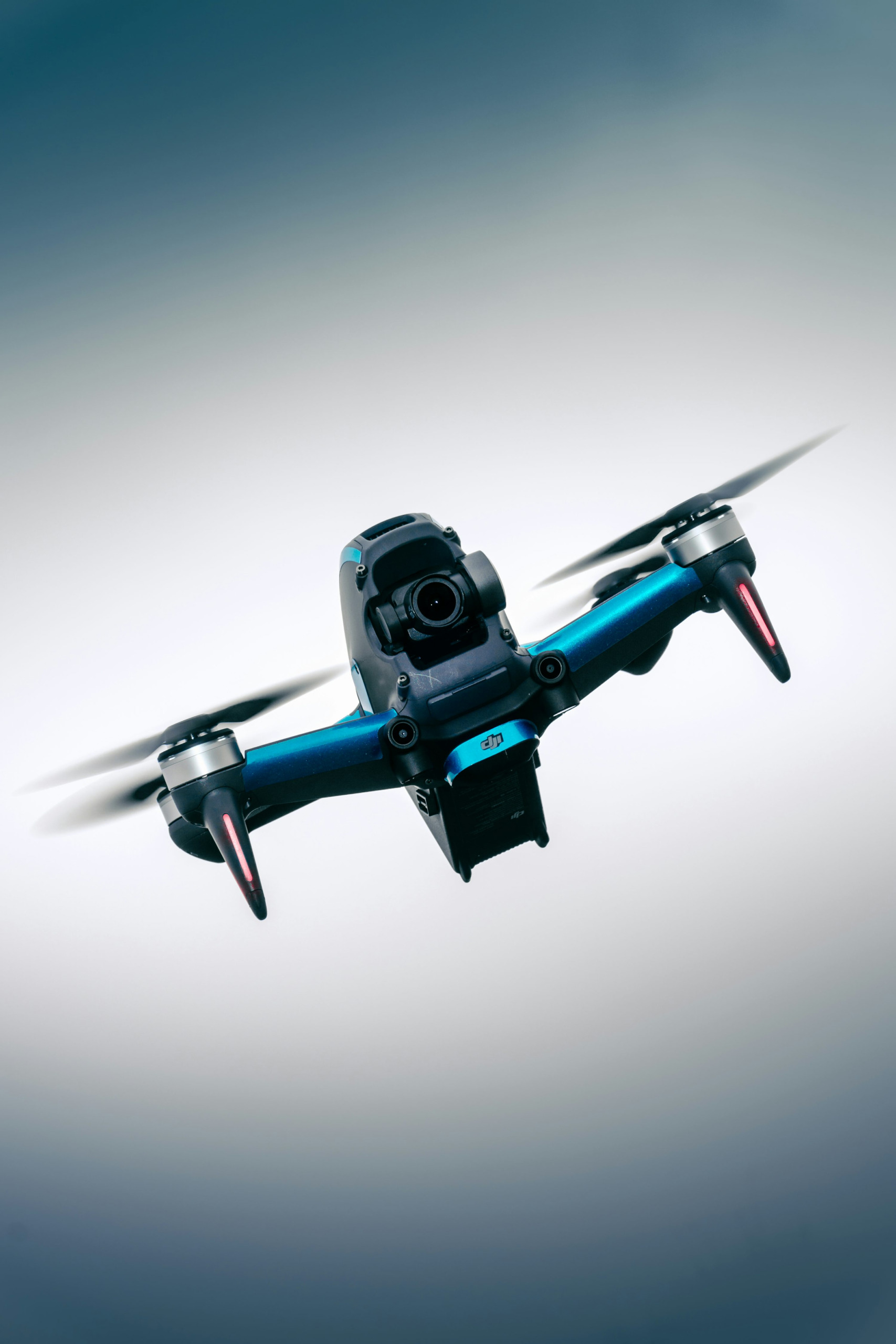
Current reporting identifies FPV drones as a core production focus. The partners are also targeting greater supply-chain diversification, reflecting the growing importance of manufacturing resilience in a sector where components, electronics, batteries, communications hardware, and specialist materials can be as critical as final assembly capacity.
FPV drones are relatively inexpensive compared with conventional aerospace systems, but producing them in substantial quantities is still an industrial exercise. Airframes, motors, electronic speed controllers, flight controllers, cameras, antennas, radio systems, wiring, batteries, connectors, and software all have to arrive in the correct versions and be assembled consistently.
A shortage of one low-cost electronic component can stop production as effectively as the absence of an entire airframe. Scaling output therefore depends on supplier qualification, inventory planning, alternative sourcing, test equipment, production yield, and controlled substitution of components when availability changes.
TAF brings experience from a Ukrainian manufacturing environment where product iterations can move quickly from operational feedback into production. That pace has helped defence drone manufacturers respond rapidly to changes in electronic warfare, interception tactics, communications requirements, and mission profiles.
Upteko contributes Danish engineering and autonomous-system capability, giving the joint programme a local industrial partner rather than simply establishing an overseas final-assembly operation. The DALO agreement describes production and development as linked objectives, which will be important if designs continue to change after manufacturing starts.
Rapid iteration can create a configuration-control problem. A drone assembled in January may not contain the same camera, firmware, communications hardware, motor, or antenna arrangement as a unit carrying the same product name several months later. That flexibility can be useful operationally, but it makes documentation and quality assurance considerably more complicated.
Distributed production increases the challenge. Engineering data, software baselines, bills of materials, test limits, production tolerances, and approved substitutions have to remain synchronised between Ukrainian developers and Danish manufacturing teams if the same product family is being built in several locations.
The cooperation sits within a broader TAF strategy of spreading manufacturing capacity into European partner countries. The company has already entered agreements involving Germany, Finland, and Sweden, reflecting an effort to reduce concentration risk while creating routes into European industrial and procurement systems.
That approach is not simply about moving factories farther from physical attack. A broader industrial footprint can give manufacturers access to different suppliers, engineering skills, finance, production equipment, customer relationships, and regulatory environments, although every additional location adds another layer of coordination.
For European governments, local production can also change the procurement proposition. Equipment manufactured and supported within the region offers a different supply-security model from systems imported as complete products, particularly if maintenance, software support, spares, and later upgrades are also available locally.
The Ukrainian connection remains central because the systems are being developed against unusually fast operational feedback. The risk is that European production processes become too slow or rigid to absorb design changes at the rate required by users, while the opposite risk is that uncontrolled change undermines repeatability and quality.
Modern drone manufacturing therefore sits somewhere between consumer electronics assembly and conventional aerospace production. Volumes can be high, individual unit costs relatively low, and component generations short, yet the equipment still needs to operate predictably in demanding environments where communications failure or poor manufacturing quality has immediate operational consequences.
The DALO cooperation agreement is an industrial starting point rather than a completed factory. Detailed information on investment value, site configuration, specific production lines, and final monthly capacity remains limited, so the important next milestones will be physical production equipment, supplier commitments, staffing, and the first Danish-built systems.
TAF has already shown that it intends to use European partnerships as part of a distributed manufacturing strategy. Upteko now adds Denmark to that network, combining local engineering capability with Ukrainian experience of scaling products whose design can change almost as quickly as the conditions in which they are used.
The value of the venture will ultimately be measured in repeatable output rather than the agreement itself. Defence drone production is often described as rapid and inexpensive; building thousands of dependable electronic aircraft without losing configuration control is the part that turns that description into manufacturing.