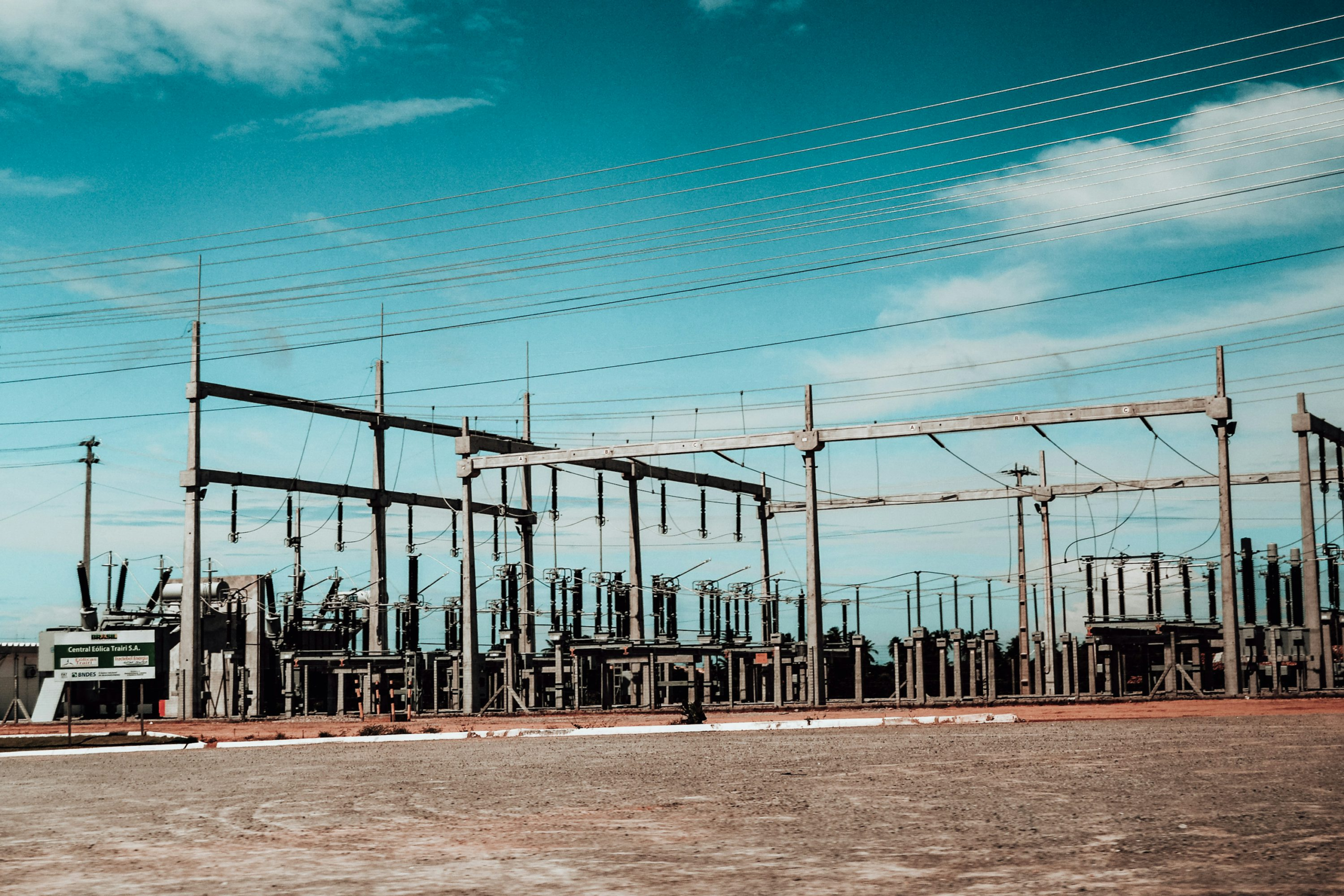
Siemens has formed a global alliance with Electric Power Group to integrate synchrophasor measurements and wide-area monitoring directly into its power automation portfolio.
The partnership combines Siemens’ grid automation systems with Electric Power Group’s Wide Area Monitoring System technology, giving transmission and distribution operators access to high-speed, time-synchronised electrical measurements alongside the conventional data already used in network control rooms.
Synchrophasors are measurements of electrical quantities taken against a common time reference, normally using GPS synchronisation. Comparing voltage, current, frequency, magnitude, and phase information from several locations allows engineers to see how different parts of an interconnected network are behaving at the same instant.
That is different from conventional supervisory control and data acquisition systems, which remain essential for monitoring and operating substations but generally collect network measurements at a lower rate. Wide-area monitoring can reveal fast electrical behaviour that is more difficult to distinguish using slower telemetry alone.
Electric Power Group’s system aggregates measurements from multiple points and applies analytics to the combined data. Siemens intends to integrate that output into its automation environment rather than leave synchrophasor information isolated in a specialist engineering application.
The practical value lies in giving operators a more detailed view of instability, oscillations, frequency movement, phase relationships, and emerging disturbances across a wider section of the network. Siemens is positioning the combined architecture for transmission system operators, distribution system operators, utilities, energy companies, and other operators of critical power infrastructure.
The alliance arrives as network behaviour becomes less predictable. Large synchronous generators historically provided comparatively stable operating characteristics, while today’s systems increasingly combine wind and solar generation, batteries, interconnectors, power-electronic converters, electric-vehicle charging, data centres, and other large loads whose output or demand can change quickly.
Those changes do not make SCADA obsolete. They increase the value of additional measurements that can show how an interconnected system is behaving between conventional data updates. A control room gains more useful information if an emerging disturbance can be recognised while it is developing rather than reconstructed after a trip has already occurred.
Higher measurement rates create their own engineering burden. Wide-area monitoring systems need reliable communications, accurate time synchronisation, data quality controls, storage, processing capacity, and software capable of distinguishing abnormal behaviour from the vast quantity of normal variation produced by an operating grid.
The result also has to be understandable. A control-room operator who receives hundreds of additional alarms has not necessarily gained better situational awareness. Analytics therefore need to turn high-resolution measurements into information that can support a specific operational decision, whether that involves investigation, switching, generation response, or simply increased observation.
Data integrity becomes critical because synchrophasor systems derive much of their value from precise timing. A measurement arriving with an incorrect timestamp or degraded communications can appear to describe an electrical event that did not actually occur in the way the system presents it.
The Siemens and Electric Power Group architecture is intended to be open and interoperable with existing grid infrastructure, allowing installations to scale from regional applications to national networks. A long-term framework agreement also gives the two companies a repeatable commercial structure for deploying the technology rather than treating every project as a completely separate integration exercise.
Integrating synchrophasors into a mainstream automation portfolio could reduce some of the engineering needed to move the technology into routine operations. Utilities have used phasor measurement systems for many years, but the commercial challenge is increasingly to make their output useful to ordinary operational workflows rather than reserve it for post-event analysis and specialist studies.
Cybersecurity also remains part of that integration. Phasor measurement units, data concentrators, communications networks, time sources, control-centre applications, and automation servers all become elements in an operational technology chain whose availability and integrity affect the operator’s confidence in the resulting network view.
The alliance does not change the electrical physics of the grid, and high-resolution monitoring cannot prevent a fault by itself. Its value depends on whether engineers and automated systems can detect developing problems earlier and respond more effectively with the information provided.
As power systems become more heavily instrumented, measurement is no longer the scarce resource it once was. The harder problem is deciding which of those measurements matter quickly enough to improve control of a live network. Siemens and Electric Power Group are placing synchrophasor analytics directly inside that operational problem rather than leaving them at its edge.