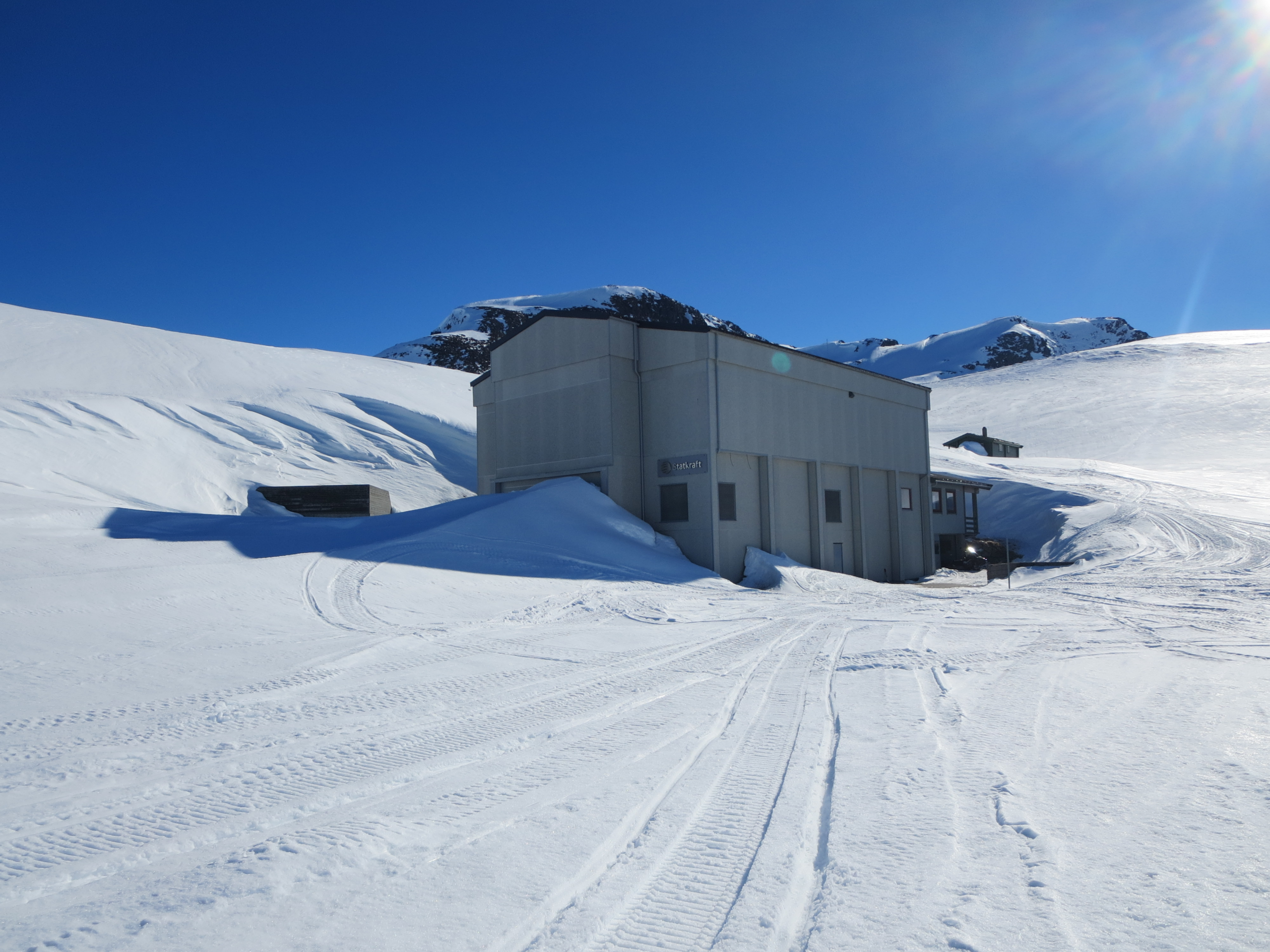
Statkraft will invest approximately NOK460 million replacing control systems across the three hydropower plants that make up its Vikfalli complex in western Norway. ABB has been selected to supply the new controls, with local contractors expected to participate at different stages as the generating assets are prepared for a wider regional grid upgrade.
Vikfalli comprises the Målset, Refsdal, and Hove power plants in Vik municipality. Together they produce around 860GWh of electricity annually, equivalent to the consumption of approximately 50,000 Norwegian households. The investment covers complete renewal of the main control systems alongside upgrades to auxiliary and common systems serving the plants.
The work is intended to reduce the risk of faults and outages while improving remote operation, monitoring, and troubleshooting. Those functions increasingly determine the availability of long-lived generating assets whose civil structures, waterways, and major mechanical equipment can remain useful for considerably longer than the generations of control hardware installed around them.
Hydropower stations illustrate the mismatch particularly clearly. Turbines, dams, tunnels, and waterways may operate for decades, while processors, communications equipment, operator interfaces, instrumentation, and software pass through much shorter technology cycles. Keeping an established station productive therefore requires repeated renewal of the digital and electrical systems wrapped around machinery that may have no immediate need for replacement.
Ageing controls create several problems before outright failure occurs. Spare parts become harder to obtain, supplier support contracts end, expertise in older platforms diminishes, and communications interfaces become increasingly awkward to connect with newer monitoring systems. A plant can remain mechanically sound while its control architecture becomes progressively more expensive and risky to support.
The Vikfalli programme is also a prerequisite for a separate upgrade of the transmission and regional network. Statkraft is working with Statnett and Sygnir on preparations for a transition to 420kV in the area, with that work planned to begin around 2031 subject to approvals. The control-system renewal has to be completed first.
That sequencing gives the current investment greater importance than a routine automation replacement. Future grid changes will place new requirements on the generating complex, and the stations need a sufficiently modern control architecture before the wider electrical infrastructure moves to its next configuration.
The underlying generating capacity is not being expanded through the controls project. Its value instead lies in protecting existing output and flexibility. In mature electricity systems, maintaining generation that is already connected, permitted, and supplied by developed water resources can be as important as adding new capacity, particularly when existing assets can respond to changing system requirements.
Hydropower also occupies a distinctive position as variable wind and solar generation expands. Reservoir-backed stations can provide controllable output within their hydrological and operating constraints, making dependable monitoring and regulation important to the wider network. A control failure that limits a generating unit removes some of that flexibility even if the turbine and water supply remain physically intact.
Replacing the controls will require careful cutover planning. Equipment being modernised is embedded inside an operating power system, so commissioning cannot be approached like a greenfield automation installation. New hardware has to communicate with existing machinery and protection systems, tests have to be coordinated around available outages, and each stage has to return the affected plant to dependable operation before the programme moves on.
Remote operation increases the importance of those interfaces. Better visibility can allow operators to identify abnormal conditions more quickly and support maintenance planning across dispersed assets, but additional data only improves reliability when alarms, diagnostics, and process information are structured well enough to support useful decisions. Modernisation provides an opportunity to redesign that information flow rather than merely reproduce old controls on new hardware.
The project sits within a much larger Norwegian investment programme. Statkraft has announced plans to invest approximately NOK80 billion in the country over the next ten years, with around NOK70 billion allocated to hydropower. Much of that expenditure is expected to cover major maintenance of existing plants, including replacement of technical equipment, dam strengthening, and improvements to waterways.
Some older facilities will also be replaced where new installations can make better use of existing water resources. The scale of the programme underlines how much of Norway’s future power engineering workload will involve renewing established infrastructure rather than constructing entirely new generating systems.
Vikfalli is a relatively concentrated example of that task. Three operating plants must receive new control, auxiliary, and common systems while continuing to contribute to regional generation, and the work has to be finished before the later 420kV network programme begins.
The NOK460 million investment will not increase the volume of water available to the stations or add a new turbine. Its engineering value is less visible but fundamental: ensuring that the equipment responsible for monitoring, regulating, and controlling existing generation does not become the weakest component in power plants intended to remain productive for decades.