YASA has secured UK Government funding to develop axial flux electric motors that reduce or eliminate the use of rare-earth magnet materials. The Oxford-based manufacturer will lead Project Resilience through two development pathways intended to preserve the performance and packaging advantages of axial flux machines while reducing exposure to concentrated material supply chains.
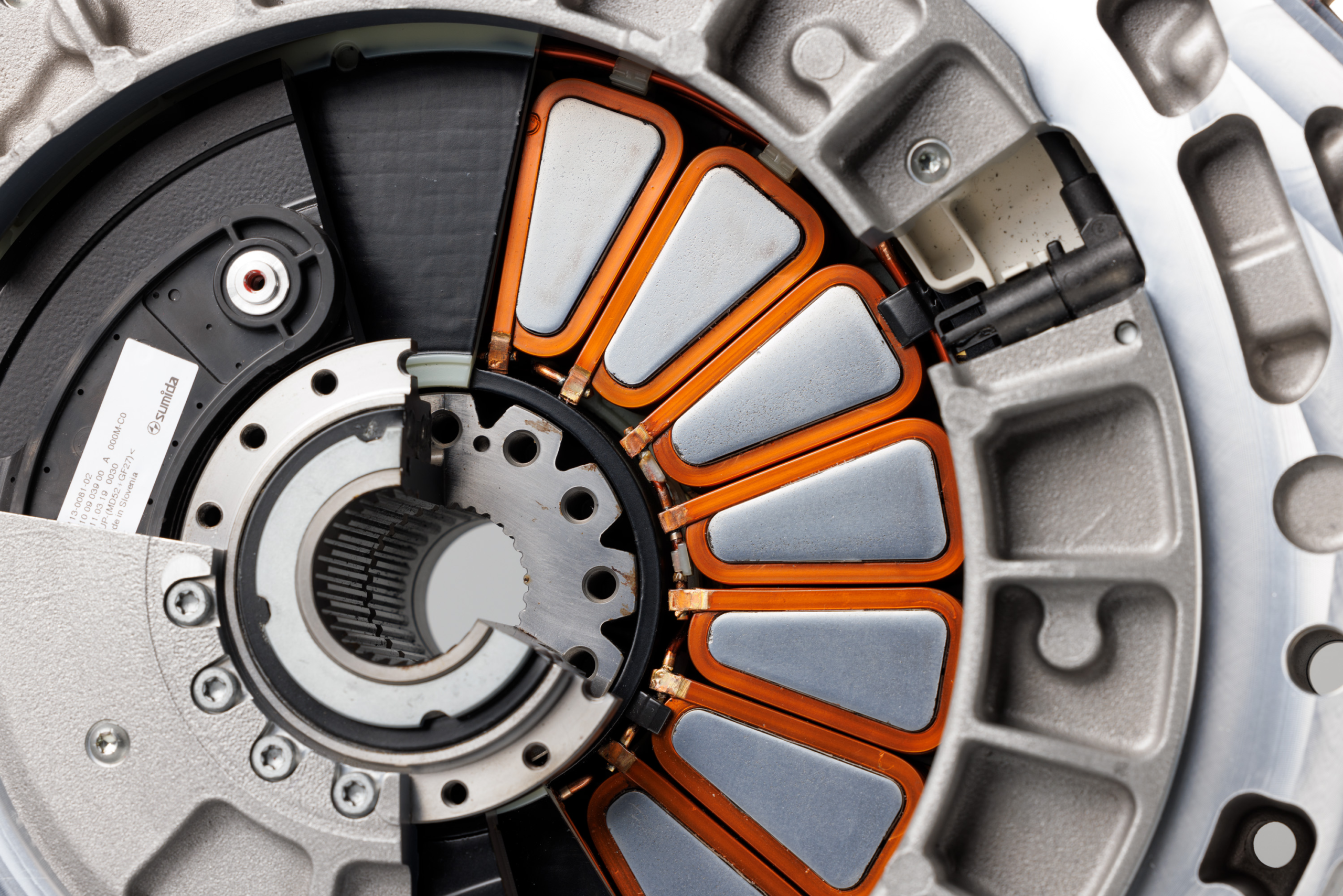
One route will investigate permanent-magnet motors that eliminate heavy rare-earth elements, while the second will develop fully rare-earth-free axial flux technology for applications where a different balance of performance, cost, packaging, and manufacturing requirements is acceptable. Both are intended to build on common YASA stator technology, creating the potential for a modular architecture in which rotor technology can change according to the requirements of an individual vehicle programme.
The project is supported through the UK Government’s DRIVE35 Demonstrate competition and will be carried out at YASA’s UK engineering and development facilities. The Advanced Propulsion Centre identifies Project Resilience among ten projects sharing £9 million of Government support, with the wider cohort representing more than £18 million once associated industry investment is included.
APC describes YASA’s demonstrator objective in specific material terms: eliminating dysprosium and terbium from the motor bill of materials. Those heavy rare-earth elements can be used in high-performance permanent magnets to help maintain magnetic properties at elevated operating temperatures, making them particularly relevant to compact traction motors that have to deliver substantial power within tightly controlled thermal limits.
Removing them is consequently more complicated than substituting one commodity for another. Motor performance depends on magnetic flux, torque density, speed, electrical loading, losses, rotor strength, cooling, control strategy, and temperature. A magnet composition that behaves differently at high temperature can force changes elsewhere in the machine if engineers are to preserve output without increasing mass or package size.
The fully rare-earth-free pathway presents a larger architectural challenge because it seeks to remove dependence on rare-earth permanent magnets altogether. Depending on the final rotor concept, that can alter magnetic loading, power density, control requirements, rotor construction, losses, and the manufacturing processes needed to achieve automotive repeatability. It may therefore suit a different range of applications from the highest-performance permanent-magnet route.
YASA’s decision to pursue two technologies acknowledges that vehicle programmes rarely require the same compromise. A performance-oriented battery-electric or hybrid vehicle may place a premium on power density and packaging, while a higher-volume platform may give greater weight to cost, raw-material exposure, ease of manufacture, or supply security. A motor that is optimal for one programme can be commercially inappropriate for another even if both ultimately turn the same wheels.
The common stator is potentially important because shared manufacturing architecture can reduce duplication across those variants. Tooling, winding processes, cooling interfaces, quality controls, test methods, and some supply arrangements may be reusable even where rotor technology changes. That modularity only creates an industrial advantage, however, if the alternative rotor systems can be integrated without undermining the production economics of the common platform.
Rare-earth supply has become a strategic issue because mining, refining, magnet production, and specialist processing capacity are concentrated geographically. Vehicle manufacturers committing to multi-year production programmes therefore have to consider more than the spot price of the material. Export controls, political intervention, processing bottlenecks, price volatility, environmental performance, and supplier capacity can all affect whether a motor architecture remains available on predictable commercial terms throughout a vehicle’s production life.
Removing rare earths does not make the supply chain independent. Alternative machines still require electrical steel, copper or other conductors, bearings, structural materials, power electronics, insulation, thermal-management hardware, and specialised production equipment. New rotor architectures may also introduce manufacturing steps or supplier dependencies that have to be qualified at automotive scale. Resilience depends on the complete production system rather than moving risk from one line of the bill of materials to another.
Axial flux technology makes those manufacturing questions particularly important. The architecture is valued for delivering high torque and power density in a short axial package, but tight air gaps, stator construction, rotor assembly, thermal interfaces, balance, and end-of-line validation all have to be controlled repeatedly in volume production. Any material change that increases package size, cooling demand, or manufacturing complexity can give back part of the advantage that justified the architecture.
YASA already operates an upgraded manufacturing facility at Yarnton, near Oxford, where a £12 million investment has increased capacity beyond 25,000 motors annually. Project Resilience is therefore being developed within an organisation that has moved axial flux technology beyond laboratory prototypes and into industrial manufacture, although the new rare-earth-reduction routes still have to demonstrate their own performance and manufacturability.
The DRIVE35 Demonstrate programme is intended precisely for that stage between research and commercial deployment. Automotive customers need evidence around efficiency maps, thermal behaviour, durability, noise and vibration, control, production consistency, material availability, and cost before an unfamiliar architecture can be committed to a vehicle programme.
Project Resilience does not establish in advance that a fully rare-earth-free motor will match YASA’s current permanent-magnet machines on every measure. Its engineering value lies in defining where heavy rare-earth content can be removed with limited compromise and where eliminating rare earths entirely produces a commercially useful alternative. For vehicle manufacturers facing increasingly strategic material decisions, having more than one technically credible motor route may ultimately be more valuable than claiming that a single architecture solves every application.