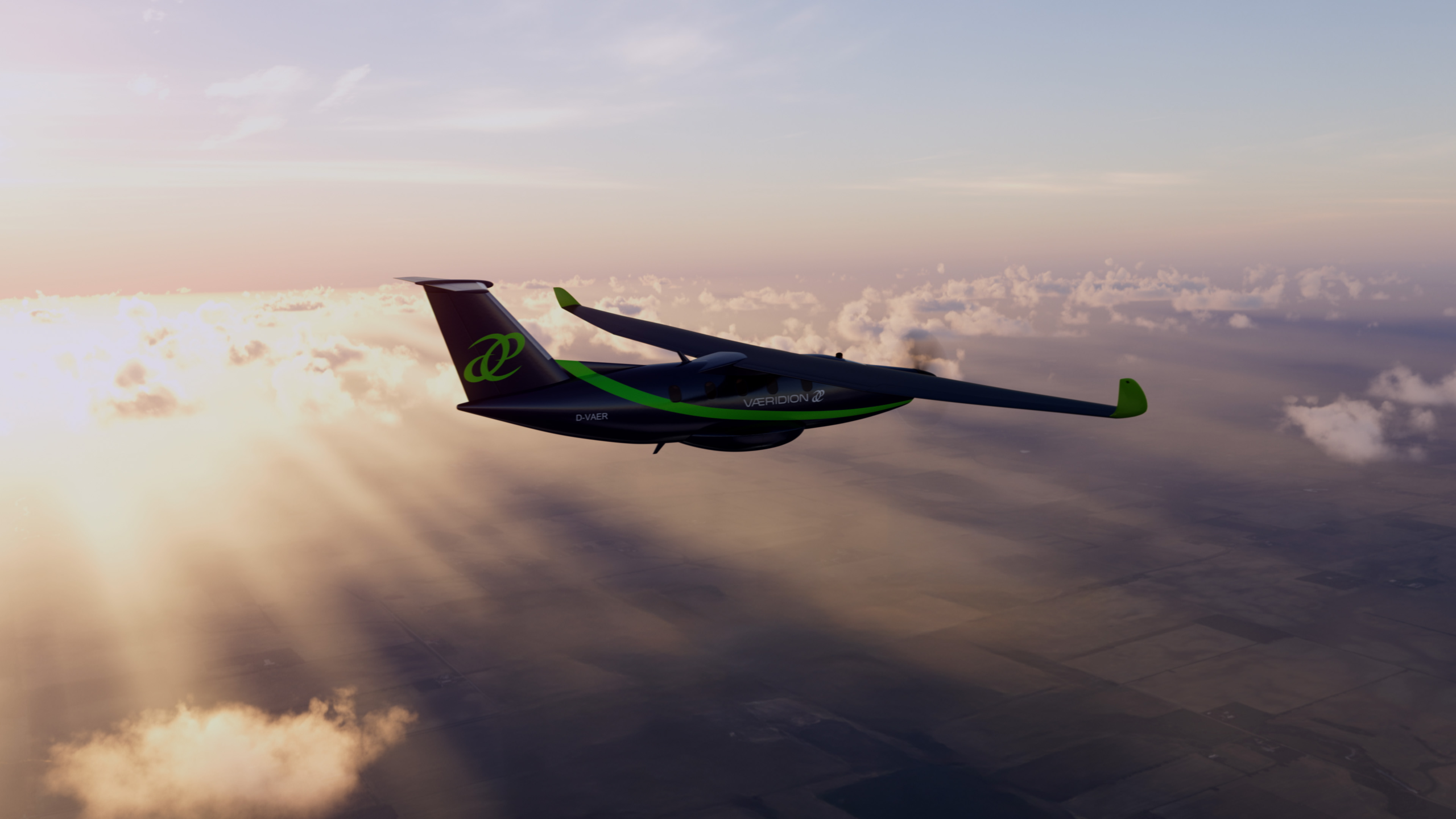
VÆRIDION has selected UK engineering company Drive System Design to develop, manufacture, and test the Blue Label propeller drive system for its nine-seat electric Microliner aircraft.
The agreement moves the propulsion system from concept work into detailed design, hardware production, and physical validation. Drive System Design, known as DSD, becomes the third principal supplier supporting the Electric Propulsion Unit alongside MT-Propeller and electric motor manufacturer Evolito.
The Microliner uses a proprietary architecture in which two independent electric engines drive one propeller through a direct-drive transmission, with the propeller drive combining the output from both motors and transferring it to the propeller.
If one engine loses power, an integrated clutch is designed to disconnect it while the remaining engine continues driving the propeller. The arrangement is intended to provide redundancy without introducing the aerodynamic and structural demands associated with two separate propellers.
DSD will lead detailed design, development, manufacture, and initial testing of the first Blue Label units at its UK facilities. Its scope includes the propeller drive unit, motor support structure, driveshaft, clutch, oil system, component optimisation, procurement, assembly, and rig testing.
The programme will proceed in two stages, with the first supporting VÆRIDION’s preliminary design review requirements and the second delivering tested hardware for the full-scale Copper Bird ground-test platform at Oberpfaffenhofen Airport in Germany.
Before shipment, the units will undergo functional testing covering rotational operation, lubrication, sealing, and governor performance. They will then be combined with two electric engines for full-scale propulsion testing.
Electric aviation enters full-system integration
VÆRIDION first demonstrated its multi-engine, single-propeller concept at 20% scale in 2024, while the programme passed preliminary design review in 2026 and is now progressing towards full-scale ground testing, detailed design, first flight, and certification.
The Copper Bird will allow engineers to operate the propulsion system on the ground before installing it in a flight article. Ground rigs can assess electrical, mechanical, thermal, control, and safety behaviour under representative loads while providing greater access for instrumentation and modification.
Electric aircraft integration extends well beyond matching a motor to a propeller because batteries, inverters, motors, transmission components, cooling, lubrication, controls, protection systems, and cockpit indications must operate as one certified system.
The drive unit must remain light enough to protect payload and range while providing the stiffness needed to maintain alignment. It must also minimise energy losses, withstand repeated loading, and meet aviation expectations for durability, inspection, and maintenance.
The clutch introduces a safety-critical function because it must disconnect a failed engine without creating an uncontrolled load or preventing the remaining motor from supplying power. Engineers will need to demonstrate its behaviour across operating speeds, temperatures, failure conditions, and repeated cycles.
Lubrication remains important even within a direct-drive architecture, as bearings, shafts, and clutch components require controlled oil delivery. Leakage, aeration, temperature, and pump performance can all affect reliability.
DSD’s automotive electrification background provides experience across motors, power electronics, transmissions, simulation, and rapid development. Applying those methods to aerospace adds tighter requirements covering mass, redundancy, environmental testing, documentation, and certification evidence.
Components developed for high-performance road vehicles cannot simply be transferred into aircraft because altitude, vibration, temperature variation, electromagnetic conditions, and operating duty differ substantially. Aerospace design also requires a documented route from requirement through verification and production control.
VÆRIDION says the Microliner is designed to carry nine passengers over a stated range of 400 kilometres plus commercial instrument-flight reserves, targeting regional routes where current aircraft can be expensive to operate and surface travel is slow.
More than 100 aircraft commitments have been announced, indicating operator interest before flight testing begins, although future orders remain dependent on certification, performance, airport infrastructure, and commercial terms.
Battery energy density remains one of the central constraints on electric regional aviation because range and payload are limited by the mass of stored energy. Charging time, thermal management, cell degradation, and airport electrical capacity also affect daily utilisation.
Propulsion efficiency therefore has direct commercial value, as losses in the inverter, motor, transmission, or propeller reduce the distance available from the installed battery. Mechanical and electrical improvements measured in small percentages can alter whether a route is operationally viable.
Certification will require evidence that the twin-motor architecture behaves predictably during normal operation and failures. Ground testing provides the opportunity to refine controls and identify integration problems before flight, when modifications become more expensive and test conditions more restricted.
The DSD award places detailed engineering, hardware manufacture, and initial validation in the UK. Delivery of the first Blue Label units will move the programme into a more demanding stage, where component performance must combine into a repeatable propulsion system capable of meeting certification requirements.