Toyota Material Handling UK is moving ahead with construction of a £31.5m Fleet Management Centre at Old Dalby Business Park in Leicestershire, adding new capacity for fleet processing, workshop activity, storage, and support operations.
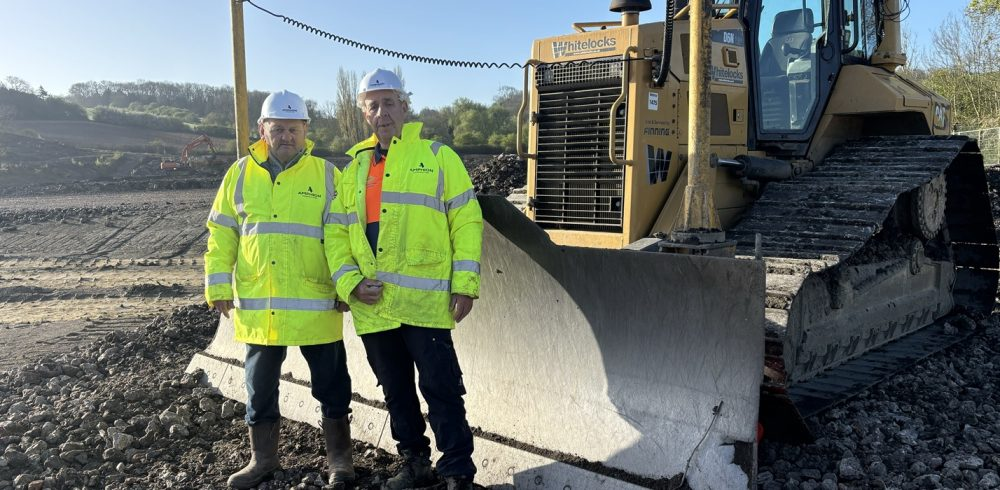
The development is being delivered by Amphion Construction, a West Midlands construction and manufacturing group with operations in Tipton and Walsall. The project covers a purpose-built 175,000 sq ft facility and is scheduled to progress over a 12-month construction programme.
The site will include modern production and workshop areas, sustainable office accommodation, extensive indoor and outdoor storage, and a secure yard. It is intended to support Toyota Material Handling UK’s growing fleet management and refurbished truck operations, extending the company’s existing presence at Old Dalby.
More than 12,000 trucks are currently processed each year at the existing Old Dalby site. Additional operational headroom will support rental, used, and refurbished materials handling equipment at a time when many industrial operators are scrutinising equipment availability, capital expenditure, and asset lifecycle performance.
Fleet support infrastructure is becoming more industrialised as warehouse vehicles and handling equipment move deeper into managed service models. Forklift trucks are no longer treated only as site assets bought and repaired when required. They increasingly form part of wider fleet strategies shaped by uptime, refurbishment cycles, energy performance, battery systems, rental demand, operator safety, telematics, and lifecycle cost.
A larger Fleet Management Centre gives Toyota more than additional space. It creates a dedicated base for processing equipment at scale, carrying out inspections, managing refurbishment workflows, preparing trucks for rental or resale, and coordinating storage. Those functions are increasingly important as companies seek to extend equipment life while keeping warehouses, factories, and distribution centres running reliably.
Refurbishment has become a sharper commercial category. Industrial users want lower capital outlay and shorter lead times, but refurbished trucks only work as a credible alternative where inspection, repair, testing, documentation, and warranty processes are robust. A dedicated facility gives Toyota more room to standardise those processes and manage higher volumes without treating refurbishment as a secondary workshop activity.
The construction model adds a regional manufacturing dimension to the project. Amphion will use its integrated supply chain and in-house manufacturing capability during delivery, with Superior Sections handling office fit-out and steel components, including purlins, while CAF Limited delivers roofing, cladding, and the external envelope using materials manufactured within the group.
That integrated approach reflects a practical change in industrial construction. Developers and occupiers want tighter control over programme risk, material availability, fabrication, installation, and quality. Contractors able to combine construction delivery with manufacturing capability can reduce interfaces that often create delay, particularly on projects with compressed schedules and complex envelope, fit-out, and operational requirements.
Changing equipment technology is also reshaping facilities of this type. Electric trucks, lithium-ion batteries, charging systems, telematics, fleet software, and safety systems all affect workshop layout and service requirements. Technical teams increasingly need to support electronics diagnostics, battery handling, software checks, and data-led maintenance as well as mechanical repair.
Industrial estates are therefore moving beyond simple storage provision. Modern logistics and fleet sites must support workshops, engineering teams, service scheduling, asset preparation, compliance management, parts operations, and secure yards. That pushes requirements for power, drainage, fire safety, circulation, handling space, staff facilities, and future flexibility.
The Old Dalby project strengthens the Midlands industrial base, where manufacturing, logistics, distribution, and equipment services continue to benefit from central location, motorway access, skilled labour, and established industrial sites. Facilities that support equipment availability can have a direct effect on warehouse throughput, production continuity, and labour productivity.
A forklift or warehouse truck that is unavailable at the wrong point can create downstream delays in lean operations with limited buffer stock. Toyota’s new centre therefore sits at the intersection of construction, fleet management, refurbishment, and industrial productivity. Its value will be measured not just by square footage, but by equipment turnaround, asset reliability, and operational resilience.