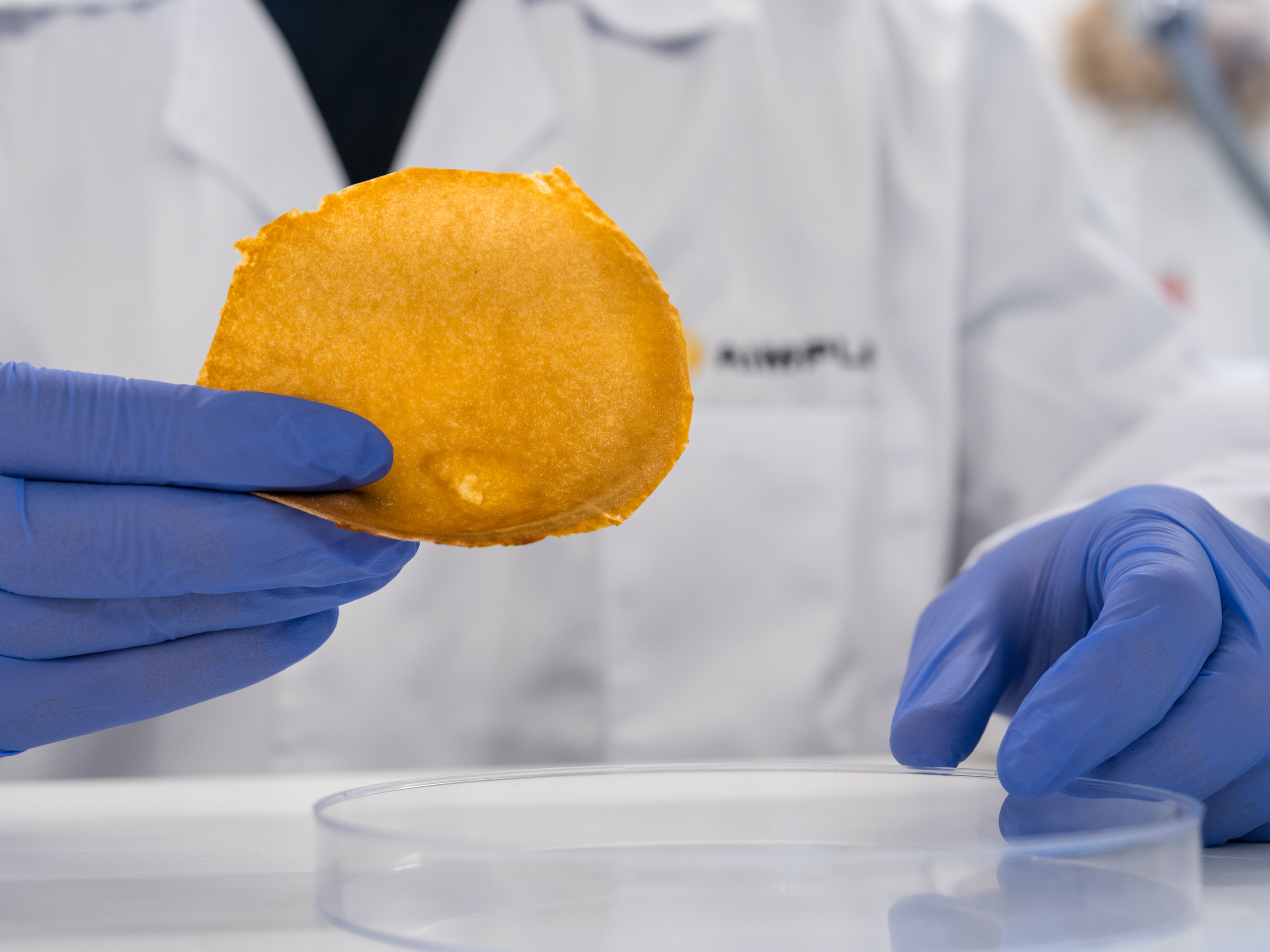
AIMPLAS is pushing further into industrial biotechnology with VEGANCELIO, a regional R&D project designed to convert organic waste into two higher-value outputs: mycelium-based vegan leather for textile applications, and chitosan microcapsules for dermocosmetic formulations. The work is backed by IVACE+i with ERDF funding and is framed around a familiar problem in Spain’s waste system — organic material makes up a large share of municipal waste, but much of its current treatment still ends in relatively low-value recovery routes.
What gives VEGANCELIO more industrial weight is the way the programme ties biological conversion to process engineering. AIMPLAS is not only growing fungal mycelium on organic residues, but also working on chitosan extraction from fungal biomass using chemical and enzymatic routes, alongside optimisation of plasticisers and extrusion processes for leather-like sheet production. That brings the project closer to existing manufacturing realities than many early-stage biomaterial programmes, especially where downstream processing and scale-up tend to become the real bottlenecks.
The project is also being shaped with commercial end-use in mind. Textile specialist Tejidos Royo and dermocosmetics company Dermopartners are involved in defining technical parameters, advising on formulation and application requirements, and validating the materials as development proceeds. That should help the work avoid the common trap of producing technically interesting biomaterials that struggle once they meet conversion lines, product specifications, or cost constraints.
For industrial materials development, that combination is the more interesting part of the story. VEGANCELIO is positioned as a circular-economy project, but the underlying question is whether organic waste can support repeatable, profitable feedstocks for sectors that already understand performance, finishing, and compliance requirements. AIMPLAS says the model could be transferred into other industries and other waste streams with similar composition, which makes this less about a single vegan leather concept and more about whether a regional waste problem can be turned into a manufacturable materials platform.