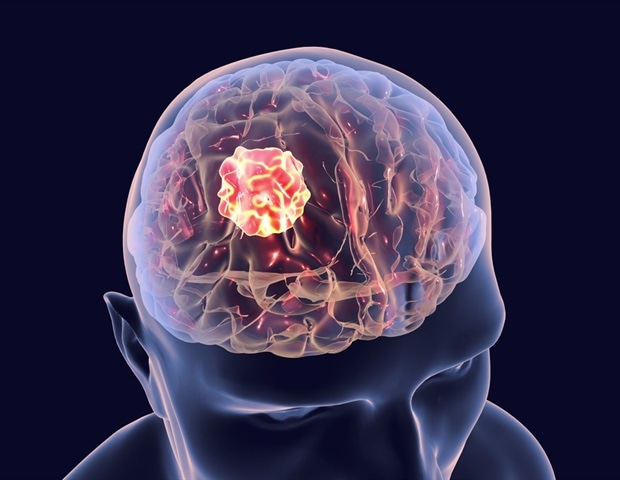
A groundbreaking machine-learning method developed at the University of Michigan is set to transform the treatment of brain cancer by mapping real-time tumour metabolism in patients. This innovation could enable clinicians to tailor treatment strategies for glioma with greater precision. The model’s reliability was confirmed through comparisons with human patient data and mouse experiments.
Published in Cell Metabolism, the study advances prior findings that certain gliomas may be mitigated by dietary interventions. Some tumours struggle to grow without specific amino acids, yet others can synthesise these nutrients independently. Historically, predicting which tumours would respond to dietary restrictions posed a significant challenge.
The digital twin technology developed by the Michigan team offers a solution by predicting individual patient tumour responses to various treatments. This computer-based model, primarily funded by the National Institutes of Health, utilises patient data from blood samples, metabolic measurements of tumour tissue, and genetic profiling to calculate metabolic flux — the rate at which cancer cells consume and process nutrients.
Deepak Nagrath, a professor of biomedical engineering and co-author of the study, emphasised the limitations of traditional metabolic measurements during surgeries. “Integrating limited patient data into a model based on fundamental biology, chemistry, and physics allowed us to overcome these obstacles,” he stated.
The approach marks the first instance of using machine learning and AI to directly measure metabolic flux in patient tumours, as noted by Baharan Meghdadi, a doctoral student and co-author. The team’s convolutional neural network was trained on synthetic patient data and validated through experiments with glioma patients and mouse models, demonstrating high predictive accuracy.
Furthermore, the digital twin successfully predicted tumour responses to the drug mycophenolate mofetil, which targets DNA synthesis. The model identified tumours capable of bypassing the drug’s effects via a salvage pathway, a finding corroborated by mouse experiments.
Wajd N. Al-Holou, assistant professor of neurosurgery and co-author, highlighted the tool’s potential to refine treatment plans by avoiding ineffective therapies. “This amazing tool could help doctors avoid prescribing treatments that a specific tumour is already equipped to resist,” he remarked.
The research received support from various foundations and institutions, including the Damon Runyon Cancer Foundation and the American Cancer Society. Collaborators from the University of Alabama, Birmingham, and the Mayo Clinic also contributed.
Patent protection is being sought with the assistance of U-M Innovation Partnerships, as the team looks for partners to commercialise the technology. This innovation brings the prospect of truly personalised cancer care closer, not only for brain cancer but potentially for a wide range of tumours as well.