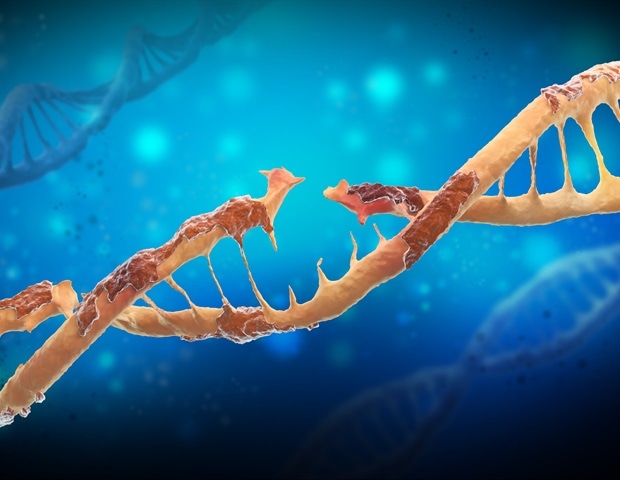
Cedars-Sinai scientists have unveiled TY1, an experimental drug designed to repair DNA damage, marking a significant advancement in medical therapeutics. Detailed in a publication in Science Translational Medicine, TY1 is positioned as a prototype for a new class of medications aimed at addressing tissue damage resulting from heart attacks, inflammatory diseases, and other conditions.
“By probing the mechanisms of stem cell therapy, we discovered a way to heal the body without using stem cells,” stated Eduardo Marbán, MD, PhD, executive director of the Smidt Heart Institute at Cedars-Sinai and the study’s senior author. He described TY1 as the first of a novel class of drugs known as exomers, which address tissue damage in innovative ways.
TY1 is a synthetic version of an RNA molecule naturally present in the body. The research demonstrated that TY1 enhances the function of a gene called TREX1, which aids immune cells in clearing damaged DNA. This action facilitates the repair of damaged tissue.
The inception of TY1 traces back over two decades to Marbán’s previous work at Johns Hopkins University, where a method to isolate progenitor cells from the human heart was developed. Progenitor cells, similar to stem cells but more targeted, promote heart regeneration. Ahmed Ibrahim, PhD, MPH, at Cedars-Sinai, discovered that these cells release exosomes — small vesicles containing RNA molecules that aid in tissue repair.
“Exosomes are like envelopes with important information,” explained Ibrahim, associate professor in the Department of Cardiology at the Smidt Heart Institute and first author of the paper. The genetic sequencing of RNA within these exosomes revealed a particularly abundant molecule, suggesting its role in tissue healing. This natural RNA molecule demonstrated efficacy in laboratory animal models for heart attack recovery. TY1, a synthetic iteration designed to mimic clinically approved RNA drugs, enhances immune cell production to reverse DNA damage, reducing scar tissue formation post-heart attack.
“By enhancing DNA repair, we can heal tissue damage that occurs during a heart attack,” Ibrahim noted. He expressed excitement over TY1’s potential applicability in autoimmune diseases, highlighting its entirely new mechanism for tissue healing and broad therapeutic prospects.
The next phase for the researchers involves advancing TY1 into clinical trials, aiming to evaluate its efficacy and safety in human subjects.