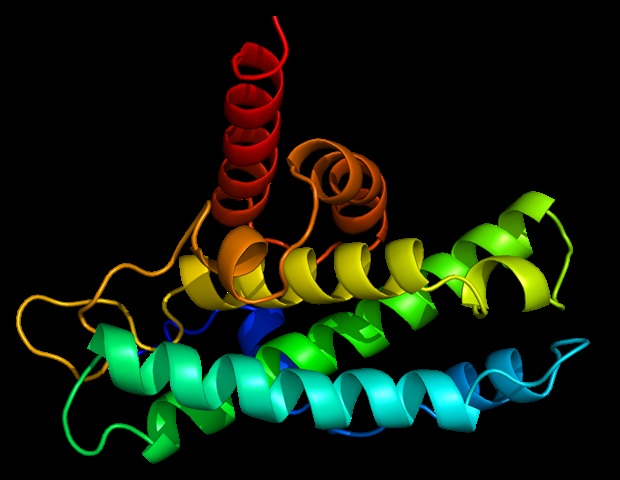
A recent study led by Rice University’s Pernilla Wittung-Stafshede has unveiled a critical finding about protein clumps, or plaques, that accumulate in the brain and are associated with Parkinson’s disease. Contrary to the belief that these clumps are simply inert waste, the research shows they actively deplete energy from brain cells by breaking down adenosine triphosphate (ATP), the molecule essential for cellular energy.
The study, published in Advanced Science on 16 October, demonstrates that when ATP binds to these protein clumps, specifically composed of alpha-synuclein, it causes the protein to reshape itself and trap ATP in a small pocket. This process results in ATP breaking apart and releasing energy, akin to enzymatic activity. This insight could reshape scientific understanding of the damage caused by these clumps, which are characteristic of neurodegenerative diseases such as Parkinson’s and Alzheimer’s.
“We were astonished to see that amyloids, long thought to be inert waste, can actively cleave ATP,” stated Wittung-Stafshede, Professor and the Charles W. Duncan Jr.-Welch Chair in Chemistry at Rice University. “The protein folds around ATP and essentially transforms the plaque into a molecular machine.”
The research team created uniform clumps of alpha-synuclein in the laboratory and tested their ability to break down chemical compounds, progressing to ATP as the biological substrate. Advanced imaging techniques, including cryo-electron microscopy, were employed in collaboration with Swiss specialists. These images revealed that when ATP binds to the clump, a previously loose section of the protein folds over the ATP binding site, forming a pocket that traps ATP and facilitates its breakdown.
To confirm these findings, researchers altered the protein to remove positive charges in the pocket one by one. These modified proteins still formed clumps but failed to break down ATP or form the unique pocket, underscoring the importance of this structure for the reaction.
The implications of this research are profound. Protein clumps in the brain may cause more harm than previously thought by disrupting essential cellular functions, including those responsible for clearing the clumps themselves. This could lead to a better understanding of how these clumps evade natural cellular cleanup mechanisms.
The study suggests potential for therapeutic innovation. If small molecule drugs can stabilize these clumps into harmless shapes, it may mitigate their detrimental effects. Additionally, the research implies that natural substances in the brain could influence the shape of protein clumps, possibly explaining the distinct clump shapes observed in various neurodegenerative diseases.
Further investigations exposed neuronal cell extracts to the protein clumps, revealing that many compounds underwent chemical changes, indicating the clumps act on multiple cellular molecules beyond ATP. If confirmed in living cells, this discovery could elucidate why brain cells in diseases like Alzheimer’s and Parkinson’s experience energy shortages, DNA damage, and other chemical stresses leading to cell death.
As neurodegenerative diseases become more prevalent with an aging global population, identifying underlying mechanisms such as this enzymatic activity could lead to improved treatments or even prevention. “We want to learn how to stop neurodegenerative diseases at the source, directly detoxifying damaging species, instead of just treating symptoms as we do today,” Wittung-Stafshede stated.
The study’s co-authors include Lukas Frey and Roland Riek from ETH Zürich, and Fiamma Ayelen Buratti, Istvan Horvath, Shraddha Parate, and Ranjeet Kumar from Chalmers University of Technology. Buratti is currently continuing her research with Wittung-Stafshede at Rice. The research was supported by the Knut and Alice Wallenberg Foundation, the Swedish Research Council, the Swedish Cancer Society, the Swiss National Science Foundation, and the Synapsis Foundation Switzerland.