
Belgian data intelligence company QClavis.io is spearheading an initiative to apply quantum computing to tackle water leak challenges.
The aim of the project, which is being carried out through the CERN Open Quantum Institute, is to apply a quantum machine learning solution to determine the optimum placement of sensors to detect water leaks in urban water distribution systems.
It is well known that a third to half of water systems are aged with leaks and other losses, such as through illegal connections.
In addition, many regions of the world are already water-scarce, and the number of countries affected will likely increase – a situation exacerbated with approaching three-quarters of the world’s population expected to be living in urban spaces by 2050.
Have you read?
Why quantum innovation will be a key enabler for decarbonising energy systems
Europe Energy Briefs: Quantum set for mainstream in Europe
For example, the Arab states and many African countries will be severely affected. It is expected that many developed regions in Europe and North America will be faced with critical ‘day zero’ type scenarios such as have already been experienced in Cape Town in South Africa and São Paulo in Brazil.
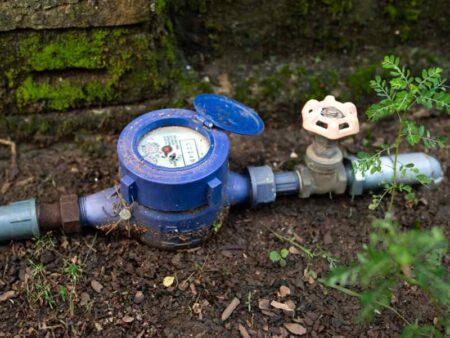
Sensing has become widespread for leak detection, with the dynamics of the water distribution network typically controlled and monitored with a limited number of such sensors located at several places in the network.
When a leak occurs at a specific location in the network, there is generally a non-linear signature in the physical quantities – mostly pressure drop – at different locations in the network.
From a mathematical standpoint, a given water distribution network can be formulated in the context of graph theory. The main bottleneck to tackle is its combinatorial nature, which limits the size of the network that can be efficiently considered. This complexity makes it a suitable case for study with quantum computing.
In particular, a promising quantum approach is the use of neutral atom quantum processors, which have a unique advantage in natively embedding complex graph-structured problems such as this one relevant for optimal sensor placement at the hardware level, according to QClavis.io.
The initiative is currently in phase 3 of simulation. Other partners include Italy-headquartered IT system integrator Reply, neural atom quantum computing company Pasqal and the UN Human Settlements Programme (UN-HABITAT) – this latter with the project’s connection to addressing SDG6 on clean water and sanitation.
This is not the only water project in development at the Open Quantum Institute. Another project that is addressing similar issues is focused on advancing water resource management with the application of a quantum fluid dynamics solution to model the hydrological cycle and assess the impact of climate change.
The promoters of the project, which is still in the first outline phase, are the American University of Beirut and the Massachusetts Institute of Technology.