
Image courtesy National Grid
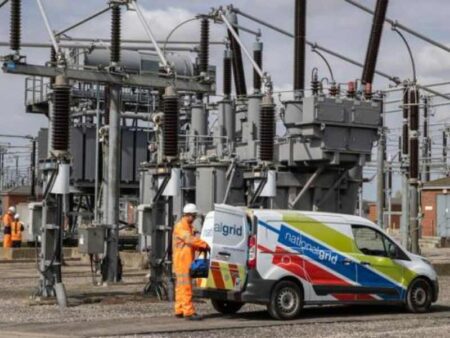
The 20 March outage that shook London Heathrow Airport was ‘most likely’ caused by moisture entering a transformer’s high voltage bushing and causing an electrical and fire at National Grid Electricity Transmission’s 275kV substation, says the country’s National Energy System Operator (NESO).
This is according to NESO’s final report from the review into the North Hyde Substation outage, which resulted in the loss of all supplies from the substation, impacting Heathrow Airport as well as essential services, such as road, rail and Hillingdon Hospital, as well as thousands of homes and businesses.
According to NESO, using forensic analysis from both National Grid Electricity Transmission (NGET) and the London Fire Brigade, their review saw evidence that the catastrophic failure of one of the transformer’s HV bushings at the 275kV substation caused the transformer to catch fire.
This was most likely caused by moisture entering the bushing, says NESO, causing an electrical fault.
Fintan Slye, chief executive officer of NESO, commented in a release: “The power outage and closure of Heathrow airport were hugely disruptive and our report seeks to improve the way parties plan for and respond to these incidents, building on the underlying resilience of our energy system.”
Have you read:
National Grid chief denies lack of substation capacity in Heathrow outage
Ofgem approves £24bn energy networks investment programme
A preventable issue
According to NESO, an elevated moisture reading in the bushing had already been detected in oil samples taken in July 2018, but mitigating actions appropriate to its severity were not implemented.
The System Operator says that NGET has since initiated an end-to-end review of its oil sampling process, with a view to ensuring that it is robust. In addition, they are undertaking a review and assurance exercise of all recorded oil samples to ensure all appropriate actions have been taken where required.
In response to NESO’s report, National Grid, in a release, said they have a comprehensive asset inspection and maintenance programme in place, and “we have taken further action since the fire.”
According to the utility, this programme includes an end-to-end review of the oil sampling process and results, as well as enhancement of fire risk assessments at operational sites and re-testing the resilience of substations that serve strategic infrastructure.
“We fully support the recommendations in the report and are committed to working with NESO and others to implement them. We will also cooperate closely with Ofgem’s investigation,” said National Grid.
“There are important lessons to be learnt about cross-sector resilience and the need for increased coordination, and we look forward to working with government, regulators and industry partners to take these recommendations forward.”
Site management and CNI
NESO’s review found that the design and configuration of Heathrow Airport’s private internal electrical distribution network also meant that the loss of one of its three independent supply points would result in the loss of power to some of the airport’s operationally critical systems.
Heathrow Airport Limited have a plan to deal with this, including reconfiguring their internal electrical distribution network to take power from the other two supply points.
The process to enact this is estimated to take 10-12 hours, NESO says, citing Heathrow Airport Limited’s plans. This was less well-known by those outside the technical team within Heathrow Airport Limited, and it was not known to the energy companies.
NESO’s review also found that energy network operators are not generally aware whether customers connected to their networks are Critical National Infrastructure (CNI), and there is currently no explicit cross-sector requirement on CNI operators to ensure appropriate continuity of operations in response to power disruption.
CNI facilities also have no priority within the electricity legal or regulatory framework. Work is underway, led by the government, to identify and analyse cross-sector CNI interdependencies.
According to Slye, all parties involved in the outage are now working together to deliver recommendations listed in NESO’s report, with much of this work already underway.