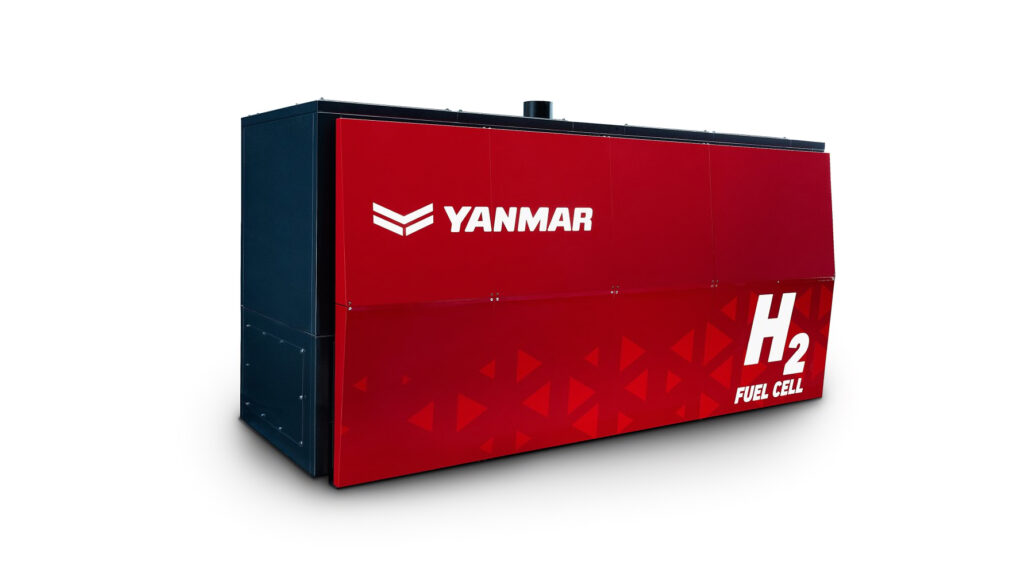
Yanmar Power Technology has reportedly become the first company in Japan to receive approval in principle (AiP) for its maritime hydrogen fuel cell system from the Japanese maritime association Nippon Kaiji Kyokai (ClassNK).
The primary objective of this system is to advance the use of zero emission ships in the maritime sector, effectively eliminating emissions such as CO2, NOX, SOX, PM and others.
The design emphasizes ease of installation, with a configuration that integrates key auxiliary components such as gas valve units into the system housing. Additionally, the system’s capability for parallel connection of multiple units and flexibility in adjusting the number of installed modules in its housing enables it to cater to diverse ship output requirements.
Both the system and its installed modules have successfully met the prescribed requirements for fuel cell power systems based on ClassNK’s Guidelines for Fuel Cell Power Systems on Board Ships (2nd Edition). This confirmation follows test results conducted in accordance with relevant standards. Yanmar PT proposed this system to a range of vessels, including passenger ships, workboats and cargo ships, that operate in coastal areas with access to hydrogen infrastructure.

For more key power and propulsion updates from the electric and hybrid marine technology industry, click here