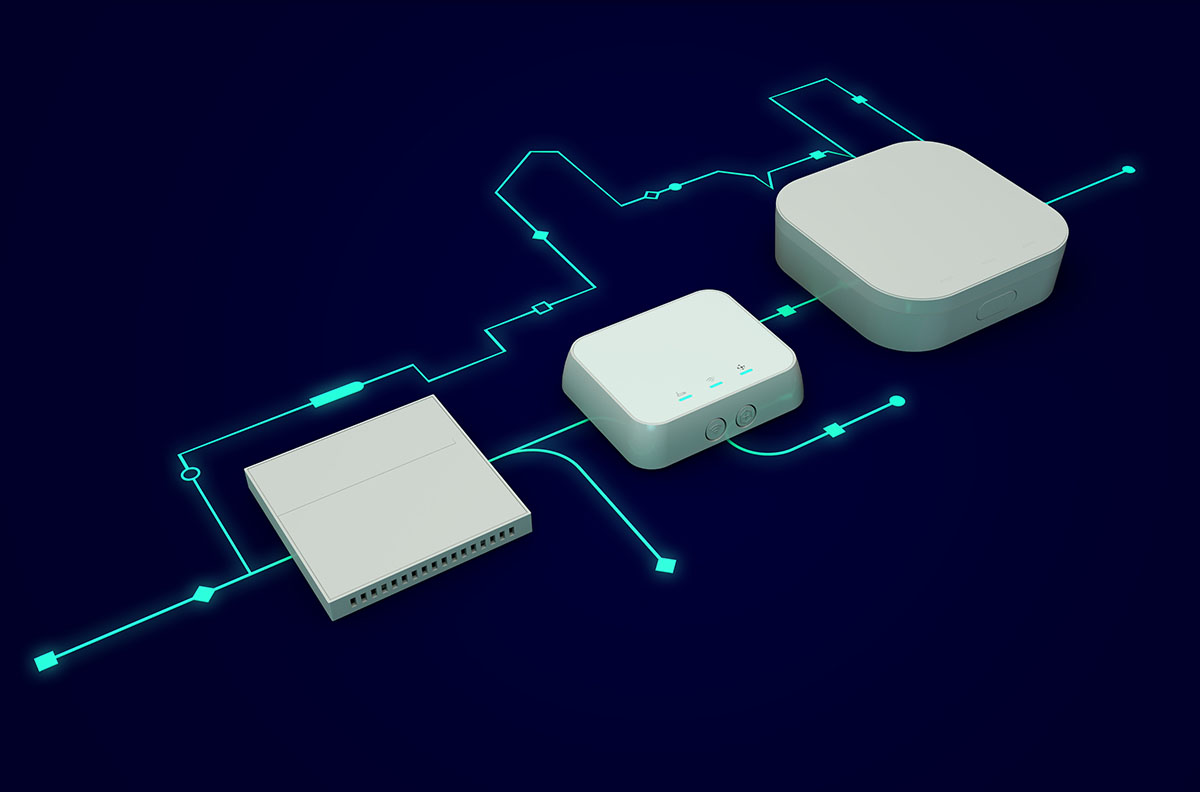

Siemens has introduced three new wireless room sensors as part of its ongoing development of the company’s expanding IoT range.
Wireless technology has moved on significantly in recent years and is once again starting to become a popular option in building management systems (BMS), offering several advantages over conventional wired technologies. The introduction of the wireless, battery-operated sensors enables quick and easy installation to provide important monitoring of indoor air quality (IAQ), with three options available: temperature only; temperature and relative humidity; temperature, relative humidity and CO2.
With CO2 being an excellent indicator of IAQ, this new sensor offers a measurement accuracy of +/-2%. For those requiring monitoring of all three variables, the three sensors are housed in a single unit, with a temperature range of 0°C – 50°C, a humidity range of 0% – 100% and a CO2 concentration range of 0 – 5,000ppm.
Open interfaces are key in enabling more intelligent room devices and building solutions. The new sensors communicate wirelessly through Thread – an open source, mesh networking, IP-based protocol – meaning they operate seamlessly, either with Siemens own BMS, such as the popular Desigo system, or with those of other manufacturers. Thread’s low power consumption, spread-spectrum techniques provide immunity to interference, while its self-healing properties avoid a single point of failure. This enables automated control of IAQ, with, for example, the sensor triggering increased ventilation when a predetermined CO2 level is detected, even if a router fails.
The new sensors have been three years in development and are being launched at an opportune time. With buildings being repurposed and offices being reconfigured in light of the changing building landscape post-COVID, the capability to easily relocate the sensors to meet new requirements without damaging walls and ceilings through rewiring is a particular advantage. Aesthetics are further addressed through the slim new design and easy mounting options (wall, flush or tape mounting).