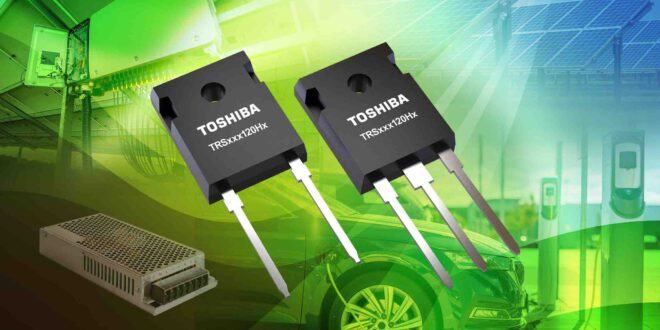
1200V SiC Schottky barrier diodes achieve typical low forward voltage of 1.27V

1200V SiC Schottky barrier diodes achieve typical low forward voltage of 1.27V

Toshiba enhances its silicon carbide (SiC) diode portfolio with ten new 1200V Schottky barrier diodes (SBDs). The TRSxxx120Hx series, comprising five products housed in TO-247-2L packages and five in TO-247 packages, helps designers improve the efficiency of industrial equipment, including photovoltaic (PV) inverters, electric vehicle (EV) charging stations, and switching power supplies. By implementing an…


Toshiba enhances its silicon carbide (SiC) diode portfolio with ten new 1200V Schottky barrier diodes (SBDs). The TRSxxx120Hx series, comprising five products housed in TO-247-2L packages and five in TO-247 packages, helps designers improve the efficiency of industrial equipment, including photovoltaic (PV) inverters, electric vehicle (EV) charging stations, and switching power supplies.

By implementing an enhanced junction barrier Schottky (JBS) structure, the TRSxxx120Hx series allows a very low forward voltage (VF) of just 1.27V (typ). The merged PiN-Schottky incorporated into a JBS structure reduces diode losses under high current conditions. The TRS40N120H of the new series accepts a forward DC current (IF(DC)) of 40A (max) and a non-repetitive peak forward surge current (IFSM) of 270A (max), with the maximum case temperature (TC) of all devices being +175°C.

Combined with the lower capacitive charge and leakage current, the products help improve system efficiency and simplify thermal design. For instance, at a reverse voltage (VR) of 1200V, the TRS20H120H diode housed in the TO-247-2L package provides a total capacitive charge (QC) of 109nC and reverse current (IR) of 2µA.


Stories for you


  • SpaceLocker launches first shared satellite mission

    SpaceLocker launches first shared satellite mission

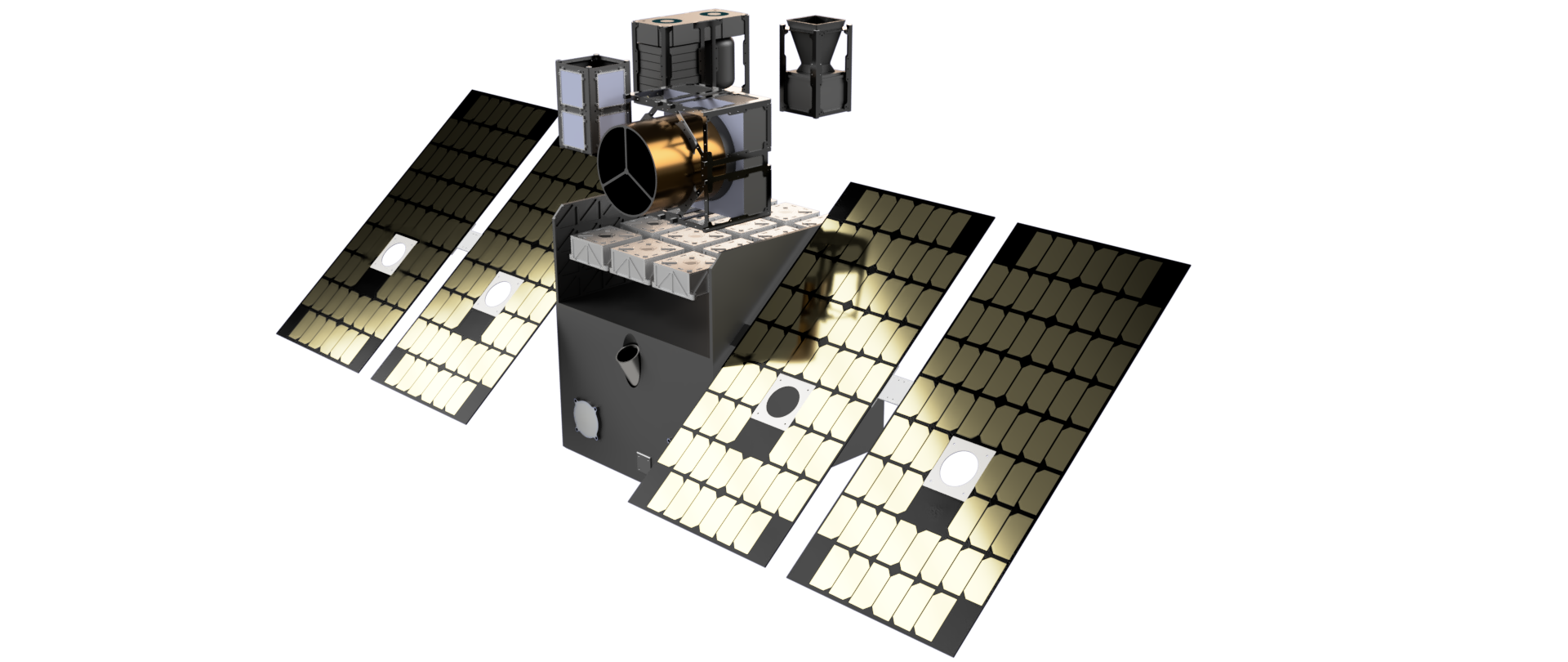
    SpaceLocker has launched its first fully owned shared satellite mission. The move shifts the French company from hosted payload specialist to operator, with a multi-customer CubeSat designed to cut cost and time to orbit.


  • Cold Chain Technologies sets net zero goal

    Cold Chain Technologies sets net zero goal

    Cold Chain Technologies has set a 2050 net zero target. The commitment builds on recyclable and reusable thermal packaging, landfill reduction, and digital shipment monitoring.